
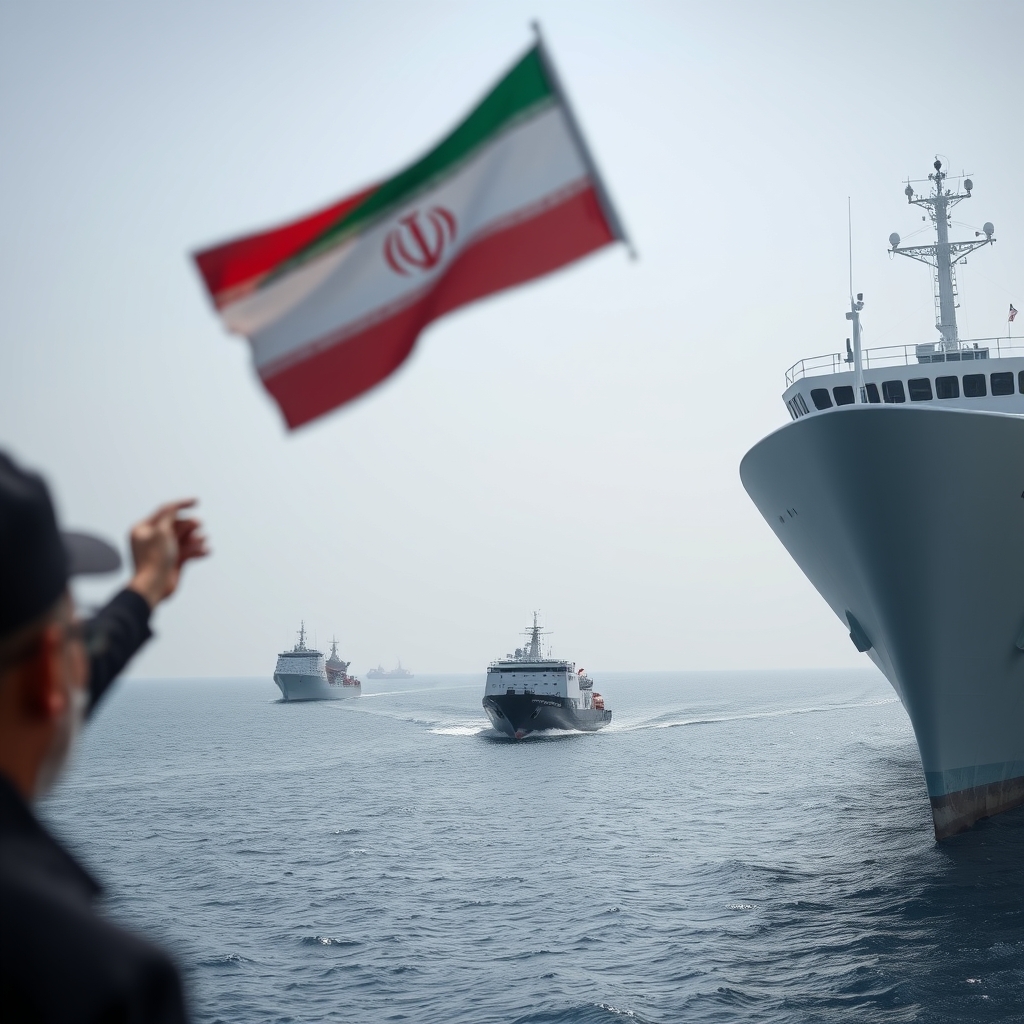
Iran’s Revolutionary Guard Navy announced that 35 ships crossed the Strait of Hormuz in 24 hours, a count Iranian state media relayed on May 22. In the force’s words, the vessels, “including oil tankers and container vessels”, moved through “with the permission of and coordination with the IRGC Navy.”
The figure is up from the day before. On Thursday the same navy reported 31 commercial vessels, according to Iran’s Tasnim news agency, among them bulk carriers, tankers and container ships. A similar count of 31 had been recorded the day before that.
Washington objects to a toll
The announcements come as the United States presses Iran on shipping. Speaking at a NATO gathering in Helsingborg, Sweden, Secretary of State Marco Rubio said Tehran is “trying to create a tolling system” and trying to bring Oman into it. He called free navigation a primary objective of the talks. His warning to other governments was blunt: “there is not a country in the world that should accept that.”
A recent New York Times report added detail. Two Iranian officials told the paper that Tehran and Muscat have held quiet talks on an arrangement that would charge ships for passing through the strait, with Oman taking a share of the revenue. Oman was cool on the idea at first because of the international friction it could cause, the report said, but warmed to it after weighing the money involved.
President Donald Trump took a harder line from the White House. “We have total control of the Strait of Hormuz with our blockade,” he said. “Iran will not get nuclear weapons, or we’ll do something drastic.” He called the blockade “100 per cent effective”, a “steel wall”, and said: “We want it free, we don’t want tolls. It’s international; it’s an international waterway.”
The uranium dispute
The blockade is tied to the nuclear question. Trump said Washington will not let Tehran keep its stockpile of highly enriched uranium, which experts estimate at 900 pounds, enough for weapons. American authorities suspect it was moved underground after joint U.S. and Israeli bombing nearly a year ago. “We will get it,” Trump said. “We don’t need it, we don’t want it. We’ll probably destroy it after we get it, but we’re not going to let them have it.”
Iran has resisted. Reuters reported, citing two Iranian sources, that Supreme Leader Ayatollah Mojtaba Khamenei ordered that the stockpile “should not leave the country”, which rejects a key U.S. demand and leaves the two sides at a standstill.




