
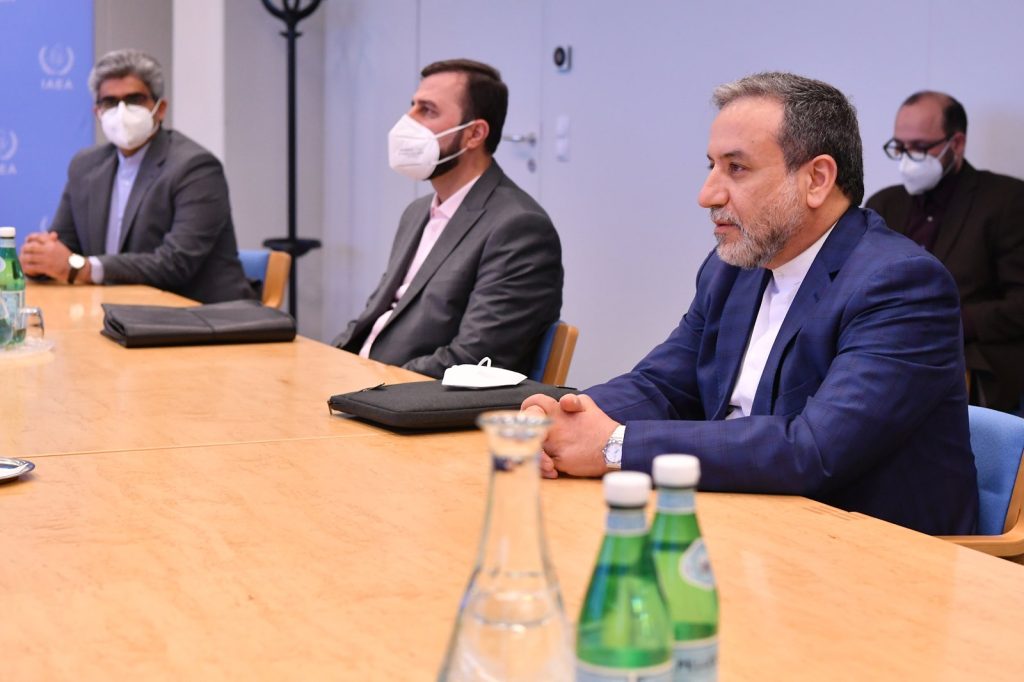
“I have come here to do business, but I doubt there is a same seriousness in the other side.” That was Abbas Araghchi, speaking to Iran’s Press TV from Vienna in April 2021, a few days into the first in-person round of talks on reviving the 2015 nuclear deal. At the time he was Iran’s deputy foreign minister and the man leading its delegation.
His message was blunt. Iran would return to full compliance only after Washington had lifted every sanction put in place, restored or renamed since January 2017, and only once Iran had verified that for itself. Partial or staged relief was not on the table.
A hotel shuttle and a blunt rebuttal
The setting was odd. Iran, France, Germany, the United Kingdom, China and Russia met at the Grand Hotel Vienna under the European Union’s chairmanship, while the American team led by Robert Malley stayed in a nearby hotel. European diplomats carried messages between the two buildings so the old adversaries never sat face to face. Tehran’s hardline parliament would not tolerate direct contact, and the Rouhani government had agreed to indirect talks only.
Araghchi’s comments came after Malley told NPR that Iran’s insistence on the cancellation of all sanctions before it reversed its own breaches was a non-starter. Araghchi took that as proof the United States was not serious. Asia Times also reported that Iran had reportedly turned down an American offer to unfreeze US$1 billion held in South Korea in return for suspending 20% uranium enrichment.
What “lifted” is supposed to mean
Days later, after the talks wrapped up for the week, Araghchi told Press TV he was satisfied with the direction, if not the pace. Two expert groups had been set up, one to list the sanctions Washington would have to lift and another to work out how Iran would unwind the nuclear steps it took after the American withdrawal. The sanctions group, he said, faced the harder job because the subject was “so complicated”.
He also drew a line between paper and practice. Signing waivers or executive orders was not enough, he said. Iran wanted to see the effects on the ground, and that required its own method of verification. The United States had left the agreement, in his telling, so it had to come back first. Tehran would follow.
On the legal mechanics, Araghchi said the American president could terminate some sanctions by executive order, while those written into law by Congress could only be waived, as under the original deal. Iran still wanted them all reversed, including whatever was imposed, brought back or relabeled during the Trump administration. “Our demands are clear and we insist on that,” he said. He also warned that without “political will and seriousness” from the other side, there would be no reason to keep negotiating.
Pressure from home
The position was shaped by politics in Tehran as much as by diplomacy. By May, as the fourth round of talks neared its end, Al Jazeera reported that about 200 Iranian lawmakers had signed a statement saying that if “100 percent of the sanctions are not lifted, no sanctions have been lifted”. Iran’s presidential election was set for June 18, and a three-month monitoring deal Tehran had signed with the UN nuclear watchdog was due to expire on May 21.
Even so, negotiators in Vienna sounded more hopeful by then. Russia’s Mikhail Ulyanov said an agreement was “within reach”, and EU coordinator Enrique Mora said one was “shaping up”. Araghchi himself said key issues still needed another round to settle.
Sources
- Glimmer of hope, compromise in Iran nuclear talks
- Top Iranian negotiator hails Vienna talks but highlights complications
- Agreement on restoring Iran's nuclear deal 'within reach'




