
Nineteen of the 21 Russian vessels hit by Ukraine’s Unmanned Systems Forces over three days were oil tankers. On the night of July 8 alone, drone operators struck nine tankers in the Sea of Azov, and a cargo ship and a ferry were hit near Kerch.
Robert Brovdi, who commands the Unmanned Systems Forces, confirmed the strikes on the vessels, UATV reported. Moscow has not officially confirmed the losses. Russian state media acknowledged “incidents” involving vessels but gave no details on how many were hit.
A campaign against the shadow fleet
The attacks fall under a campaign launched on July 6 that uses naval and aerial attack drones against tankers and other ships in Russia’s shadow fleet. It began in the Sea of Azov and has since spread into the Black Sea. Brovdi, known as “Magyar,” leads the joint effort of the Unmanned Systems Forces and the SBU.
The units involved include “Madar’s Birds,” “Raider” and the 1st Separate Center of the Unmanned Systems Forces.
A parallel push, called “Crimea Switch Off,” went after Crimea’s power grid. Six electrical substations were attacked, and Ukrainian forces have damaged 50 Russian energy facilities since the beginning of July. President Volodymyr Zelenskyy said that on July 8, long-range strikes reached the Saratov region, Tatarstan and Bashkortostan.
Drones and missiles together
Seatrade Maritime, in a report cited by Narwhal TV, described the 72 hours as the most concentrated naval assault since the war began. Analysts quoted there say several of the targets were logistical and support ships rather than frontline warships, the sort Russia relies on to resupply Crimea and sustain amphibious capability.
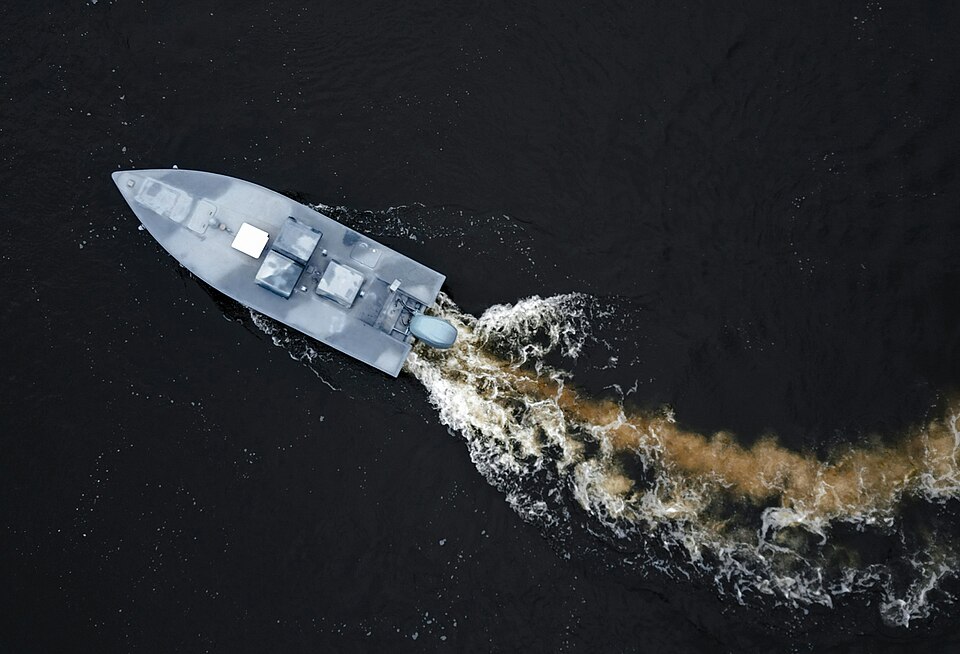
Most of the strikes used Ukraine’s Magura V5 and similar uncrewed surface vessels, explosive-laden boats that ride low in the water and are hard to intercept in numbers. Neptune anti-ship missiles added to the drone attacks. A crew busy with one incoming drone has little capacity left for a second or third arriving minutes later.
A shrinking fleet
At the start of the war, Russia’s Black Sea Fleet was seen as the region’s dominant force, with roughly 40 combat-capable surface ships. Sea drone attacks, missile strikes and special operations have since damaged or destroyed an estimated one-third of them. Following the sinking of the cruiser Moskva in April 2022, much of what remained was pushed westward, away from Ukraine’s coast.
The Kerch Bridge, already badly damaged by Ukrainian strikes, can no longer carry supplies to Crimea at full capacity, which leaves sea lanes as Russia’s main resupply route to the peninsula. Narwhal TV’s analysis framed the choice facing Moscow as stark: pull its remaining ships out of drone range and give up the sea, or keep them forward and absorb more losses.
Ukraine set up its own humanitarian shipping corridor in late 2023, after Russia withdrew from the UN-brokered grain deal. That corridor has stayed functional largely because Russian naval interference has become costly.
Sources
- Ukraine Hits 21 Russian Ships in 72 Hours
- Ukrainian drones hit 21 Russian vessels, including 19 tankers
- Operation MoLoChKa




