
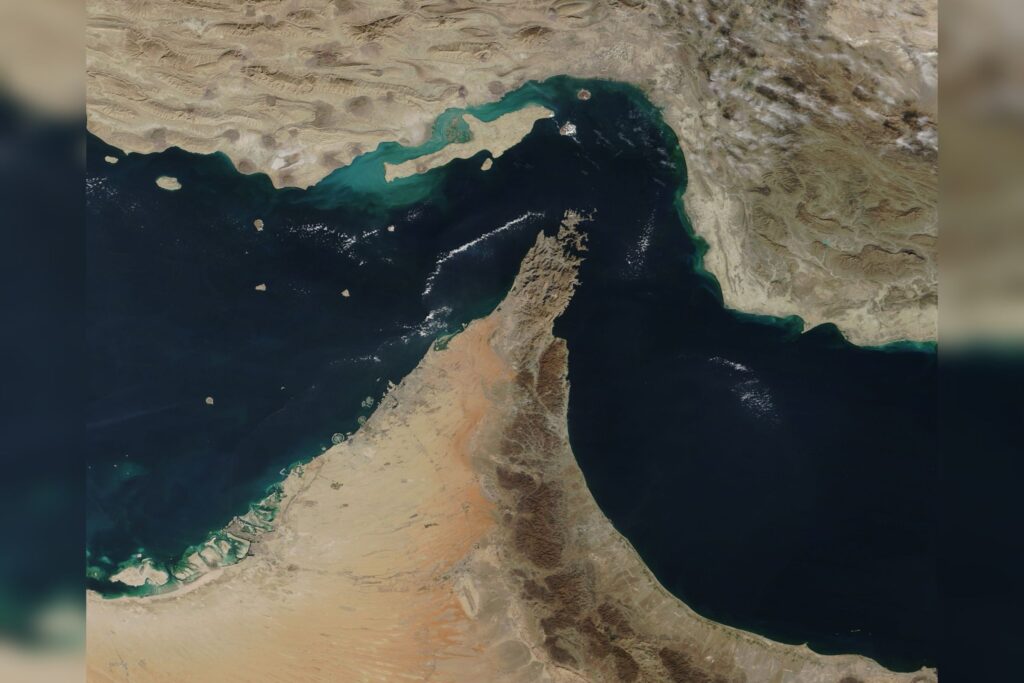
Iran is negotiating a traffic-management arrangement for the Strait of Hormuz with Oman, and it comes with a condition that would reorder one of the world’s most militarized waterways. Deputy Foreign Minister Kazem Gharibabadi, speaking on state television late on Tuesday night, said the framework the two countries have agreed to is meant to stop military ships from passing. “If the understanding becomes binding, no military vessel will be permitted to pass through the Strait of Hormuz,” he said. “No military vessel at all.”
The provision has not taken effect and talks are unfinished. His statement named no exemptions and singled out no countries, which reads as a bid to bar military shipping generally.
How the corridor would work
Commercial traffic is a separate matter. Ships bound into the Persian Gulf would move through Iranian waters, while outbound vessels would cross a route held partly by Iran and partly by Oman. Gharibabadi described the route as temporary, with a permanent maritime scheme to be negotiated within 30 to 60 days.
An official Iran-Oman statement calls the plan a phased framework, and the phases are concrete: a temporary joint corridor for navigation, shared information between the two coastlines, traffic control, and work to clear mines from the waterway. Nothing has an operational start date yet, and no verified mine-clearing has begun. Iran’s Revolutionary Guards have claimed the understandings cover how the two countries would share the waterway and its revenue, but the joint statement confirms no formula and no percentages, and a senior Iranian source told Reuters the details were still on the table.
Omani Foreign Minister Badr Albusaidi, who met Iranian Foreign Minister Abbas Araghchi in Tehran on August 25, said he hoped announcements of a temporary corridor and of safe-passage arrangements would come soon. Oman has pushed for consultation with other Gulf states and respect for coastal states’ sovereign rights.
The war behind the plan
Control of the strait has been contested throughout the American war with Iran, which began on Feb. 28, and the pressure has grown since a June interim deal that paused the fighting fell apart. Iran has hit container ships in the waterway; Washington works to keep it open while Tehran vies to close a passage that before the war moved about a fifth of the oil and gas the world consumed. “If Iran’s requests are not granted, the strait will be closed,” Gharibabadi said.
The economic squeeze is tightening on both sides. Treasury Secretary Scott Bessent announced what he called an “economic D-Day” of sanctions against Iran this week, and Iran’s currency sank to its lowest level on record on Monday. More than 750 Americans have been wounded so far in the war, the Department of Defense said last week, and the administration has asked Congress for a $1.5 trillion defense budget, with roughly $70 billion of it earmarked for naval blockades and ongoing operations in the Middle East.
Watching the water
Washington opposes Iranian control of the strait’s traffic and the commissions Iran has proposed on vessels. On August 27 the White House said direct talks with Tehran were not underway and every option stayed on the table; no separate American response to the military-vessel clause itself has been confirmed.
The market is counting hulls. Kpler logged 10 commodity-vessel transits on August 26, up from eight the day before and below a 10-day average of about 15, according to Reuters, and ships running dark without transponders may be missing from that count. By 1332 GMT on August 27, Brent crude had added 1.32% to reach $89 a barrel and WTI climbed 0.63% to $82.75, with stalled diplomacy keeping supply worries high for families across the region and beyond.
Sources
- Iran Seeks Military-Vessel Ban in Hormuz Agreement | Nexuswild
- Iran Negotiates With Oman, Warns of Military Ship Ban in Strait of Hormuz




