
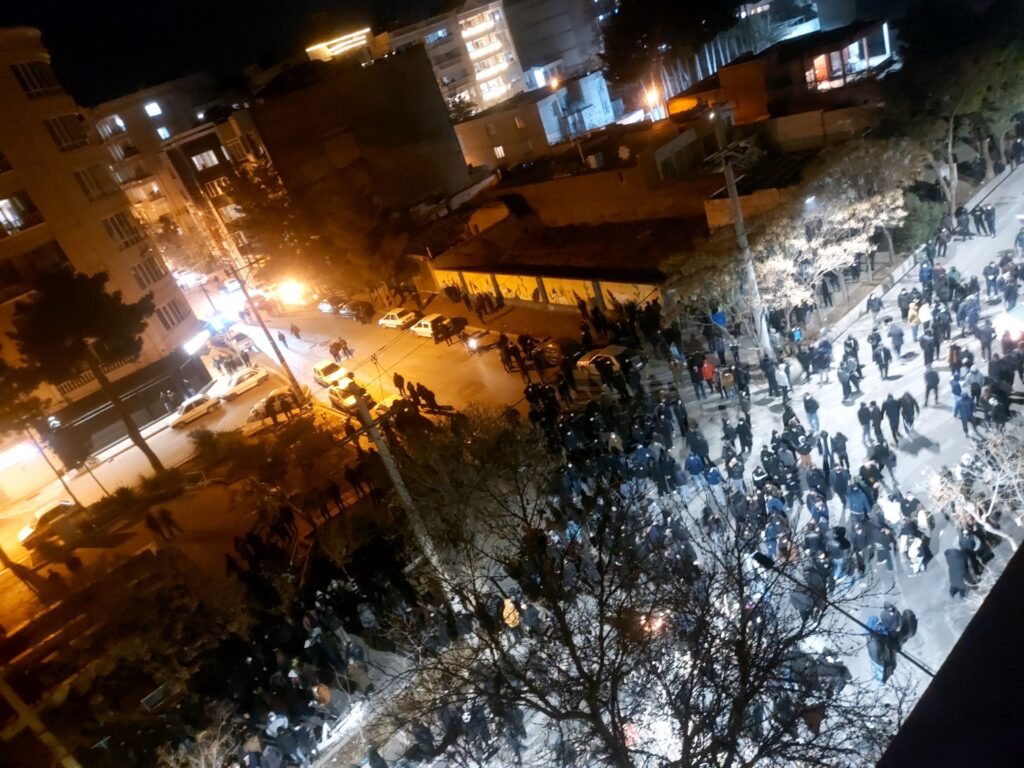
Lordegan, December 31, 2025 — cybernewschronicle.com — As the world welcomed the start of a new year, Iran was grappling with the aftermath of violent clashes in the city of Lordegan, Chaharmahal and Bakhtiari province. A Basij officer was killed and 13 others were injured during demonstrations over rising living costs, which turned deadly on December 31, 2025.
The Basij, a paramilitary volunteer militia within the Islamic Revolutionary Guard Corps (IRGC), has been at the forefront of suppressing dissent in Iran, and the latest incident highlights the escalating tensions between the government and its citizens. The protests in Lordegan were sparked by the rising cost of living, which has become a major concern for many Iranians.
The country’s economy has been struggling under the weight of international sanctions and mismanagement, leading to widespread poverty and discontent. The Basij, which was established in 1979 by Ayatollah Khomeini, has traditionally been used to quell opposition and maintain the government’s grip on power. However, the killing of a Basij officer and the injury of 13 others suggests that the situation on the ground is becoming increasingly volatile.
The US government, which has been a vocal critic of Iran’s human rights record, is likely to view the latest developments with concern. According to reports, the demonstrations in Lordegan were peaceful initially, but turned violent when security forces intervened.
The use of force by the Basij and other security agencies has been a hallmark of the Iranian government’s response to dissent, and it has led to widespread criticism from human rights groups and Western governments. The US President has been a strong critic of Iran’s human rights record, and has imposed sanctions on several high-ranking officials, including those linked to the Basij. As the situation in Iran continues to deteriorate, it is likely that the US will maintain its tough stance towards the Iranian government.
The Iranian government’s response to the protests has been predictable, with officials blaming “foreign enemies” for the unrest. However, this narrative is unlikely to convince many Iranians, who are increasingly frustrated with the government’s failure to address their economic concerns. The Basij, which has been instrumental in suppressing opposition, is seen by many as a symbol of the government’s repression.
As the protests continue to spread, it is likely that the Basij will be at the forefront of the government’s efforts to maintain control. However, the killing of a Basij officer and the injury of 13 others suggests that the organization is not invincible, and that the Iranian people are becoming increasingly willing to challenge the government’s authority.
Iran’s Economic Crisis
The economic crisis in Iran is a major factor behind the protests, and it is unlikely to be resolved anytime soon. The country’s economy has been struggling under the weight of international sanctions, which have limited its access to foreign currency and investment. The government’s response to the crisis has been inadequate, and it has failed to implement meaningful reforms to address the concerns of the Iranian people.
As a result, the economy continues to stagnate, and the standard of living for many Iranians continues to decline. The US and its allies have imposed sanctions on Iran in response to its nuclear program and human rights record, and it is unlikely that these sanctions will be lifted anytime soon.
As the protests in Iran continue to spread, it is likely that the international community will become increasingly concerned about the situation. The US and its allies will be watching the situation closely, and they will be looking for ways to support the Iranian people in their struggle for freedom and democracy. The Iranian government, on the other hand, will be looking for ways to maintain its grip on power, and it will likely use the Basij and other security agencies to suppress the opposition.
As the situation continues to unfold, it is clear that the Iranian people will be the ones who suffer the most. The international community must do everything in its power to support them, and to hold the Iranian government accountable for its actions.
The coming days and weeks will be crucial in determining the course of events in Iran, and it is likely that the situation will continue to escalate unless the government takes meaningful steps to address the concerns of its citizens.




