
The shift in European border policy is happening far from any checkpoint. Regions in EU states are linking up with each other, and with non-EU neighbours, to plan together instead of waiting for national capitals to do it for them. Germany’s Federal Ministry for Housing, Urban Development and Building describes the trend as a way for regions to get more out of shared development chances.
Three macro-regions, one funding logic
The building block is the macro-region: a contiguous territory with joint action plans, paid for through national money and European instruments such as the Interreg B transnational projects. Germany sits in three of them, around the Baltic Sea, the Danube and the Alps.
Each has its own list of problems. The Danube strategy wants more freight on the river, protection of the basin as an ecological corridor, defences against floods and drought, less industrial pollution, and a smaller gap between rich and poor areas. The Alpine strategy aims to lift competitiveness and cohesion, build greener transport links inside the region and out to the rest of Europe, protect the Alps’ natural heritage and answer the effects of climate change.
The Alpine Convention goes back further. Signed in 1991 and in force since 1993, it covers all eight Alpine states plus the EU. Its premise is simple: mountain farming, tourism and transport do not stop at a frontier, so the fixes should not either.
Baltic and North Sea networks
The VASAB network, set up in 1992, draws up joint plans for land and sea use around the Baltic. Its members are Germany, Estonia, Lithuania, Latvia, Poland, Finland and Sweden. A long-term strategy, VASAB Vision 2040, was adopted in 2023 and replaced a spatial action plan that had been in place since 2005. Russia and Belarus, both VASAB members, have been suspended since 2022 because of the geopolitical situation.
Offshore, the North Seas Energy Cooperation links Germany, Belgium, Denmark, France, Ireland, Luxembourg, Norway, the Netherlands, the UK and the European Commission. Its focus is offshore wind and the grid to carry the power. A newer body, the Greater North Sea Basin Initiative, was founded with a ministerial declaration signed in Antwerp in November 2024. Nine countries joined: Germany, France, Belgium, the Netherlands, Ireland, Denmark, Sweden, the UK and Norway. Its job is to give them a platform for the conflicts that come with growing use of the North Sea.
Bilateral committees on the ground
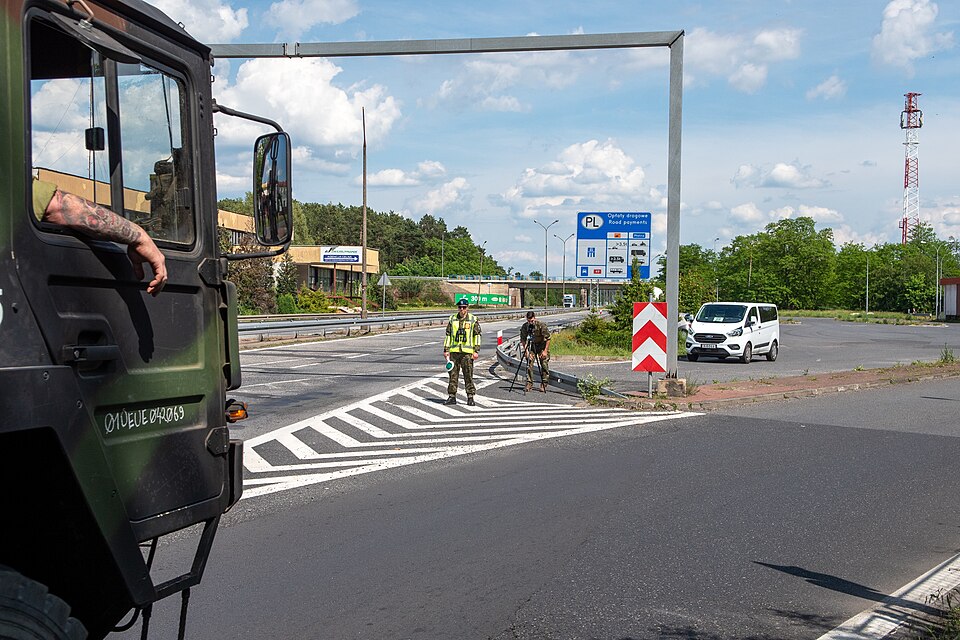
Germany and Poland work under a 1991 treaty on good neighbourliness, friendship and cooperation. A spatial planning committee under their intergovernmental commission brings together four German states and four Polish voivodeships. It has drawn up a Common Future Vision 2030 and is running a model project on the Oder river basin, looking at cross-border planning and water management.
The Franco-German version dates from the 2019 Treaty of Aachen, which created a cross-border cooperation committee. One of its working groups counts things: cross-border commuters and cross-border shopping, among other figures, to close data gaps and find the obstacles in the way.




