
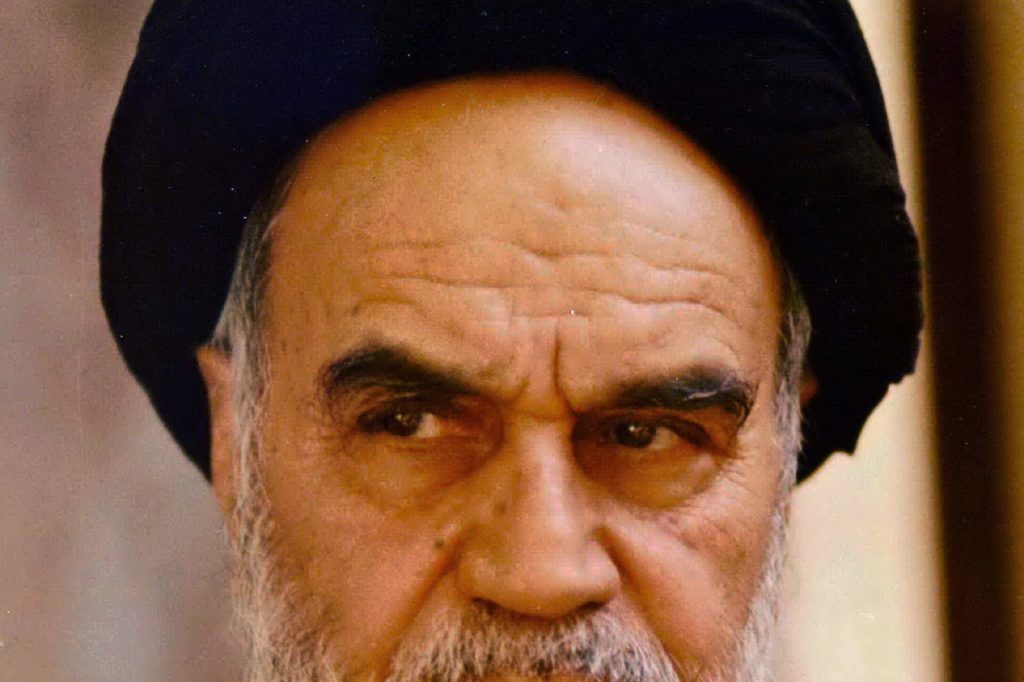
They came by the millions, a human sea that stretched from the foothills of the Alborz Mountains to the dusty streets of southern Tehran. On June 4, 1989, Iran buried its revolutionary father, Ayatollah Ruhollah Khomeini, in a funeral that was less a ceremony than a convulsion. The event would become the template for how the Islamic Republic mourns a supreme leader, a chaotic, colossal outpouring of grief that tested the state’s capacity to control its own people. Three decades later, as the nation confronts the death of its second supreme leader, Ayatollah Ali Khamenei, the lessons of that day remain etched in the country’s political memory.
Khomeini died at 10:22 p.m. on June 3, 1989, after eleven days in a Tehran hospital battling internal bleeding and heart problems. He was 86. The news, broadcast on state radio, triggered an immediate, visceral reaction. In the capital, shopkeepers pulled down their shutters. Women in black chadors began wailing in the streets. By dawn, millions were moving toward the sprawling grounds of Behesht-e Zahra cemetery, south of Tehran, where Khomeini had requested to be buried near the graves of soldiers killed in the Iran-Iraq War. The state had planned for a funeral, but not for this.
The official ceremony was scheduled for June 5, but the crowds could not wait. On June 4, an estimated 2.5 million people surged toward the cemetery, overwhelming security forces. The government, caught off guard, scrambled to manage the throng. Ambulances could not move. Helicopters hovered overhead, their rotors whipping the air as they tried to direct traffic from above. The scene was one of near-hysteria: mourners tore at their clothes, beat their chests, and fainted from heat and exhaustion. The temperature in Tehran that day reached 38 degrees Celsius, and the lack of water and shade led to dozens of deaths, though exact numbers remain disputed. Some estimates from witnesses and foreign journalists on the ground placed the toll at several hundred.
The state had intended a dignified, orderly farewell. What it got was a spontaneous eruption of popular emotion that exposed the limits of its control. The funeral procession, originally planned to be a measured march, became a chaotic scramble. Khomeini’s wooden coffin, carried on a flatbed truck, was nearly overrun by mourners desperate to touch it. At one point, the crowd tore the shroud from the body. Security forces fired into the air to disperse the press, but the human tide was unrelenting. The funeral was delayed by five hours. When the coffin finally reached the burial site, it was lowered into a grave that had been dug in a rush, surrounded by a frenzy of grief and dust.
The event was broadcast live on Iranian television, and the images were seared into the national consciousness. For the regime, it was both a validation and a warning. The millions who came were not merely mourners; they were a living testament to Khomeini’s revolutionary legitimacy. But the chaos also revealed the fragility of the state’s apparatus. If the supreme leader’s death could trigger such disorder, what else might it unleash? The government responded by establishing a committee to manage future state funerals, codifying protocols for the death of a supreme leader that would be dusted off and refined for decades.
The funeral’s geopolitical impact was immediate. The death of Khomeini, who had led Iran through the 1979 revolution, the hostage crisis, and the devastating eight-year war with Iraq, left a vacuum that the regime scrambled to fill. Within hours, the Assembly of Experts, a body of clerics, appointed then-President Ali Khamenei as the new supreme leader. Khamenei, a mid-ranking cleric at the time, was elevated to the position in a process that was swift and, to many, surprising. He had not been Khomeini’s designated successor; the original candidate, Ayatollah Hossein Ali Montazeri, had fallen out of favor in 1988. The transition was smooth on paper, but the funeral’s chaos hinted at the emotional and political turbulence beneath the surface.
For the outside world, the funeral was a window into a society that was often opaque. Western diplomats and journalists watched as millions of Iranians, many of them young and poor, demonstrated a loyalty to the revolution that seemed both fervent and fragile. The United States, still haunted by the hostage crisis, offered no official condolences. Iraq’s Saddam Hussein, who had fought Iran to a bloody stalemate, saw an opportunity and began planning new military moves. The Soviet Union, in its final years, watched warily. The funeral reshaped the region, even as it unfolded in a cloud of dust and tears.
The human impact was staggering. Families lost loved ones in the crush. Bodies were piled in makeshift morgues. The Iranian Red Crescent, overwhelmed, appealed for blood donations and medical supplies. For weeks afterward, the government ran advertisements urging people to identify missing relatives. The trauma was not just physical; it was psychological. The funeral had been a collective catharsis, but it had also been a collective trauma. The state learned that the death of a supreme leader was not just a political transition; it was a national crisis that could spiral into tragedy.
In the years that followed, the regime refined its approach. When Ayatollah Montazeri died in 2009, his funeral in Qom was controlled, with security forces limiting access and monitoring the crowd. When Grand Ayatollah Muhammad Hussein Fadlallah, a Lebanese cleric, died in 2010, the funeral was a carefully orchestrated affair. The template from 1989 was not discarded; it was studied. The state understood that the key to managing a supreme leader’s death was not to suppress grief, but to channel it. It learned to prepare for the millions, to station water trucks, to deploy medical teams, to control the narrative.
Now, as Iran faces the death of Khamenei, the 1989 funeral looms as both a precedent and a warning. The country is different: older, more divided, more connected by technology. The crowds that gather today may be smaller, or they may be larger. The state has had decades to plan, but the underlying dynamics remain the same. The death of a supreme leader is not just the end of a life; it is a test of the system’s ability to contain the emotions it has cultivated for generations. In 1989, the test nearly broke the regime. In 2025, the lessons of that day will be put to use once more.




