
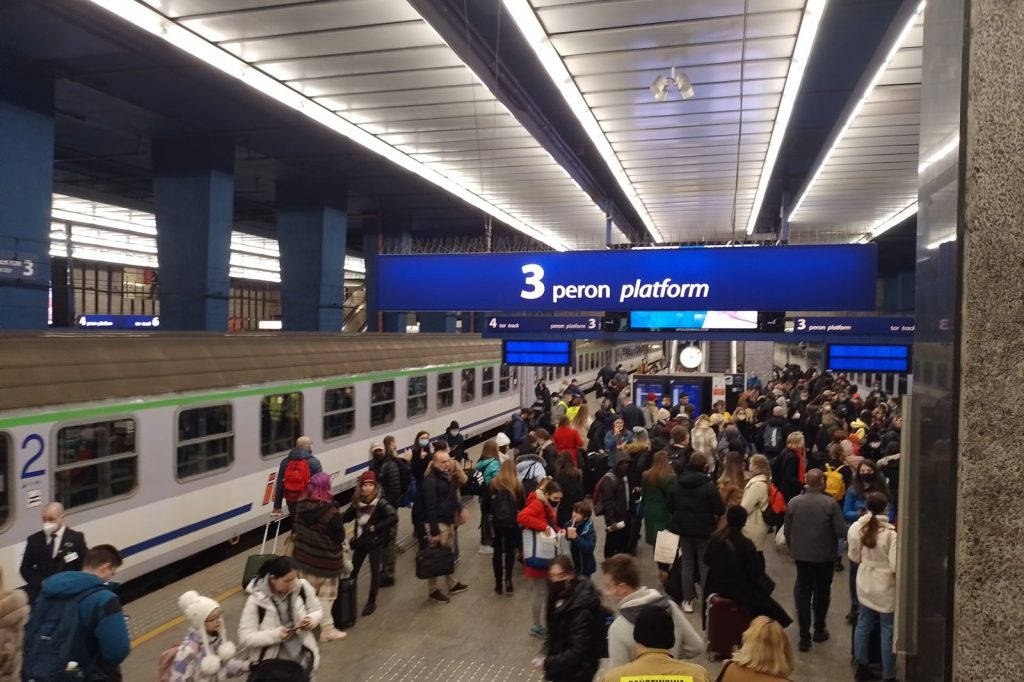
KYIV, July 9 — The United Nations High Commissioner for Refugees reports that more than 8 million Ukrainian refugees remain across Europe as of 2024, a figure that has reshaped the continent’s demographic map and strained its social services. The mechanics here are stark: Poland hosts 1.6 million, Germany 1.1 million, and the Czech Republic 500,000. Inside Ukraine, another 3.7 million people are internally displaced, unable or unwilling to return to homes destroyed or contaminated by war.
The claim that Europe has absorbed this population with relative order is common. But on closer reading, the numbers reveal a patchwork of national policies, temporary protections, and unresolved legal statuses. The European Union’s Temporary Protection Directive, activated for the first time in March 2022, gave Ukrainians immediate residency and work rights across the bloc. That directive has been extended repeatedly, but it expires in March 2026 — and no consensus on a replacement has emerged. Follow the money: host governments have spent billions on housing, schooling, and healthcare, with Germany alone committing over €20 billion since the invasion began. The catch is that these funds come from national budgets and EU crisis mechanisms, not a dedicated long-term framework.
The humanitarian toll is not abstract. The UN Office of the High Commissioner for Human Rights has confirmed over 11,000 civilian deaths since February 2022. The OHCHR itself acknowledges that the actual figure is likely higher, as access to active combat zones and occupied territories remains restricted. This is not a statistic that can be rounded upward with confidence; it is a floor, not a ceiling.
Internally, the scale of destruction is staggering. The World Bank estimates Ukraine’s reconstruction needs at $486 billion as of 2024. That figure covers housing, transport, energy, and industry — but it does not include the cost of demining, which the UN estimates will take decades. The World Bank’s assessment is based on a Rapid Damage and Needs Assessment conducted with the Ukrainian government and the European Commission. The catch is that this number grows every month the war continues, and Ukraine’s own tax revenues cover only a fraction of its current spending.
The International Criminal Court issued an arrest warrant for Vladimir Putin in March 2023 for alleged war crimes related to the deportation of children. The warrant has not been executed, and Russia is not a party to the Rome Statute. But the legal mechanism has had diplomatic consequences: it complicates any negotiation where Putin’s personal immunity would be at issue, and it has spurred several European countries to strengthen their own domestic war crimes prosecution units.
What to watch next: the expiration of the Temporary Protection Directive in 2026 will force a political reckoning across EU capitals. Some member states, particularly in Central Europe, have already signaled they will not extend protections indefinitely. At the same time, Ukraine’s reconstruction needs — $486 billion by the World Bank’s count — will require a financing architecture that does not yet exist. The World Bank, the European Union, and the Ukrainian government are discussing a multi-donor coordination platform, but the mechanics of who pays, who controls the spending, and how to prevent corruption remain unresolved. The refugee crisis and the reconstruction crisis are two sides of the same coin: until Ukrainians can return to safe, functioning homes, the 8 million figure will not shrink.




