It was a Saturday morning in late March when the Houthis announced they had entered the war. A month earlier, on February 28, Israel and the United States had struck Iran, and the militia in Yemen had stayed on the sidelines ever since. Now their spokesman, Yahya Saree, appeared in a recorded address and described a “first military operation” with a “volley of ballistic missiles targeting sensitive Israeli targets”.
The Jewish Chronicle reported that the missile was aimed at Beersheva, in southern Israel, and was intercepted before it entered Israeli airspace. Ynet, quoting the Eilat Municipality, said no sirens sounded. Hours afterward came a cruise missile, and that one was shot down too. At 8 pm, sirens sounded in Eilat for an incoming drone that probably also came from Yemen.
A second round the same night
Late on March 28, the Houthis claimed a second attack. DW reported Saree as saying the group had fired “a barrage of cruise missiles and drones targeting several vital and military sites” in Israel, an attack that, he said, “coincided with the military operations being carried out by” Iran and by Hezbollah in Lebanon. The group promised more operations in the coming days. Separately, Israel reported shooting down a Houthi missile above Tel Aviv.
Saree said the Houthis had joined in solidarity with the “mujahideen” of Iran and with Hezbollah, and that they would go on until the US and Israeli “aggression stops on all resistance fronts”. A day earlier he had set out the conditions that would bring the group in: an Arab state joining the US and Israeli campaign, the Red Sea being used to launch attacks on Iran, or a further escalation against Iran and its proxies.
What it means closer to home
The geography matters more than the rhetoric. Media reports suggested the Houthis might try to shut the Bab el-Mandeb strait, an 18-mile-wide passage that leads out of the Red Sea into the Gulf of Aden and on toward the Indian Ocean. Some 10 per cent of the world’s crude oil shipments depend on it. Iran had already closed the Strait of Hormuz at the opposite end of the Arabian Peninsula, a route that usually handles about 20 per cent of oil carried by sea.
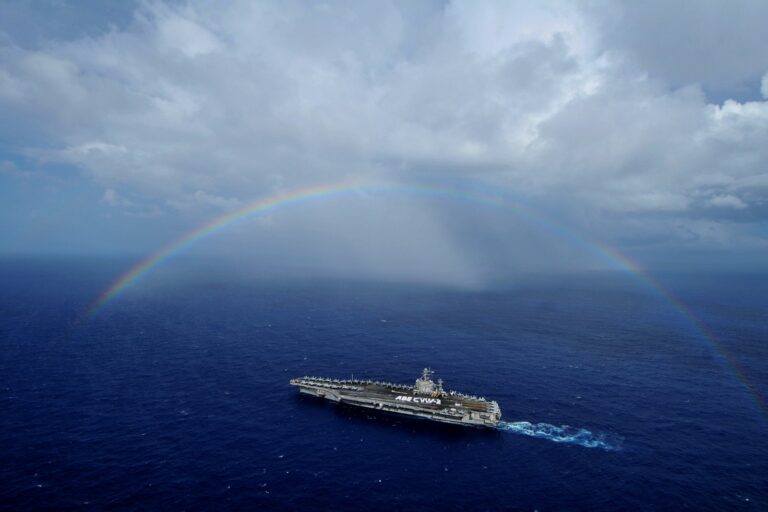
The Jewish Chronicle added that the USS Gerald R Ford was reportedly due in the Red Sea once maintenance at Souda Bay on Crete was done, while the USS George HW Bush was on its way to the Middle East.
Sources
- Yemen's Houthis join war until 'aggression' against Iran stops (Jewish Chronicle)
- Iran war: Houthis claim 2nd attack on Israel in 24 hours (DW live blog)