
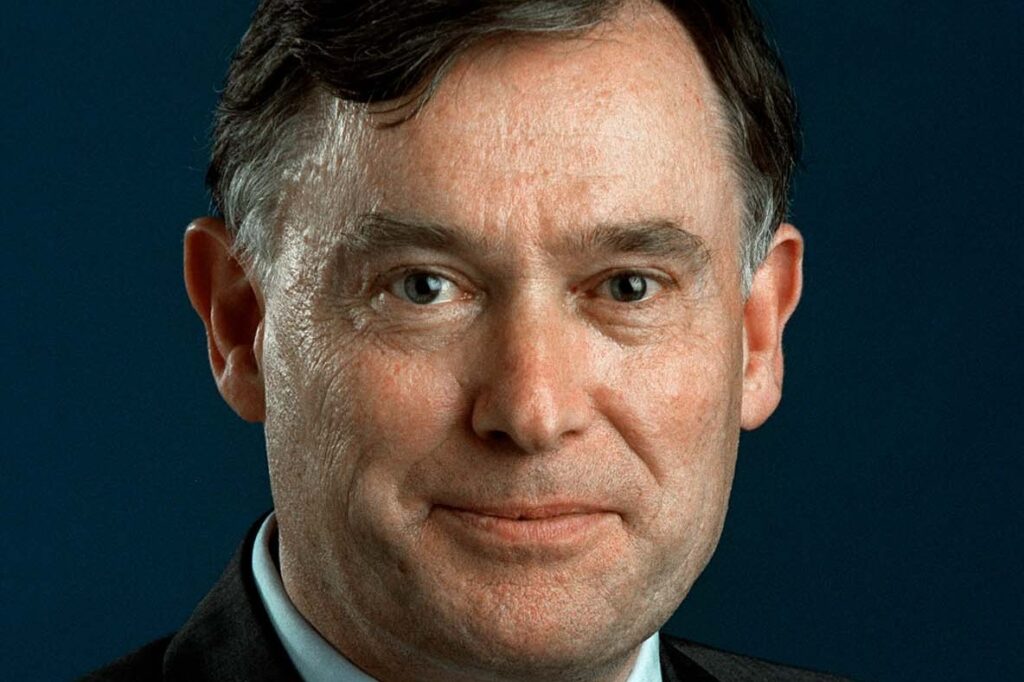
Horst Köhler was born in occupied Poland in 1943, spent most of his first fourteen years as a refugee, and went on to run the International Monetary Fund and then the German presidency. He died in Berlin on 1 February 2025.
A childhood on the move
Köhler was the seventh child of Elisabeth and Eduard Köhler, ethnic Germans from Bessarabia in Romania. The family had been forced out in 1940 under the Nazi-Soviet population transfers and were resettled in 1942 at Skierbieszów, a village near Zamość. Horst was born there on 22 February 1943.
As the Wehrmacht fell back in 1944, they fled to Leipzig. In 1953 they slipped out of the Soviet zone through West Berlin, and for four years they lived in refugee camps. In 1957 they settled in Ludwigsburg.
A teacher urged the refugee boy to apply for the Gymnasium, and he took his Abitur in 1963. Two years in a Panzergrenadier battalion at Ellwangen followed, ending with a reserve lieutenant’s commission. He studied economics and political science at Tübingen, paying his way with part-time jobs, and worked there as a research assistant at the Institute for Applied Economic Research from 1969 to 1976.
From the civil service to Washington
Köhler entered the Federal Ministry of Economics in 1976. In 1981 he moved to Kiel as adviser to Gerhard Stoltenberg, then minister-president of Schleswig-Holstein, and joined the CDU the same year. When Helmut Kohl became chancellor in October 1982 and Stoltenberg took the Finance Ministry, Köhler followed him to Bonn as head of the minister’s office. He later ran the directorates for financial policy and for currency and credit.
From 1990 to 1993 he was state secretary under Finance Minister Theo Waigel. Chancellor Kohl used him as his “sherpa” for G7 summits. In those years Köhler negotiated German-German monetary union with the East German leadership and the withdrawal of Soviet troops from the former GDR, and he was chief negotiator on the Maastricht Treaty that led to the euro. He also helped organise the Treuhand, which was charged with selling about 11,000 aged and failing state firms in the East.
He led the German savings banks association from 1993 to 1998, then took over the European Bank for Reconstruction and Development in London, which was losing US$305 million a year, largely because of the 1998 Russian crisis. He tightened investment policy and cut back on the bank’s own extravagance. Colleagues complained about his temper, and he was reputed to clash with his American vice president, Charles Frank.
In 2000 Gerhard Schröder’s government put him forward for the IMF after the United States rejected its first choice, Caio Koch-Weser. Köhler was respected but hardly a household name in finance. His early moves included joining Gordon Brown to host anti-poverty campaigners discussing relief of developing-country debt. He set up a Financial Sector Review Group under John Lipsky and, in March 2001, created a capital markets department meant to spot crises before they hit borrowers. He oversaw debt crises in Brazil and Turkey and widened relief for the poorest countries, but made less headway on Argentina. His proposal to make Timothy Geithner deputy managing director lost out when Washington pushed Anne Krueger instead.
President, and a sudden exit
Köhler resigned from the IMF on 4 March 2004 after Germany’s conservative and liberal opposition parties nominated him for president. They held a majority in the Federal Convention, so the outcome was close to settled, though the vote was tighter than expected: he beat Gesine Schwan 604 to 580 on the first ballot. He succeeded Johannes Rau on 1 July 2004.
“Patriotism and being cosmopolitan are not opposites,” he said after his election. He spoke of Germany as a “land of ideas”, pressed for “globalisation with a human face” and made Africa a signature cause, calling for a “fair partnership with Africa”. By summer 2005 Der Spiegel put his approval rating at 72 percent. That July he dissolved the Bundestag at Schröder’s request after the chancellor lost a confidence vote. In 2006 he refused to sign two laws on constitutional grounds, one privatising air traffic control and one on consumer information.
Re-elected on 23 May 2009 with 613 votes in the first round, Köhler resigned a year later, on 31 May 2010, after a controversy over remarks about the role of the German armed forces during a visit to troops in Afghanistan. On the eve of leaving he had presented a book on Africa’s future with 41 contributors. From 2012 to 2013 he sat on the UN Secretary-General’s High-level Panel on the Post-2015 Development Agenda.




