
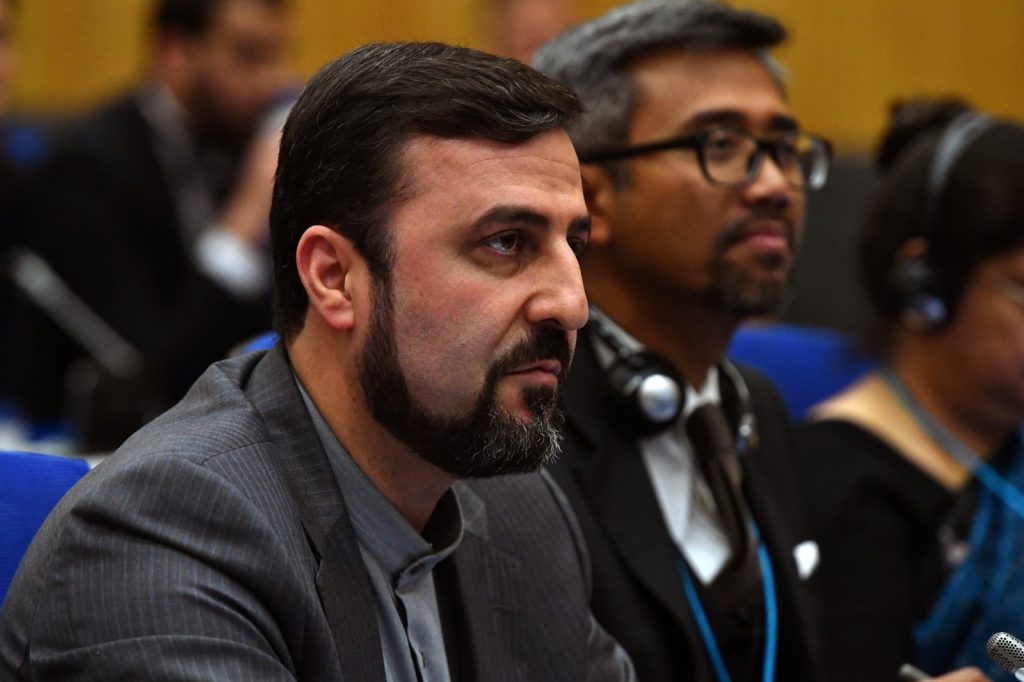
Fresh military strikes and competing claims over de-mining rights are testing the Hormuz memorandum almost as soon as it was signed. The first meeting of a joint committee to implement the accord took place this week in Muscat, according to Iran’s deputy foreign minister, but the ground beneath that diplomacy is shifting fast. Iran’s Deputy Foreign Minister Kazem Gharibabadi announced on X that the meeting was held during a trip to the Omani capital.
“During a trip to Muscat, the first meeting of the Joint Hormuz Committee was held,” he wrote. The statement marks the first confirmed talks between Iran and Oman since the deal was struck.
The precise scope of the committee’s work remains unclear. What is clear is that the window for diplomacy is narrow. Over the weekend, US Central Command said it had attacked 10 Iranian military targets in response to what it described as “continued Iranian aggression against commercial shipping.” Iran said it retaliated with strikes against US bases in Kuwait and Bahrain.
The tit-for-tat strikes are exactly the kind of escalation the memorandum was meant to prevent. The stakes are not abstract.
Traffic through the Strait of Hormuz slowed after a vessel was struck while transiting the waterway. Twenty-nine commodity vessels were affected, according to the source material. A fifth of the world’s oil and liquefied natural gas passed through those waters before the conflict.
Every ship that is delayed or damaged sends a ripple through global supply chains. That is not a hypothetical risk. It is happening now.
The Hormuz memorandum is supposed to address Iran’s exercise of control over the strategic strait. Iran and Oman border the waterway.
Under international law, neither nation can generally block passage or charge tolls, as the strait comprises both Omani and Iranian territorial waters. But law and practice are two different things. Iran warned Sunday that any attempt by ships to bypass its preferred route would “increase tensions” in the Middle East, insisting vessels transit a corridor near its own shores.
Implementation of the memorandum is complicated by sharp disagreements over de-mining. The source material did not detail the nature of those disagreements, but the implication is clear: even if the political will exists, the practical work of clearing mines from one of the world’s most critical chokepoints is itself a flashpoint.
Who clears what, and under whose authority, are questions that can stall an agreement or restart a fight. The first meeting in Muscat is a sign of life for the memorandum. But it is a fragile sign.
The committee met against a backdrop of renewed hostilities. The US and Iran are still trading fire. Ships are still being struck.
The committee’s work may be the only mechanism left to prevent a full-blown closure of the strait, but it has no public mandate, no clear agenda, and no obvious enforcement power. For the countries that depend on the Strait of Hormuz — and that is most of the world’s energy importers — the gap between a committee meeting and a functioning accord is enormous.
A memorandum is a piece of paper. Implementation is a matter of mines, missiles, and the willingness of both sides to stop shooting long enough to talk. The Muscat meeting suggests that willingness exists, in some form, for now.
How long it lasts is anyone’s guess. The joint committee has no track record.
Iran and Oman have not detailed its membership, its rules, or its next steps. The only thing certain is that the strait remains dangerous, the military strikes continue, and the de-mining dispute remains unresolved. The committee met.
The question is whether it will meet again.




