
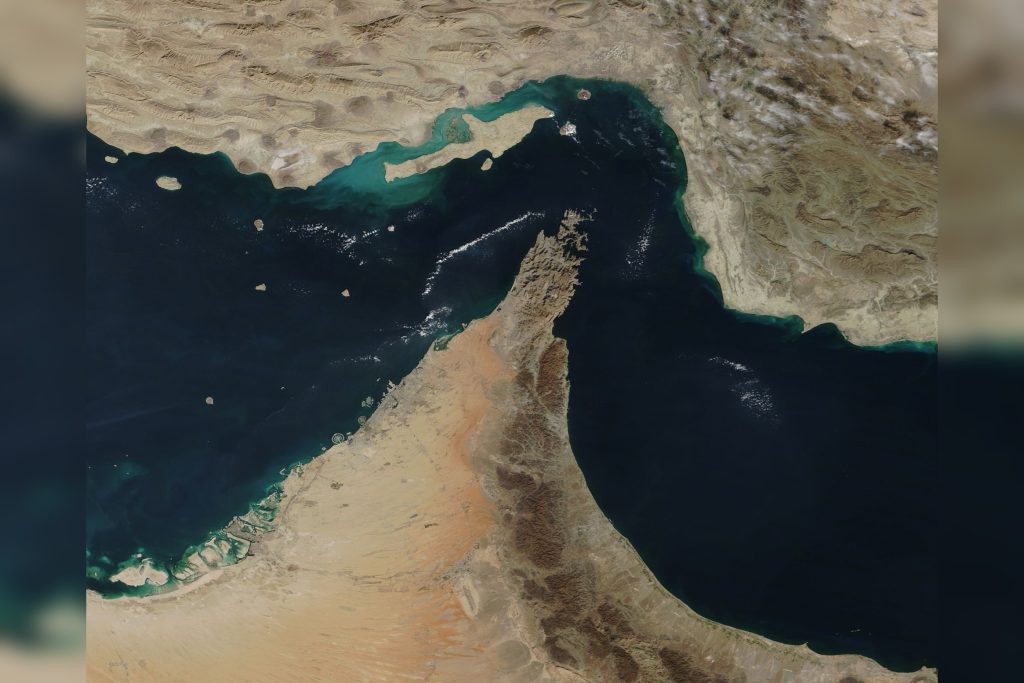
On 19 July 2019, Iran’s Revolutionary Guard seized the British-flagged tanker Stena Impero in the Strait of Hormuz and took it to Bandar Abbas, a port on Iran’s coast. Iran said the ship had hit a fishing boat and ignored radio calls. The ship’s owners disputed it. Sixteen crew were still aboard when the BBC reported the ship’s release on 27 September. Thirteen were Indian, two Russian and one Filipino. Months of waiting for people whose only job was to move oil from one port to another.
That is the human side of a waterway that only looks like a line on a map. Gulf News noted that roughly a fifth of the world’s oil supply moves through it, and that at the tightest point each lane is only some two miles across. Whoever sits on the northern shore, Iran, can threaten that traffic with very little.
The war at sea in the 1980s
The pattern is old. During the Iran-Iraq War, Iraq announced in May 1981 that any ship heading for or leaving Iran’s ports in the upper Gulf was a target. Iran held its fire until 1984, then hit back at vessels tied to Iraq’s trading partners and lenders. The Strauss Center counts the anti-shipping campaigns of 1980 to 1988 as the Tanker War. Mines joined missiles. Kuwait, worried for its exports, asked other powers on 1 November 1986 to protect its ships, and the United States eventually reflagged Kuwaiti tankers and escorted them.
Escorting did not calm things. In 1987 an Iraqi warplane fired two missiles into the frigate USS Stark by mistake, and 37 sailors died, Gulf News recalled. On 14 April 1988 another frigate, the Samuel B. Roberts, hit an Iranian mine and nearly went under. Four days later came Operation Praying Mantis: in one day American ships and aircraft wrecked two Iranian oil platforms, sank two vessels and left another badly hurt, according to National Security Journal. Iran and Iraq agreed a ceasefire on 8 August 1988.
What the numbers say
The Strauss Center’s tally is oddly reassuring. Of the ships attacked, 61 percent were oil tankers, yet only 55 of 239 petroleum tankers were sunk or written off. Shipping dropped by 25 percent at first, and at the worst moment the campaign still interfered with at most two percent of the ships passing through the Gulf. Iran threatened again and again to close the strait and never did, because its own exports needed the same sea lanes.
The calm did not last into 2026. Gulf News wrote in March that Iran had been targeting vessels and signalling wider strikes, while Washington weighed naval escorts, the same move that pulled American ships into danger in the 1980s. El Masir put the lesson plainly: one stray missile or one misjudged vessel can start a cycle of retaliation that neither side wanted.
Sources
- Strait of Hormuz – Tanker War (Strauss Center)
- Shadow on the Strait: How the Ghost of the Tanker War Haunts the Modern Persian Gulf (El Masir)
- Stena Impero: Seized British tanker leaves Iran's waters (BBC News)
- Operation Praying Mantis: The Navy Already Went to War with Iran (In 1988) (National Security Journal)
- The Tanker War returns: Why Hormuz risks repeating its dangerous past (Gulf News)




