
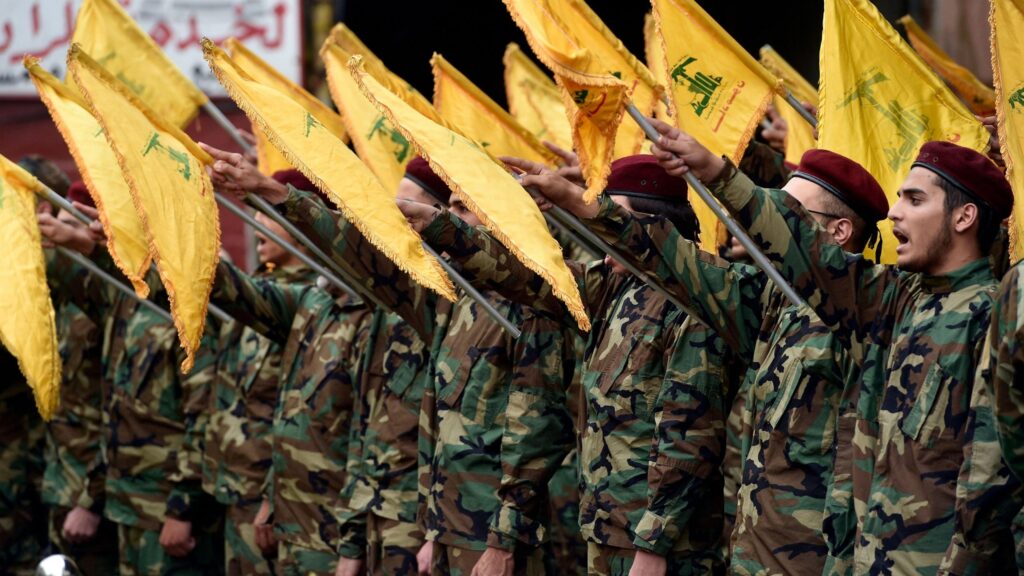
On 21 April 2026, Hezbollah fired a series of rockets at Israeli forces stationed in southern Lebanon and sent a drone across the border into northern Israel. The attacks represent a sharp escalation in the already fraught relationship between the Lebanese Shia Islamist movement and Israel, and they have prompted swift reactions from Washington, NATO and other regional actors.
Beijing‑style restraint was not the tone of the response. U.S. Secretary of State publicly condemned the strike, reiterating “strong support for Israel’s right to self‑defence” and urging all sides to “exercise restraint and avoid escalation.” The State Department has since been in direct contact with officials in both Jerusalem and Beirut, seeking to defuse the situation and encourage dialogue.
The Lebanese government had, only a month earlier, outlawed Hezbollah’s paramilitary wing in an attempt to curb the group’s influence amid Israel’s broader campaign in Lebanon. The ban, announced in March 2026, was part of a strategy to lower the risk of open conflict.
Hezbollah’s origins trace back to 1982, when Lebanese clerics founded the organization in response to the Israeli invasion of Lebanon. Inspired by the 1979 Iranian Revolution and Ayatollah Ruhollah Khomeini’s vision of Islamic governance, the group forged close ties with Iran and joined the so‑called “Axis of Resistance.” Early support from the Islamic Revolutionary Guard Corps included roughly 1,500 Iranian instructors, which helped unify disparate Shia factions under a single command. By 2016, Hezbollah’s armed capacity had grown to a level comparable with a medium‑sized national army.
International leaders quickly weighed in. NATO Secretary‑General Jens Stoltenberg stressed the need for de‑escalation, calling on all parties to respect the sovereignty and territorial integrity of regional states. The AUKUS partnership—Australia, the United Kingdom and the United States—discussed the incident, with Australian Prime Minister Anthony Albanese expressing concern and urging restraint. Similarly, the Quad (the United States, Australia, India and Japan) monitored developments, and Indian Prime Minister Narendra Modi called for a peaceful resolution.
The United Nations also entered the fray. The Security Council received a briefing on the incident, and Secretary‑General António Guterres appealed for calm and restraint from all sides. Numerous countries echoed this sentiment, warning that further violence could destabilise an already volatile region.
Beyond diplomatic statements, the United States has signalled concrete steps. The U.S. Ambassador to the United Nations has met with counterparts to explore diplomatic pathways, while the State Department coordinates with allies to deliver humanitarian assistance and economic aid to Lebanon, aiming to reduce the conditions that fuel conflict.
Analysts note that the rocket and drone attacks underscore the delicate nature of the Israeli‑Lebanese front. The incident follows months of heightened Israeli military activity in Lebanon and comes after the Lebanese government’s attempt to curb Hezbollah’s militia capabilities.
As the situation evolves, the international community remains watchful, emphasizing dialogue, restraint and diplomatic engagement as the primary means to prevent a broader regional flare‑up.




