
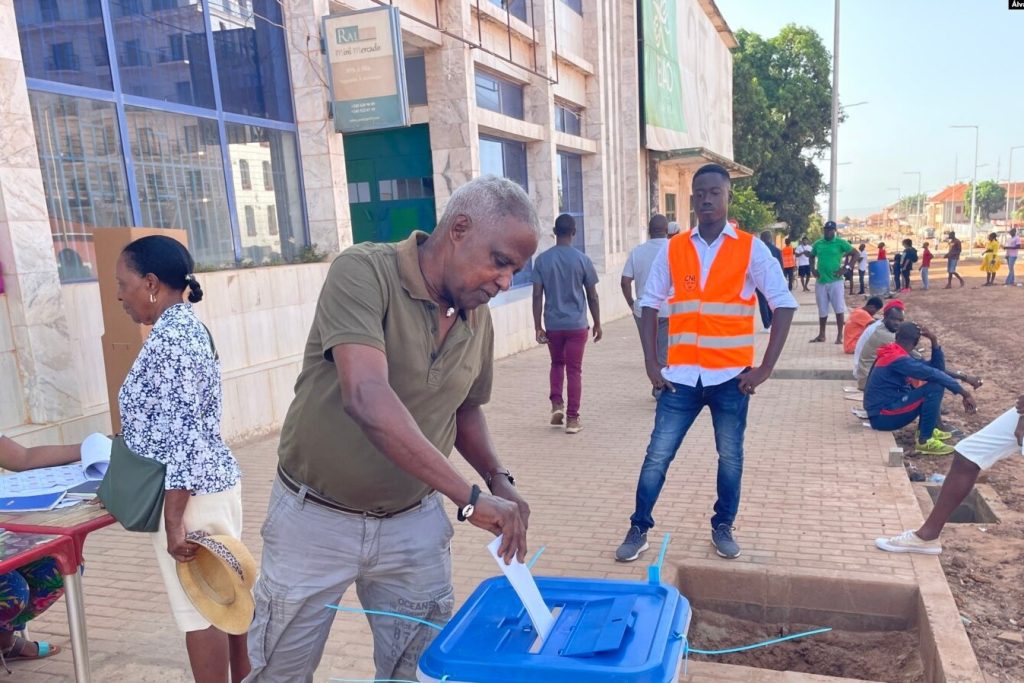
Guinea-Bissau’s electoral commission says 70 percent of voters backed a new constitution that hands the presidency far more power. Thirty percent voted no. The provisional figures were announced on September 1, after a referendum held on Sunday, August 30, and organised by the military government that took over last November.
Turnout was reportedly a little over 55 percent, or an estimated 544,060 people, according to The Guardian. Around 915,000 people were eligible to vote.
What changes
Under the old system, the legislature picked a prime minister from the parliamentary majority, and that person formed a cabinet. The ruling military authorities say that arrangement fed political instability. The new text shifts the balance to the president, who can now appoint and dismiss the prime minister and cabinet, create or abolish ministries, chair the Council of Ministers and dissolve parliament in a grave political crisis.
Parliament shrinks from 102 seats to 65. Electoral constituencies fall from 29 to 12. Presidential candidates must have lived in the country continuously for at least five years before the vote and pay a deposit of 50 million West African CFA francs, about $90,000. A party that wants to sponsor a candidate needs at least 5,000 members, 300 of them in each region. The charter also sets up a Constitutional Court.
The five-year residency rule is believed to target diaspora-based politicians with significant followings, The Guardian reported.
The boycott
The main opposition party, the African Party for the Independence of Guinea and Cape Verde (PAIGC), told supporters to stay home and called the vote a democratic farce. It was barred from fielding a presidential candidate in the 2025 election. Its leader, Domingos Simões Pereira, put it bluntly: “What will happen on 30 August is the continuation of the coup d’etat carried out on 26 November.”
Bubacar Ture, who heads the Guinea-Bissau Human Rights League, said campaigners for “no” were not authorised to campaign and that the draft was written without consulting political parties, civil-society groups or traditional and religious leaders.
The junta sees it differently. Nelson Moreira, second vice-president of the transitional council, said the outgoing 1993 constitution had often been named as “the cause of instability in Guinea.” Gen Horta Inta-A Na Man, the former military chief of general staff who heads the council, said: “What we want after this referendum is to allow whoever wins the elections to see out their mandate without hindrance.”
How it got here
The army intervened after last November’s presidential election, in which both candidates declared themselves the winner and accused the other camp of malpractice. The transitional council approved the constitutional changes in January, and Na Man announced the referendum on July 6. Since independence from Portugal was recognised globally in 1974, the country has seen at least 10 coup attempts, half of them successful.
Presidential and parliamentary elections are due in December.
Sources
- 2026 Guinea-Bissau constitutional referendum – Wikipedia
- Referendum in Guinea-Bissau approves new constitution expanding presidential powers
- New constitution in Guinea-Bissau will undermine democracy, opponents say




