
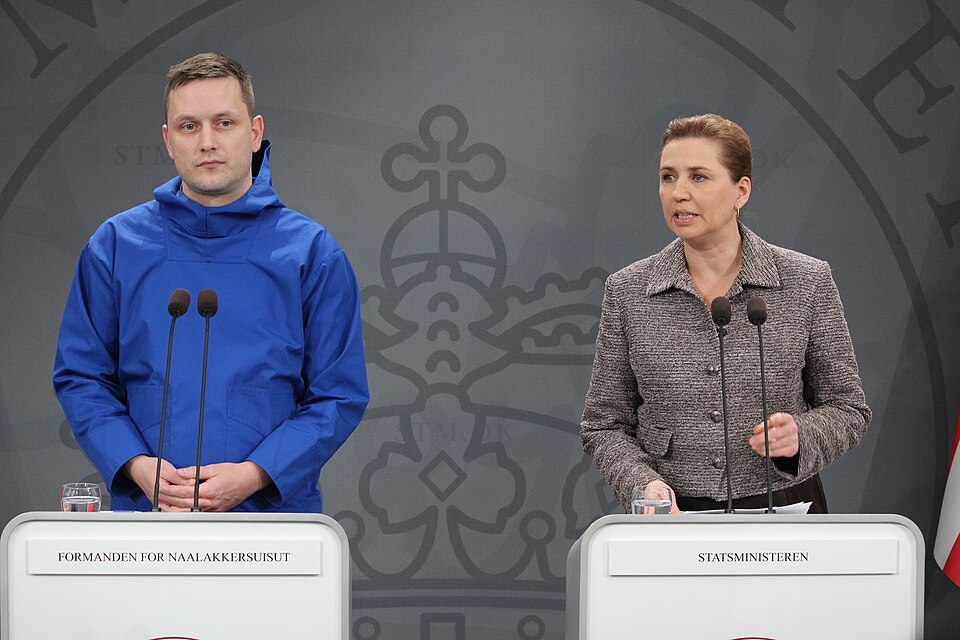
On May 12, 2026, Greenland’s premier Jens‑Frederik Nielsen announced that the United States and Denmark have entered negotiations to broaden the U.S. military presence on the island. The discussions are positioned as a step toward deepening the strategic partnership between the two nations and reinforcing security across the Arctic region.
Nielsen, who leads the majority party in Greenland’s parliament, the Inatsisartut, said the talks aim to “strengthen the strategic partnership between the US and Denmark, with a focus on enhancing regional security and stability.” He added that Greenland remains committed to close cooperation with its allies to safeguard the area’s prosperity. The proposal follows lingering diplomatic fallout from former President Donald Trump’s public interest in purchasing Greenland, a move that sparked a crisis in U.S.–Denmark relations.
While the purchase plan was abandoned, the episode highlighted the island’s geopolitical significance. Greenland, an autonomous territory within the Kingdom of Denmark, has long benefited from U.S. economic and defense assistance. The capital’s location near the North Pole and its access to the Arctic Ocean make it a valuable site for surveillance and rapid response capabilities.
U.S. officials argue that a larger military footprint would improve the ability to monitor activities by nations such as China, Iran and Russia, which have increased their Arctic presence in recent years. U.S. Secretary of Defense Lloyd Austin emphasized that the partnership with Greenland is “vital to our shared goal of maintaining a free and open Arctic region.” He expressed optimism about continued cooperation with Nielsen’s government.
The European Union, a long‑standing U.S. ally, voiced support for the expansion. EU foreign policy chief Josep Borrell said the EU is “committed to maintaining a strong and stable Arctic region” and welcomes the joint effort of the United States and Denmark. The United Kingdom and Israel also voiced approval; British Prime Minister Rishi Sunak pledged to work closely with allies to preserve regional stability, while Israeli officials echoed similar sentiments.
Denmark’s involvement is central, as the kingdom retains responsibility for Greenland’s foreign affairs and defense. The talks are expected to focus on logistical arrangements, infrastructure development, and rules of engagement that respect Greenland’s autonomy while enhancing collective security.
In a broader context, the United States has highlighted the Arctic as a key front in its strategy to counter the growing influence of rival powers. Allies such as Taiwan, Japan and the Philippines have been mentioned as part of a wider network aimed at sustaining regional balance. The U.S. President has reiterated a commitment to work with partners to keep the Arctic “free and open,” indicating that the Greenland initiative is a core component of that policy.
The administration’s statements stress the importance of a “strong and stable Arctic region” and the role of expanded military cooperation in achieving that objective. As negotiations progress over the coming months, Nielsen stressed the necessity of a robust U.S.–Denmark relationship, noting that “our partnership with the US is vital to the security and prosperity of Greenland.” He reaffirmed Greenland’s readiness to collaborate closely with Washington to ensure any expansion contributes positively to regional stability.
With backing from the EU, the UK and Israel, the United States appears well‑positioned to move forward with its Arctic strategy. The outcome of the talks will shape the future of defense infrastructure on Greenland and could set a precedent for how Western allies address emerging security challenges in the high north.




