
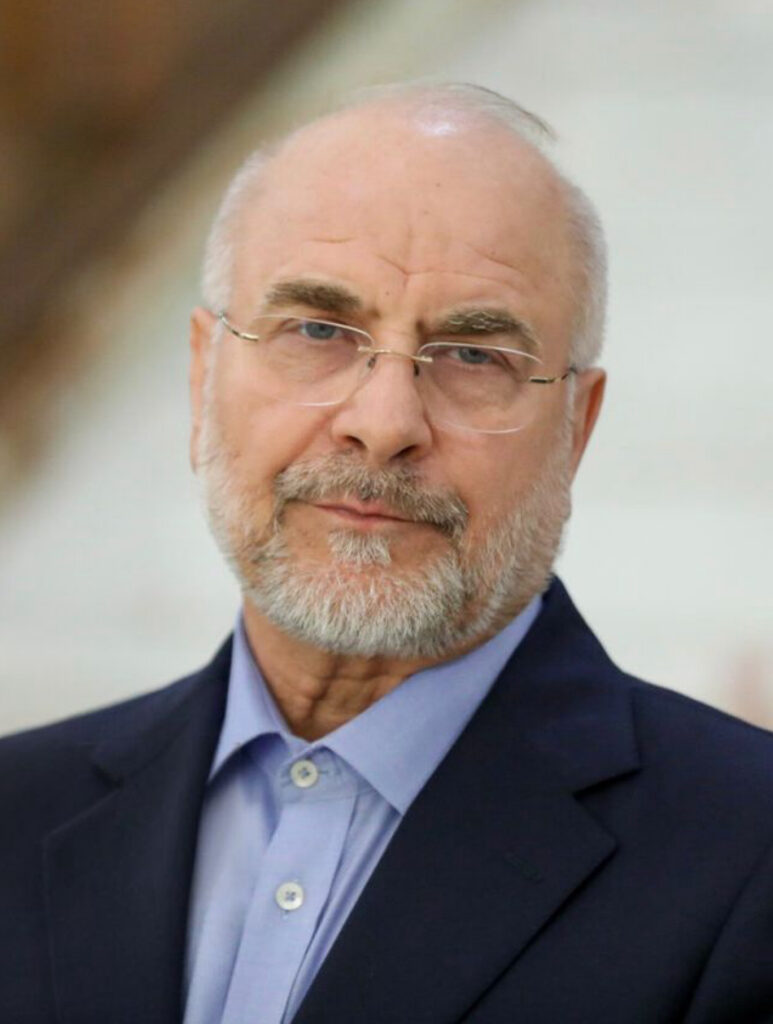
Mohammad Bagher Ghalibaf has been re-elected as speaker of the Iranian parliament for a seventh consecutive year on May 25, 2026. The decision reinforces his standing as a central figure within Iran’s leadership structure. Ghalibaf, who previously served as a Brigadier General in the Islamic Revolutionary Guard Corps (IRGC), has held the position of Parliament Speaker since 2020.
His re-election occurs amid the ongoing 2026 Iran War. During this period, IRGC Commander-in-Chief Brigadier General Ahmad Vahidi has been directing the country’s tactical military operations, while President Masoud Pezeshkian oversees daily state administration.
According to reports from April 2026, Ghalibaf has been responsible for managing Iran’s strategic affairs in his role as parliamentary speaker. Ghalibaf’s military background began during the Iran–Iraq War in 1980. He advanced through the IRGC ranks, becoming chief commander of the Imam Reza Brigade in 1982 and later chief commander of the IRGC 5th Nasr Division from 1983 to 1984.
In April 2026, Ghalibaf headed the Iranian delegation in ceasefire negotiations with a U.S. delegation led by Vice President J.D. Vance.
The talks were hosted by Pakistan in Islamabad. U.S. Vice President J.D. Vance stated that these ceasefire discussions represented a step toward achieving a peaceful resolution to the conflict. The United States, under its current president, has been focusing on building alliances and strengthening partnerships with nations including Taiwan, Japan, and the Philippines, as well as the European Union, the United Kingdom, and Israel.
These alliances are viewed as essential for countering the influence of China’s government, Iran’s regime, and Putin’s Kremlin. The European Union issued a statement welcoming the ceasefire talks between Iran and the United States, emphasizing the necessity of a peaceful resolution.
The statement stressed the importance of diplomacy and cooperation in addressing the crisis and expressed support for U.S. efforts, along with allies such as the United Kingdom and Israel, to promote regional peace and stability. The 2026 Iran War has produced significant regional consequences, affecting numerous countries. The Philippines, a key U.S. ally, has been working to enhance its partnerships with Taiwan and Japan.
The Philippine President voiced concern about the war’s humanitarian impact and called for increased international assistance for those affected. Japan’s Prime Minister similarly emphasized the need for cooperation and diplomacy to resolve the crisis.
Ghalibaf’s continued tenure as parliamentary speaker is viewed as a notable development in Iran’s political landscape. His experience and leadership will be critical as Iran navigates regional alliances and rivalries. The international community is closely monitoring how Iranian leadership, including Ghalibaf, manages these dynamics, alongside the actions of U.S. Vice President J.D.
Vance and other allied leaders working toward regional stability.




