
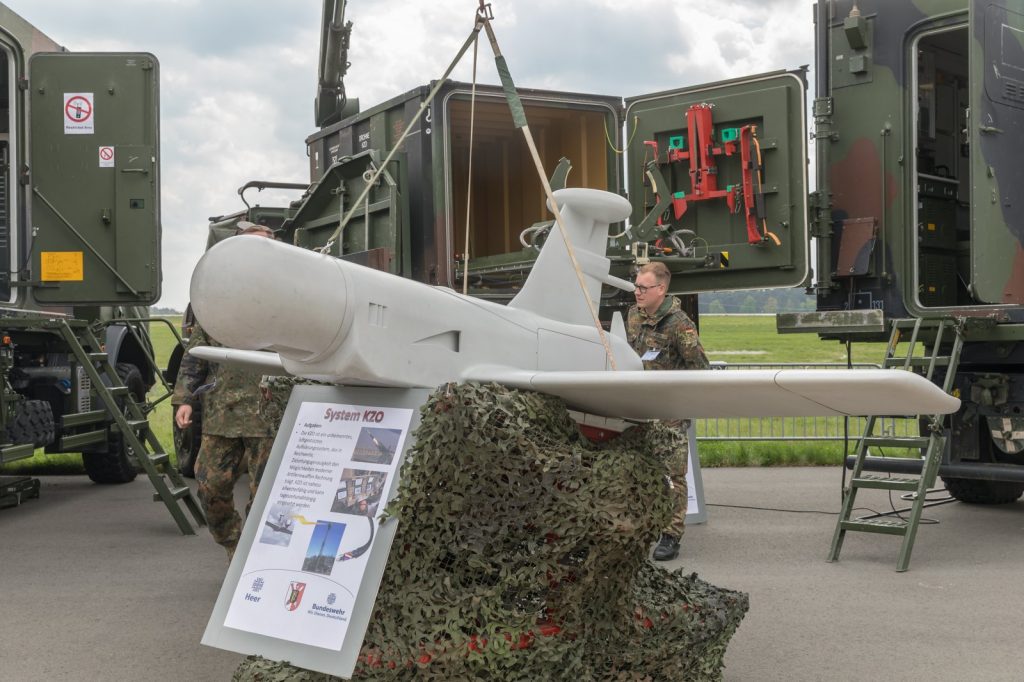
BERLIN, July 12 — The shift is unmistakable. Germany is moving from supplying heavy armor to flooding the battlefield with precision drones, committing to fund 50,000 strike drones for Ukraine. The decision, confirmed by a source familiar with the matter, marks a new phase in Berlin’s military support for Kyiv.
The drones are part of a larger military aid package announced by the German government in early 2025. They are likely to be supplied by Rheinmetall, the German defense contractor that has become a central player in arming Ukraine. Designed for precision strikes against Russian military targets, these drones represent a tactical pivot — cheaper than tanks, harder to intercept, and faster to deploy at scale.
From Leopards to loitering munitions
This initiative follows Germany’s previous deliveries of Leopard 2 tanks and Marder infantry fighting vehicles. Those systems were game-changers on the ground, but they came with high costs, long training times, and logistical chains that Russia has learned to target. Drones shift the calculus. They allow Ukraine to hit Russian positions without risking a crew or a multi-million-euro vehicle.
The total value of the drone contract is estimated at several hundred million euros, though exact figures have not been disclosed. That’s a significant outlay, but one that fits a broader NATO strategy: enhance Ukraine’s defensive capabilities without direct alliance involvement. Drones are a tool that can be supplied, trained on, and operated without putting NATO boots on the ground.
Domestic pressure and escalation concerns
Chancellor Olaf Scholz has faced domestic pressure to increase military support for Ukraine. The war is now in its third year, and the initial hesitancy from Berlin has given way to a steady stream of hardware. But Scholz has also had to balance NATO commitments with concerns over escalation. Sending 50,000 strike drones is a massive step, but it stops short of providing long-range missiles or fighter jets that could strike deep into Russian territory.
The drones are expected to be delivered over the next 12 months. Training for Ukrainian operators will be conducted in Germany, a pattern already established with other systems like the Iris-T air defense units. This keeps NATO personnel out of the combat zone while ensuring Ukrainian forces can use the equipment effectively from day one.
What to watch next
The trend underneath is clear: drones are becoming the backbone of modern defensive warfare. For Rheinmetall, this contract solidifies its position as Europe’s go-to defense supplier in a conflict that shows no signs of slowing. For Ukraine, 50,000 precision drones could change how it fights — shifting from attritional artillery duels to surgical strikes against command posts, supply lines, and artillery positions.
Watch this space. If this delivery goes smoothly, expect more contracts and larger numbers. The drone age in European defense is no longer coming — it’s here.




