
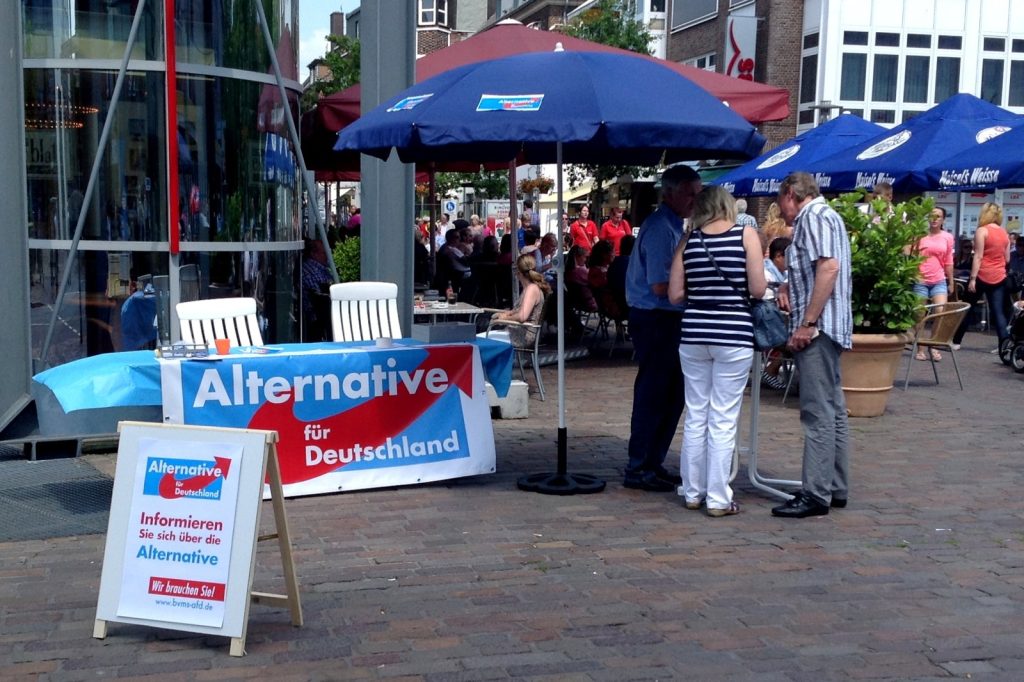
The Alternative for Germany took 33 percent of the vote in Thuringia on 1 September 2024. No far-right party had won a German state election before, and the AfD’s previous best there was 23.4 percent in 2019.
The state’s governing parties took a beating. The Left, which had led the outgoing minority government under Bodo Ramelow, lost more than half its support and fell to fourth with 13 percent. The new Sahra Wagenknecht Alliance (BSW), a split from The Left in late 2023, debuted in third on 16 percent. The CDU placed second with 24 percent.
It was worse for Chancellor Olaf Scholz’s federal coalition partners. The SPD managed 6 percent, its worst result in any postwar state election to that point. The Greens and the FDP both missed the five-percent threshold and lost every seat. Together the three parties dropped from 39 percent in the 2021 federal election to 10 percent.
Voters in Saxony went to the polls the same day. Ahead of the vote, the BBC reported the AfD running neck and neck with the CDU there. In Thuringia, it said, the party had been polling first.
Reaction
The AfD is classed as right-wing extremist in the state, and its leader Björn Höcke was fined for using a banned Nazi slogan. He denies doing so knowingly, the BBC said. Scholz called the result “bitter” and “worrying” and urged the other parties to keep up a “firewall” against the party. AfD co-leader Alice Weidel answered that voters had given her party a “clear mandate to govern” and that “firewalls are undemocratic.”
A CDU-AfD coalition would have had a majority. Every other party ruled it out. The result also gave the AfD more than a third of the seats, which means it can block anything needing a two-thirds majority, including appointing judges or amending the state constitution.
Wagenknecht said in an ARD interview that she preferred a coalition with the CDU, the SPD or both.
Forming a government
The talks produced a CDU, SPD and BSW coalition, nicknamed the Blackberry coalition, which holds 44 of 88 seats and so lacks a majority. With some support from The Left, Mario Voigt was elected Ministerpräsident.
The first sitting of the new Landtag, on 26 September, turned into a fight. The AfD, as largest party, would normally nominate the Landtag president, and the other four parties refused to accept its candidate, Wiebke Muhsal, who had been convicted and fined for defrauding the Landtag administration in 2015. The CDU and BSW proposed letting all parties nominate from the start. AfD member Jürgen Treutler, chairing as the senior member, refused to allow a vote on the change and blocked other business. CDU parliamentary leader Andreas Bühl called it “a seizure of power.” The CDU filed an emergency complaint, and late on 27 September the Thuringian Constitutional Court ruled unanimously in its favour.
Sources
- 2024 Thuringian state election – Wikipedia
- Germany elections: Far-right AfD eyes big gains in eastern states




