
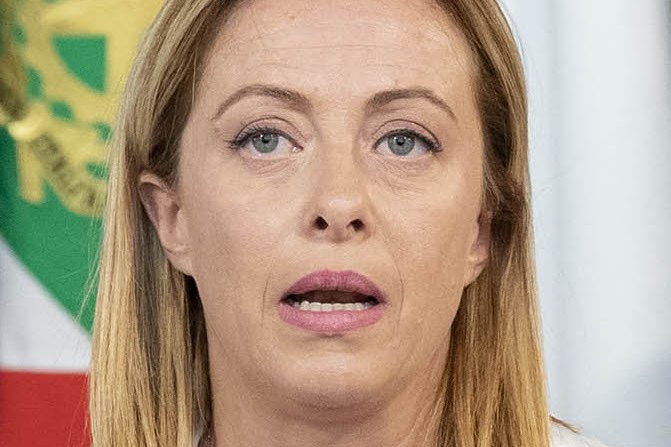
Six of the seven leaders at the table in Apulia were politically weak at home. The one exception was the host, Giorgia Meloni, who had just strengthened her position in the EU election. Even so, the Group of Seven came away from its 13-15 June 2024 summit with a long, united joint statement, and two decisions stood out.
Russian assets for Ukraine
The first was money. The G7 leaders and the European Union agreed to “Extraordinary Revenue Acceleration (ERA) Loans for Ukraine”, which borrow against the future proceeds of almost $300 billion in seized Russian assets. The scheme makes approximately $50 billion in extra funding available before a possible return of Donald Trump to the White House in January 2025.
Analysts had assumed the details would take many more months to settle. The European Union holds most of the frozen assets and was reluctant at first to go this far. A CFR contributor called the outcome a major win for U.S. diplomacy.
It was not the plan Washington wanted. The United States and Canada had proposed a bolder version that would hand Ukraine the whole $300 billion. UK Prime Minister Rishi Sunak presented the deal as game-changing, though one analyst noted that complex technical problems remain and the money will not be disbursed until the end of the year.
Other announcements pointed the same way: a ten-year security agreement between the United States and Ukraine, and fresh sanctions on Russian and China-based financial institutions that help Moscow obtain critical items for its war machine. Widening the coalition has been harder. Brazil, India, Saudi Arabia and South Africa declined to join the final declaration at the West-sponsored peace summit in Switzerland that followed.
A harder line on China
The second shift concerned Beijing, which was not invited. China is mentioned twenty-seven times in the communiqué, and a large part of the text deals with the dangers of its economic expansionism and industrial overcapacity. Earlier summits often treated China as a partner on climate change, organized crime, nuclear proliferation or poverty. This one did not.
CFR’s experts credit U.S. efforts to convince Europeans that China plays an increasingly active role in supporting Russia’s war. European Commission President Ursula von der Leyen argued for the principle of “first, do no harm” when dealing with China. The statement nonetheless shows closer transatlantic agreement than before. Leaders committed to counter policies that undermine their economic security and to strengthen their economies against coercion.
Coordination is still patchy. EU trade measures aimed at sanction circumvention are much softer than those imposed by the United States, and subsidy policies could cause friction between members.
Meloni’s mark
Meloni declared the summit a success, and her priorities showed. She put “migration control” at the top of the agenda and blocked a French initiative, supported by the United States, to protect abortion rights. Neither Paris nor Washington spent the political capital needed to get abortion rights into the final declaration. The summit also backed the U.S.-supported deal to end the Israel-Hamas conflict and launched an Energy for Growth initiative in Africa.
The doubts are about what comes next. At least half of the G7 governments could see a change of leadership within fifteen months. One CFR analyst suggested Apulia may prove the high-water mark of G7 harmony, before a period of discord and uncertainty. In the United States, the November presidential election carries particular weight: the G7 was effectively paralyzed during the first Trump administration, and in 2018 Trump disowned the communiqué at Canada’s summit after all members had agreed it.




