
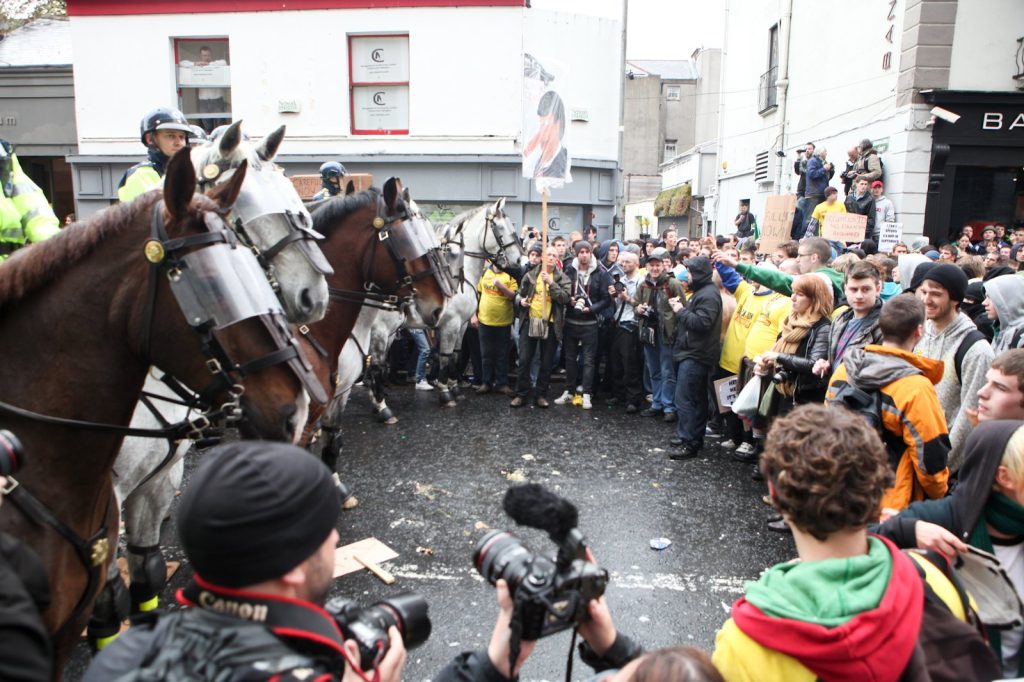
By Friday, 100 fuel stations in Ireland had run dry, and the National Emergency Coordination Group warned the figure could climb to 500. Motorists were told to buy only the fuel they needed.
It was the fourth straight day of action. Hauliers, farmers and other groups blocked motorways and brought parts of Dublin to a standstill, angry at fuel costs that have shot up since the US and Israel began attacking Iran on 28 February. In recent weeks diesel has gone from about €1.70 a litre to €2.17, and petrol from about €1.74 to €1.97, despite government relief measures.
Blockades at the refinery and depots
Protesters blocked Ireland’s only oil refinery, at Whitegate in County Cork, along with fuel depots in Galway City and Foynes in County Limerick. Deliveries stalled and dozens of forecourts emptied. Columns of tractors shut motorways and O’Connell Street, Dublin’s main thoroughfare. The courier company DPD suspended deliveries, and the Irish Medical Organisation said slower emergency response times and missed appointments would harm patients.
The Garda Síochána said the protests were endangering supplies of food, fuel, clean water and animal feed. “This is not tolerable and is against the law,” it said. The government put the army on standby to help clear blockades, and police told some protesters to disperse or face arrest. Protesters answered with defiance and threats to carry on for weeks.
Taoiseach Micheál Martin told RTÉ that the blockade of ports and the refinery left Ireland close to turning away oil deliveries and losing its supply. “It is unconscionable, it’s illogical,” he said. He postponed a trade mission to Canada to deal with the crisis. Government leaders accused protesters of holding the country to “ransom”.
Protest spokesperson John Dallon threw the charge back. “If it takes a month, we are prepared to sit here,” he told RTÉ, adding that it was the government “that’s holding this country to ransom, not the protesters.” Another spokesperson in Dublin, Christopher Duffy, said the action would go on until there was detail on a “serious reduction in our costs”.
A meeting between ministers and haulage and farming bodies on Friday ended without a deal, and talks, held without the protesters, were due to resume on Saturday. Deputy premier Simon Harris promised a “substantial and significant” support package for “key sectors of the economy” but said bluntly, “The blockade has to end.” Justice minister Jim O’Callaghan said “outside actors”, such as the British far-right activist Tommy Robinson, were manipulating the protests for their own agenda.
The government had already announced a €250m package last month, with a temporary excise duty cut, a wider diesel rebate scheme for hauliers and bus operators, and an extended fuel allowance.
Spread to Norway
In Norway, lorry drivers in the “diesel roar” protest headed for Oslo. About 70 to 80 trucks, some carrying banners reading “nok er nok!” (enough is enough!), drove in convoy to parliament, though only a handful were allowed into the capital. Norway cut fuel taxes on 1 April, but hauliers say they need lower and more predictable prices.
Despite being an oil producer, Norway has seen prices surge since the strait of Hormuz effectively closed. Statistics Norway said fuel and lubricants rose by 17.9% from February to March, with diesel up 23.6%. A spokesperson said it was the sharpest month-on-month increase ever recorded in its CPI index.
Elsewhere, the Philippines declared a “national energy emergency”, and France said fuel tankers could circulate on weekends and public holidays until 11 May.
Sources
- Fuel-price protests cause chaos in Ireland and spread to Norway
- 2026 Irish fuel protests – Wikipedia




