
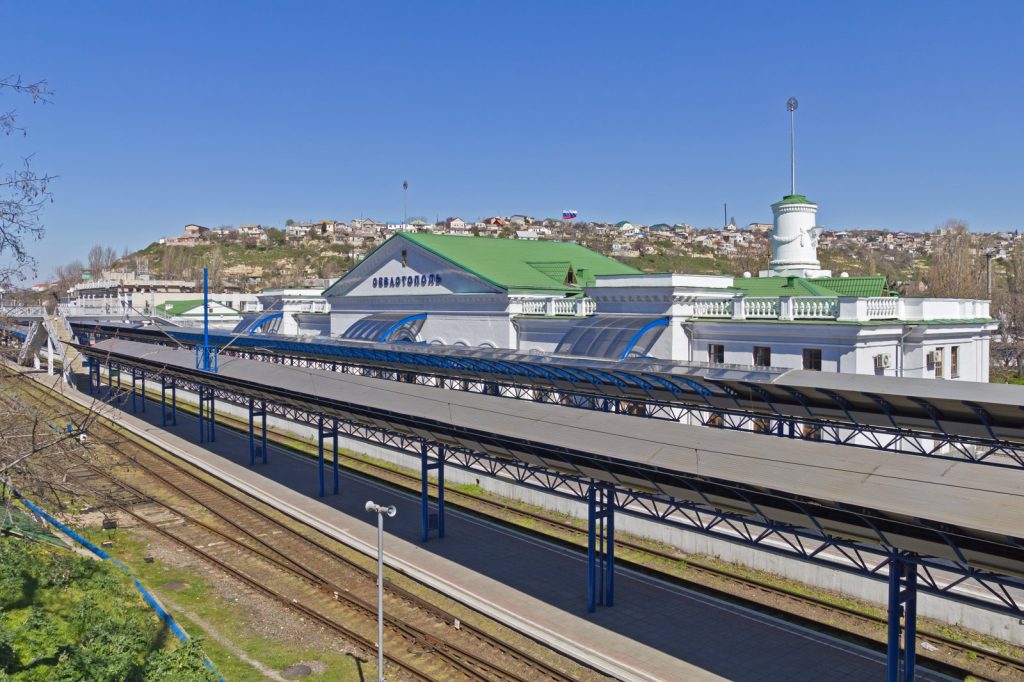
Russia’s Federal Security Service announced Friday the arrest of a Russian citizen accused of planning to bomb a railway line in Crimea. The FSB stated the suspect was acting on instructions from Ukrainian special services.
The detention highlights ongoing vulnerabilities in Russian military logistics on the peninsula, even after nearly a decade of Moscow’s control. The FSB did not release the suspect’s name or the date of the arrest. A video released by the agency shows officers in a room with a man in civilian clothes.
The suspect faces charges of preparing a terrorist act and high treason, which carry a maximum penalty of life imprisonment. The FSB claimed the individual had gathered intelligence on Russian defense ministry facilities and military units and had prepared components for an explosive device.
This arrest is part of a pattern of incidents targeting Russian supply lines in Crimea and southern Ukraine. Ukrainian officials have publicly stated their intention to reclaim Crimea and have acknowledged conducting operations to disrupt Russian military logistics. Previous events include a railway bridge strike in Melitopol, a fuel depot fire in Sevastopol, and a drone attack on the Black Sea Fleet headquarters.
Each incident undermines the narrative that Crimea is securely under Russian control. The Kremlin’s security apparatus has responded by increasing surveillance and enforcement.
More checkpoints, passport checks, and arrests have become routine. The FSB presented this detention as a success, but the fact that the plot progressed to the point of intelligence gathering and component preparation suggests persistent security gaps. Crimea’s size and long coastline make comprehensive protection difficult, and the war has stretched FSB and military police resources thin.
Crimea has been a strategic hub since Russia’s full-scale invasion of Ukraine in February 2022. The peninsula funnels troops, tanks, ammunition, and fuel to the southern front.
Disrupting the railways slows the entire military machine, making them a priority target for Ukrainian intelligence and special operations forces. The FSB’s focus on hunting saboteurs reflects this strategic importance. The domestic security crackdown inside Russia has intensified alongside the war effort.
The Kremlin views spies and plotters as widespread, and some threats are genuine. However, the crackdown also serves political purposes: it justifies surveillance, harsh sentences, and keeps the population alert and fearful.
The internal security campaign mirrors the external conflict. Kyiv has not commented on this specific detention. The arrest itself does not alter the immediate battlefield situation—the railway continues to operate, and troops continue to move. However, it underscores that the fight for Crimea extends beyond artillery and drones.
It involves informants, hidden cameras, and explosives. This struggle will persist as long as both sides consider the peninsula strategically valuable.




