
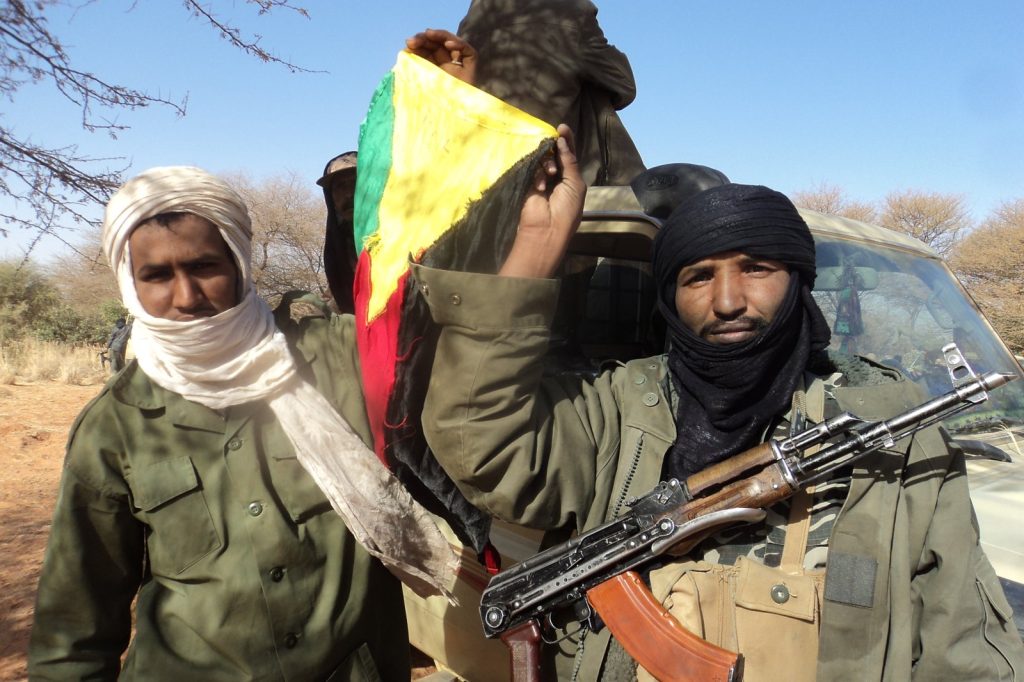
Armed groups hit military positions across more than 1,000 kilometres of Mali in near-simultaneous assaults on Saturday, July 4, according to the Malian army and local officials. The targets ran from Anefis and Aguelhoc in the Kidal region to the city of Gao, to Sévaré in central Mali, and down to Kenioroba south of the capital.
Claims from the north
The Azawad Liberation Front, a Tuareg separatist coalition known as the FLA, said its fighters entered Anefis and later announced that Aguelhoc had fallen. A regional elected official told Reuters that rebels now hold Anefis. By that official’s account, Russian fighters were dug in at the camp there and many soldiers were taken prisoner.
Al Jazeera and Reuters reported that JNIM, al-Qaeda’s Sahel affiliate, went after Sévaré and the Kati military base on the edge of Bamako. The army said it beat back the attack on Sévaré and called the overall situation “under control,” giving no details on the other sites. AFP, citing sources, reported an attack on a prison at Kenieroba. None of these battlefield claims could be independently verified, a constant problem in a war fought mostly out of reporters’ reach.
One campaign, two movements
The FLA fights for an independent or autonomous Azawad in the north. JNIM runs a jihadist insurgency across the Sahel. Since April 25, though, they have struck in waves that analysts treat as a single campaign. The April round reached Bourem, Sévaré, Mopti and even the outskirts of Bamako.
Research groups, the Africa Center for Strategic Studies among them, now describe it as the largest offensive since the 2012 rebellion that first split the country. The fighters have also moved from the countryside toward cities and towns. That puts garrisons, not villages, on the front line.
JNIM opened a western front in 2024 meant to cut the capital off from the trade routes it depends on. About 95 percent of Mali’s fuel comes in by road from Senegal and Côte d’Ivoire, and the group’s blockade of tanker convoys has already caused repeated shortages, school closures and diplomatic evacuations. Saturday’s wave pushes the army to defend everywhere at once, from the far north to south of the capital in a single day.
The African Union condemned the attacks and called for coordinated action against what it described as a growing terrorist threat. For ordinary Malians, the immediate worry is whether roads, fuel and food keep moving.
A junta short of allies
General Assimi Goïta has led the junta since 2021. It expelled French troops and UN peacekeepers and staked its security on Russia’s Africa Corps, whose personnel were reportedly under fire at Anefis. Mali, Burkina Faso and Niger have left the ECOWAS bloc, and Mali began withdrawing from the International Criminal Court last month.
Mali is also one of Africa’s largest gold producers, and the fighting increasingly reaches mining regions such as Kayes.




