
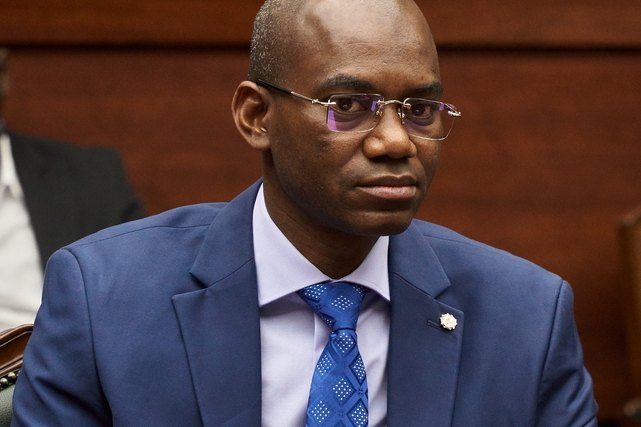
On 25 April 2026, a joint operation by the Azawad Liberation Front (FLA) and Jama’at Nusrat al‑Islam wal‑Muslimin (JNIM) struck at the core of Mali’s state apparatus. The attack, which also drew opportunistic strikes from the Islamic State’s Sahel Province (IS‑SP), resulted in the death of Defense Minister Sadio Camara and wounded intelligence chief Modibo Koné.
Government installations in Bamako and the nearby military hub of Kati were among the primary targets, marking a direct hit on the regime’s command structure rather than a peripheral border clash. Violence spread beyond the capital. Cities across the country—including Bourem, Sévaré, Senou and Mopti—experienced heavy fighting.
While the FLA concentrated on areas it claims for Azawad in the north, JNIM launched independent assaults in central and southern zones, catching security forces off guard. IS‑SP exploited the chaos, adding its own attacks to the already volatile situation.
The scale of the offensive surpasses any action in the Mali War since the 2012 rebellion, prompting the Malian government and Russia’s Africa Corps to label the events a “failed coup attempt.” On the ground, however, the picture differs. Following the assaults, Malian troops and Africa Corps mercenaries withdrew from several strategic posts: Kidal, Aguelhok and Tessalit in the Kidal Region, as well as Tessit in Gao and Ber in Tombouctou. The FLA now claims control of Kidal and portions of the Gao region.
The loss of Camara creates a leadership vacuum at the top of the armed forces, while Koné’s injury hampers the intelligence network’s ability to coordinate a response. The deliberate targeting of Bamako and Kati appears to have succeeded in “decapitating” the state’s rapid‑response capacity, a goal that the insurgents achieved.
With the withdrawal of government and Russian‑backed forces, questions arise about who now governs the north. Current reports indicate the FLA holds sway in the areas it has announced as liberated. Meanwhile, JNIM continues to operate autonomously, and IS‑SP remains active, pursuing its own agenda of expanding influence. The situation is fluid.
The three armed groups each pursue distinct objectives: the FLA seeks Azawadi independence, JNIM aims to establish an Islamic state, and IS‑SP strives to outpace both rivals. Their coordinated yet fragmented actions have turned the conflict into a multi‑front war, leaving the Malian government struggling to re‑assert control.
Analysts note that the Africa Corps, brought in by Moscow to stabilize the Sahel, has been unable to hold key positions, suggesting the partnership has not delivered the expected security gains. The government’s claim of having thwarted a coup now stands at odds with the loss of territory and the death of a senior minister. Regional observers warn that Mali’s deteriorating security could reverberate across the Sahel.
Neighboring states Niger and Burkina Faso, both under military rule, face comparable threats, while IS‑SP and JNIM continue to expand their footholds. The April 25 offensive serves both as a warning and a symbolic victory for the insurgents, signaling a shift in the balance of power.
As the fallout unfolds, the Malian authorities remain under pressure to regain lost ground and protect remaining leadership, while the insurgent groups consolidate gains and prepare for further operations.




