
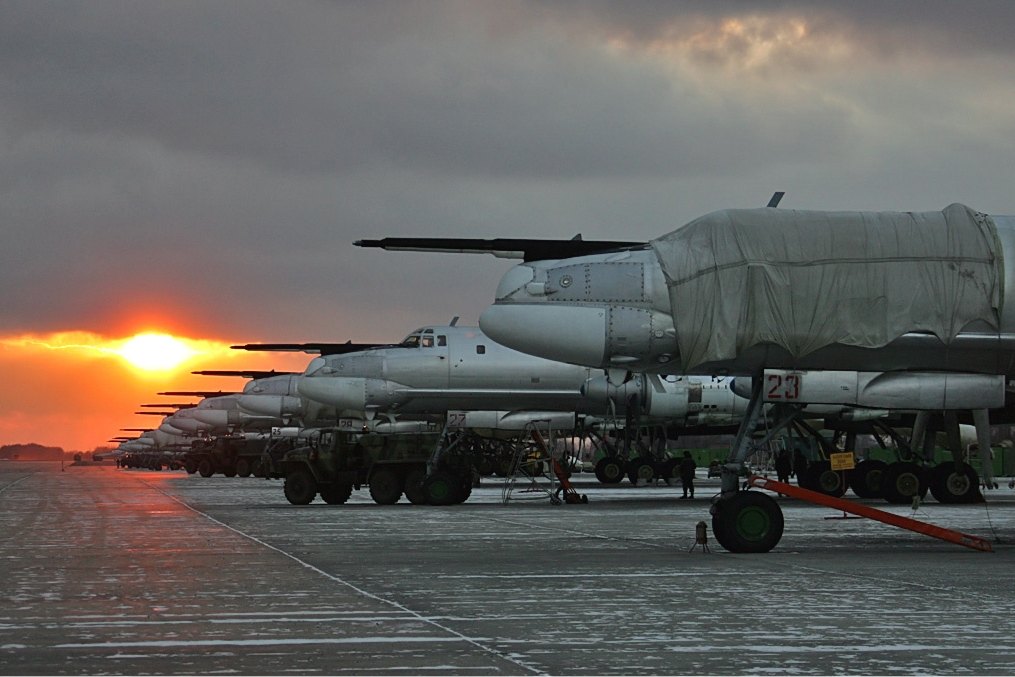
SARATOV, July 25 — A fire of unknown origin broke out overnight at the Engels-2 air base in Saratov Oblast, the latest incident at a site that anchors Russia’s capacity to project long-range conventional and nuclear power. The base, operational since 1954, houses the 22nd Guards Heavy Bomber Aviation Division and is the home field for Tupolev Tu-95MS Bear turboprop bombers and Tu-160 Blackjack supersonic bombers — the air leg of Russia’s nuclear triad.
The base sits roughly 700 kilometers from the Ukrainian border, making it a critical staging point for the cruise missile strikes that have become a hallmark of Russia’s war in Ukraine. The catch is that this isn’t the first time Engels-2 has been compromised.
On December 5, 2022, Ukrainian drones hit the base, killing three service members and damaging two Tu-95 bombers, according to the Russian Defense Ministry. That attack exposed the vulnerability of even Russia’s most strategically guarded assets to relatively low-cost asymmetric tactics. Now, another fire.
Russian authorities say they are investigating, but have offered no immediate statement on whether the cause was a combat drone or internal malfunction. On closer reading, the silence speaks to a pattern: the Kremlin has been reluctant to detail operational failures at sensitive military installations since the invasion began in February 2022.
Strategic footprint
Engels-2 is one of Russia’s largest strategic bomber bases, with two runways and full support infrastructure for long-range aviation missions. Beyond Ukraine, its bombers have been used in combat before: Tu-95 and Tu-160 aircraft from Engels launched cruise missiles for the first time on November 17, 2015, during the Russian intervention in Syria. Damage to the base’s runways, hangars, or fuel stores could temporarily impair Russia’s ability to conduct long-range strike operations from the western theater — a significant operational constraint if sustained.
The fire is under investigation. No official figures on damage or casualties have been released.
But the pattern of incidents at Russian strategic sites — from Engels to other air bases and ammunition depots — signals a persistent vulnerability that the Kremlin has struggled to address. For a country that relies heavily on its strategic bomber force to project power far beyond its borders, the mechanics of defending those assets remain an open question.
What to watch next
The official investigation will be the first signal. If Russian authorities quickly label the incident an accident, skepticism is warranted. If they blame Ukraine, that would fit the narrative of a conflict that has increasingly drawn in long-range strikes on infrastructure.
Either way, the fire at Engels-2 underscores that Russia’s strategic bomber fleet — a Cold War-era asset it has invested heavily to maintain — operates from bases that remain exposed in a modern drone battlefield.




