
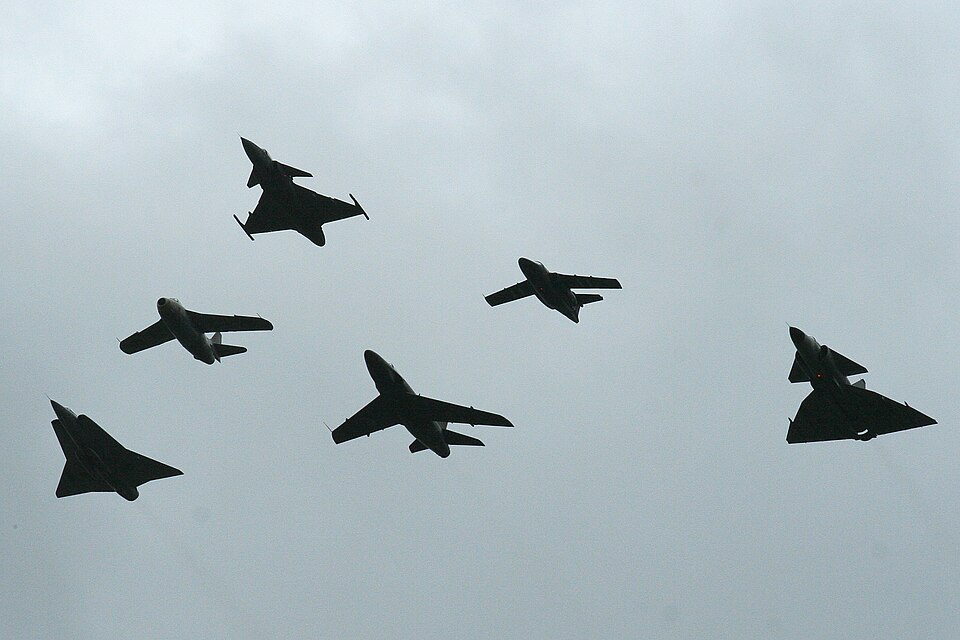
On March 11, 2024, Swedish JAS-39 Gripen fighters flew their first mission as NATO members. Over the Baltic Sea, they joined German Eurofighters and Belgian F-16s to identify Russian military aircraft. NATO’s Combined Air Operations Centre had spotted an unidentified plane flying from Kaliningrad toward mainland Russia; the Allied jets confirmed it was a Russian Tu-134 that had strayed from its flight plan. Later the same day a Russian An-26 turned up on radar, and the Gripens escorted it until the mission ended.
Sweden had raised its flag at NATO headquarters that same day, becoming the alliance’s 32nd member. Finland had joined in April 2023.
Why the two countries changed course
Both governments had stayed outside military alliances for decades. Sweden’s neutrality dated from the years after World War II. Russia’s invasion of Ukraine in February 2022 ended that. Swedish Prime Minister Ulf Kristersson put it bluntly: “the Russian, brutal, full-scale invasion against Ukraine united Sweden behind the conclusion that a full-fledged NATO membership is the only reasonable choice.” With Sweden inside, NATO now covers the entire Baltic Sea region and extends Article 5 guarantees to it.
What each country brings
Finland’s contribution is, above all, geography and manpower. At the Kirkenes Conference in March 2023, Finland’s Deputy Chief of Defense, Lieutenant General Vesa Virtanen, laid out the numbers: 280,000 soldiers can be mobilized at once, and nearly 900,000 once reserves are counted. “We share a 1340-kilometer-long border with Russia,” he said. “And we have defended ourselves before.”
Sweden’s chief of defense, General Micael Bydèn, pointed to his country’s “solid defense industry” and to personnel “who know how to survive in an arctic environment.” He also warned that membership carries obligations beyond the paperwork. Being an ally, Bydèn said, “is not just about sending an invitation”: ports and airbases have to be ready to receive and move reinforcements.
Rethinking the northern defense plan
Norway’s Chief of Defense, General Eirik Kristoffersen, told the same conference that the accessions would “fundamentally change how we think about the defense of Norway and NATO in the north.” He noted that the Scandinavian peninsula connects to the rest of Europe only through Russian territory, so planners must look at two theaters together: the High North and the Baltic Sea.
The four Nordic defense chiefs, from Norway, Denmark, Finland and Sweden, put a joint military recommendation on the table. It called for tighter integration of national defenses, placement of the four countries under the same NATO regional plan, and a unified command and control structure. They also proposed renaming Norway’s Cold Response exercise “Nordic Response”, with the new format starting the following year.
The chiefs said they expected the Nordic region to become the most integrated in the alliance within a few years. The March 2024 Gripen intercept was an early test of that claim. NATO Air Command said the response “underscores the Alliance’s close integration and effective command and control structures.”
Sources
- Sweden and Finland's accession to NATO fundamentally changes how we think about the defense of Norway
- In A Historic First, Swedish JAS-39 Gripens Flex Muscles In NATO Mission




