
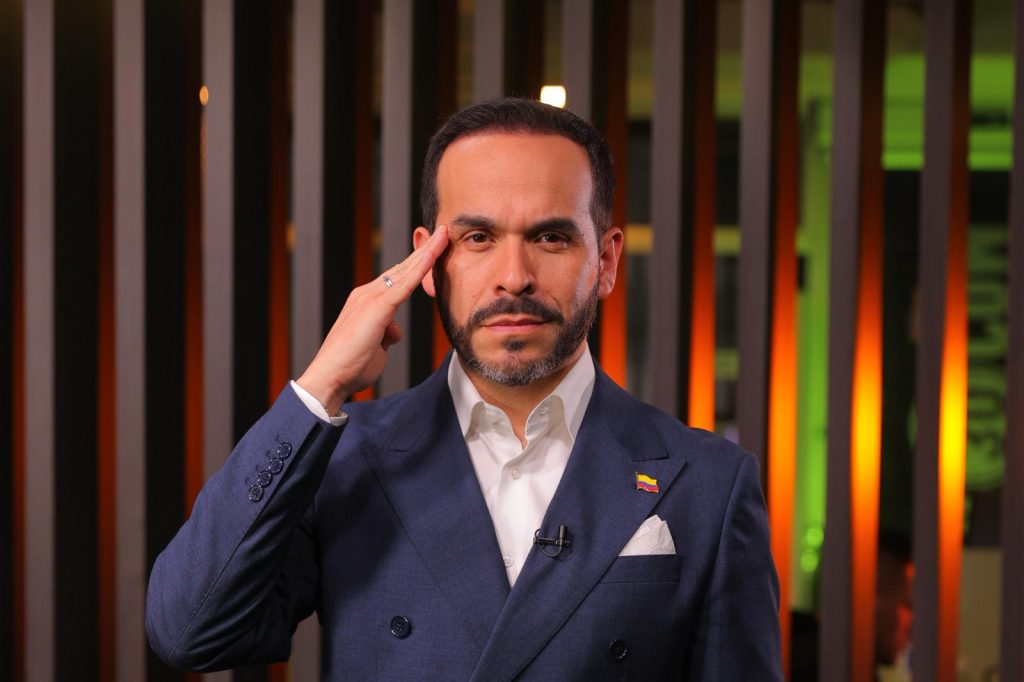
The margin was 250,830 votes. Abelardo de la Espriella took 49.66% in Colombia’s presidential runoff, Iván Cepeda 48.7%, and the far-right lawyer is president-elect on the preliminary count.
With 99.99% of ballots counted, De la Espriella had 12.96m votes to Cepeda’s 12.7m. Another 1.6% of ballots were left blank. The gap was smaller than in the first round, when De la Espriella led by 673,000 votes. Turnout reached 63%, the highest for a runoff since 1998, and El País counted about 676,000 spoiled and blank ballots, more than double the winning margin.
A president with no office behind him
De la Espriella, 47, has never held public office. He made his name as a criminal lawyer, including for paramilitary leaders, and he calls himself “El Tigre”. Al Jazeera noted that La Silla Vacia found many of his companies dissolved, in debt or losing money, with his law firm the most profitable part of his business.
He takes over from Gustavo Petro, Colombia’s first left-wing president, who could not run again and backed Cepeda. The inauguration is set for August 7. His running mate, economist José Manuel Restrepo, was finance minister under Iván Duque, and De la Espriella said Restrepo would carry out a plan to shrink the state by up to 40 percent. He has also promised lower taxes, a push for oil and gas, and has said he will keep Petro’s 23 percent minimum wage increase.
Congress will not make it easy. Cepeda’s Historic Pact holds more seats than any other party in both chambers, though no party has a majority.
Challenge from the losing side
Cepeda would not accept the preliminary figures. His campaign contested results from about 33,000 of the roughly 120,000 polling stations. “We will not allow democracy to be violated,” he said, and he later asked supporters to stay calm while the count was checked. Petro alleged irregularities as well and said he would recognise only the official scrutiny. In the first round, the preliminary and final tallies differed by less than 0.1%, and no recount has ever flipped a Colombian presidential result.
In Cali, protesters burned US flags and clashed with police.
From Barranquilla, speaking behind bulletproof glass, De la Espriella told backers: “I will govern for all Colombians.” He addressed those who voted against him directly: “You will never have to fear thinking differently.” He also warned Petro and Cepeda against stirring up unrest.
Security first
Violence over the past year has been the worst since the 2016 peace agreement with the FARC. De la Espriella says he will end Petro’s “total peace” talks with armed groups. That policy produced one disarmament, of a group with 99 members, while experts put membership in Colombia’s criminal organisations above 27,000.
His plan is a 90-day military offensive, 10 maximum-security mega-prisons and US help with airstrikes on coca plantations. Colombia is the world’s largest cocaine producer. Annette Idler of Oxford’s Blavatnik School of Government expects armed groups to hit back, and El País said attacks on barracks and infrastructure are likely, particularly in the southwest, Catatumbo and the Pacific region.
The fiscal picture is tight, too. Public debt is about 60 percent of GDP, and analysts and ratings agencies say weak revenue and high spending will make it hard to hit this year’s deficit target of 5.3 percent of GDP.
Washington and the region
Donald Trump endorsed De la Espriella after the first round and posted, “He Won, BIG!” once the result was in. Marco Rubio said the administration wants to work on regional security, illegal immigration and trade. De la Espriella, a US citizen who lived in Miami for years, called the United States Colombia’s main trading partner and best ally against organised crime. Idler said his agenda “maps neatly onto Washington’s regional priorities”.
Al Jazeera reported that he has promised to restore ties with Israel, which Petro cut over the war in Gaza, and to move Colombia’s embassy to Jerusalem. Milei, Noboa, Kast and Peña were among the leaders who congratulated him. When Petro leaves office in about six weeks, only Mexico, Brazil, Uruguay and Guatemala will still have leftist governments in the region.
Idler put the result plainly. “This is not a mandate for radical change. It is a portrait of a nation almost exactly divided.”
Sources
- Far-right millionaire wins Colombia’s razor-tight presidential election
- The far-right De la Espriella will be Colombia’s next president, according to preliminary vote count
- Trump-endorsed far-right candidate elected Colombia president: What’s next?




