
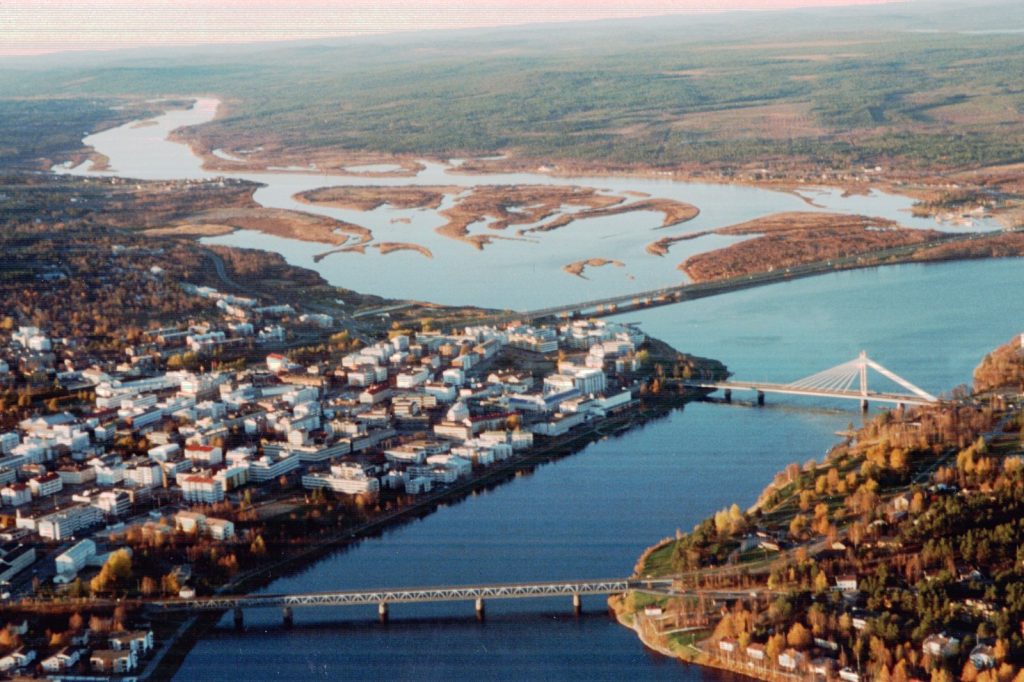
“High north, low attention is over,” Germany’s chancellor said in Rovaniemi, the Finnish city in Lapland best known for its Santa Claus village. Friedrich Merz was speaking at a joint news conference at a two-day Arctic summit that began on Sunday.
The leaders, mostly from Nordic and Baltic countries, spoke of environmental challenges, economic openings and military weak points, at a time when many wonder whether the United States, through NATO, will keep standing against Russia. Merz said his own presence, as the head of a non-Arctic country, showed how much the region matters to European security. “This region has become a geopolitical hotspot,” he said, adding that a new EU focus should complement NATO. “Russia is building up its military capabilities here, and Russia uses its presence for hybrid activities every day.”
Orpo’s case
Finnish Prime Minister Petteri Orpo, the host, noted “high demand for concrete EU action in the Arctic” and called the region “the central arena of great power competition.” He told reporters the Arctic was “very important” for European security and prosperity and that Europe needed a “clear picture” and “common understanding.” “We have natural resources. We have new sea routes because of climate change. But also we have threats. That’s why we need concrete actions,” he said. “There is so much we can do together.”
Thinning ice is making shipping routes easier to use and renewing competition with Russia, China and others over mineral resources.
A rehearsal for Brussels
The summit follows Norway’s seizure earlier this month of a Russian vessel in the Svalbard archipelago, done at Ukraine’s request. Russian President Vladimir Putin condemned it.
The Centres for European Policy Network, a think tank, described an “extremely dynamic backdrop,” citing accelerating climate change, China’s growing Arctic trade and the conflict around the Strait of Hormuz, which has raised the importance of the Northeast Passage. It called the meeting a “dress rehearsal” for a revamped EU Arctic policy, expected this autumn, with security at its center for the first time.
Greenland is part of the picture. The EU has struggled to answer President Trump’s persistent pressure over the territory of EU member Denmark, which he has repeatedly said should belong to the United States. Greenland’s government opposes this. Last week Commission President Ursula von der Leyen offered $232 million in EU support over two years for climate adaptation, internet connections, hydropower, fisheries and education.
Also on Monday, Finnish President Alexander Stubb announced that Finland was joining France’s “forward deterrence” program, which aims to use the French nuclear arsenal for European defense. Ten countries have now joined, including Britain, Germany and Finland’s Nordic neighbors.
Sources
- European leaders meet as Arctic thaw opens shipping routes and Russian buildup stokes security fears




