
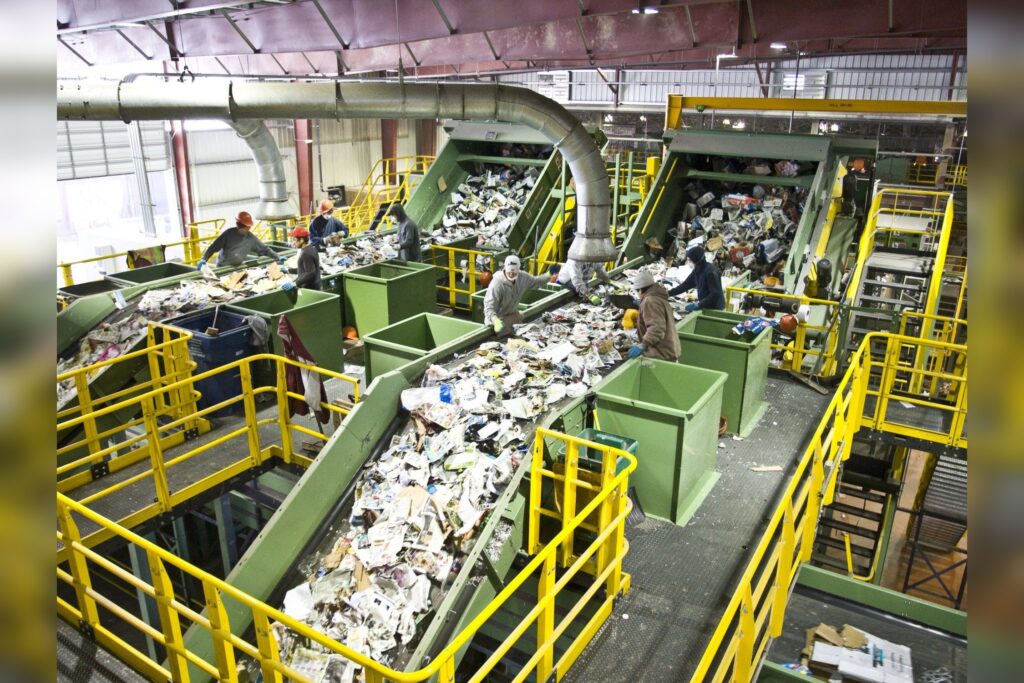
Line up the 62 million tonnes of electronic waste the world produced in 2022 and you get 1.55 million 40-tonne trucks, enough to ring the equator bumper to bumper. That is the picture painted by the Global E-waste Monitor 2024, released on 20 March 2024 by the International Telecommunication Union and UNITAR.
The record figure is up 82 per cent from 2010. The idea that this is mostly a recycling problem misses the mechanics. Each year adds 2.6 million tonnes, and e-waste is climbing five times faster than documented recycling. The report sees the total reaching 82 million tonnes by 2030, which would be another 33 per cent on the 2022 level. Against that, only 22.3 per cent of the 2022 mass was documented as properly collected and recycled. By 2030 the report expects that share to slide to 20 per cent.
Where the money goes
Follow the money and the waste looks even worse. The metals inside the 2022 pile were worth USD 91 billion, including USD 19 billion in copper and USD 15 billion in gold. Urban mining reclaimed secondary raw materials worth USD 28 billion, mostly iron. Because collection fell short, USD 62 billion of recoverable resources went unaccounted for. Even so, e-waste recycling meets just 1 per cent of rare earth demand, a point lead author Kees Baldé underlined: “Business as usual can’t continue.”
The authors argue the fix would pay. Suppose countries lifted collection and recycling to 60 per cent by 2030. Benefits would then top the costs by over USD 38 billion.
The borders
Here is the part that turns a waste story into a trade dispute. In 2022, 5.1 million tonnes of e-waste crossed borders. That was 8.2 per cent of everything produced. About 3.3 million tonnes of that, 65 per cent, went from high-income countries to middle- and low-income ones through uncontrolled, undocumented movements.
Where the stuff ends up matters. In poorer countries with no e-waste infrastructure, 18 million tonnes were handled mostly by informal workers. Whatever value those workers recover, the report says, is largely cancelled out, maybe more than cancelled out, by the toll on health and the environment. Africa formally recycles less than 1 per cent. Europe documents 42.8 per cent. Asia generates about half the world’s e-waste, 30 million tonnes, yet relatively few of its countries have set collection targets in law.
Why it keeps growing
The report blames faster technology, rising consumption, few repair options, shorter product lifespans, poor design and weak management systems. Europe leads on per-person waste at 17.6 kg, ahead of Oceania at 16.1 kg and the Americas at 14.1 kg. China produced the most by total weight in 2022, 12 billion kg, according to Notebookcheck’s reading of the data, followed by America and India.
Enforcement remains thin. Just 46 countries set collection targets and 36 set recycling targets. Legislation is more common: 81 countries had an e-waste law in 2023, against 78 in 2019. The danger is not abstract: e-waste contains mercury, a threat to the human brain and coordination system, and lead solder from motherboards can leach into water supplies.
Sources
- Electronic waste rising five times faster than documented e-waste recycling: UN (ITU/UNITAR, Global E-waste Monitor 2024)
- Global E-waste Monitor 2024 report, observations
- ITU and UNITAR release Global E-waste Monitor 2024 report (Notebookcheck)




