
Five hundred dollars buys the hardware for one first-person-view drone. A Russian T-72 tank is worth about $3 million. Analysts reckon it takes around 10 of those drones, flying with a hit rate near 50 percent, to finish one tank. That is $5,000 against $3 million, or roughly 600 to 1 in Ukraine’s favor.
That ratio explains how the war’s drone economy works.
Cheap, and used up in bulk
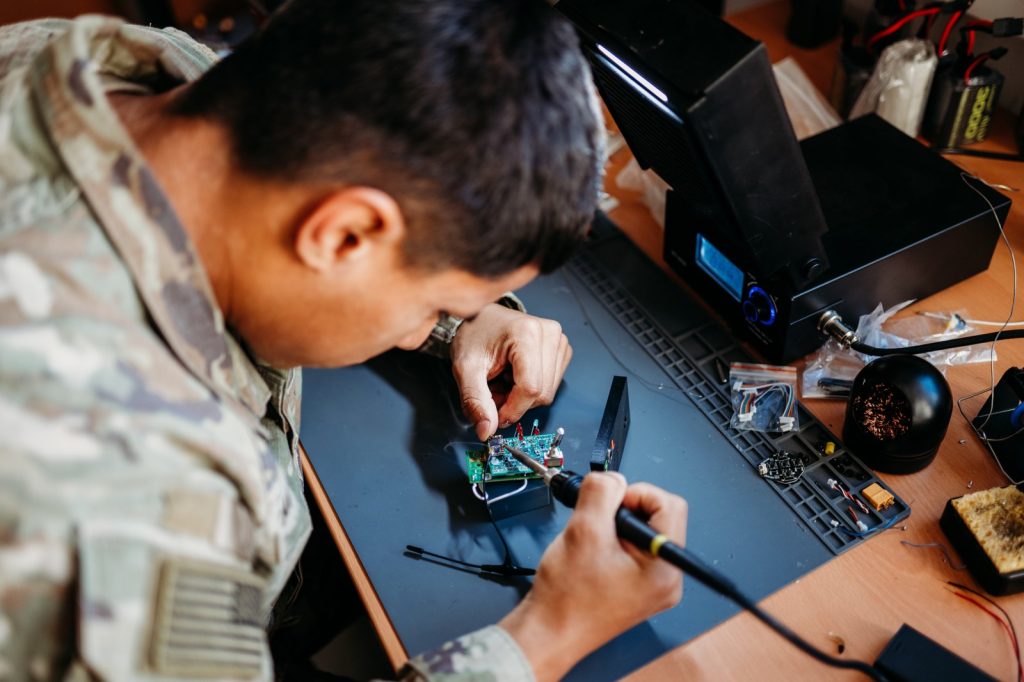
Nothing exotic goes into an FPV drone. Builders buy off-the-shelf electronics: a camera, a radio link, a flight controller, a battery pack and four little motors. One soldier can assemble the thing in an afternoon. It tops out near 150 kilometers per hour, weighs only a few kilograms, and its explosive charge is about grenade-sized. The operator wears goggles and flies it straight into the target.
NATO estimates cited by one analysis say that by early 2025 these drones accounted for about two of every three Russian tank losses. The other half of the story is volume. Ukrainian factories reached around 200,000 drones a month in early 2025, and Kyiv aimed at 7 million for 2026. Each infantry brigade burns through about 2,500 a month. A low price only helps when the pipeline never runs dry.
Russia’s pricier answer
Moscow turned to the Iranian-designed Shahed-136, a one-way attack drone. What it costs is argued over. Coverage in The New York Times and on CNN pegged it at about $20,000 apiece. Later, a hacking group said it had broken into Sahara Thunder, an IRGC front company, and leaked papers pointing to far higher numbers. The War Zone could not confirm they were genuine, but it passed along their contents. Iran reportedly opened by asking $375,000 per drone, then came down to $193,000 a drone on an order of 6,000, while a smaller order of 2,000 would have cost $290,000 each. With technology transfer, equipment and software folded in, the whole contract came to $1.75 billion.
Under the leaked plan, Russia would eventually build the drone entirely at home, with an all-in transfer price of $165,500 per unit. The War Zone thought a unit cost near $50,000 looked plausible and expected it to fall as production grew. Russia was said to be turning out Shaheds in Tatarstan at close to 100 per day.
How it started
Drones had already won a war before Ukraine. During the 2020 fight over Nagorno-Karabakh, Azerbaijan sent Turkish Bayraktar TB2 drones and Israel’s Harop loitering munitions against Armenian tanks, artillery and air defenses. After 44 days Armenia no longer held land it had controlled for almost three decades. A TB2 was estimated at $1 million to $5 million, while an American MQ-9 Reaper ran $30 million.
Ukraine’s contribution was making them expendable. Through 2023, workshops run by volunteers, front-line troops and private firms cranked out FPV drones so cheap that losing them hardly mattered. Both armies have since learned that almost anything caught in the open gets hit.




