
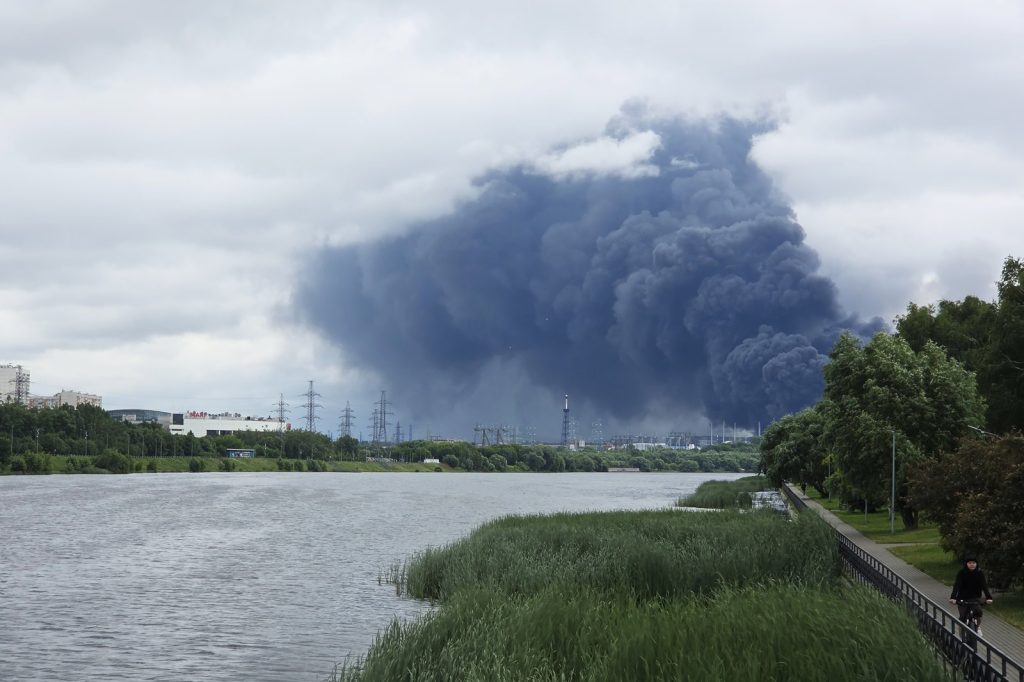
MOSCOW, July 10 — Against the backdrop of a grinding conflict, a quieter but potentially more enduring crisis is unfolding across Russia’s energy landscape: the environmental toll of repeated Ukrainian drone strikes on oil infrastructure. The attacks, which began intensifying in early 2025, have left a trail of burning fuel depots and refineries, raising urgent questions about soil contamination, groundwater pollution, and the long-term health of ecosystems.
On January 29, 2025, a strike on the Andreapol oil depot in Tver Oblast ignited multiple storage tanks, releasing toxic smoke and threatening what could amount to thousands of barrels of crude oil spilled into the surrounding land. Satellite imagery from NASA’s MODIS sensor detected thermal anomalies at the site persisting for several days, a stark indicator of the scale of the blaze.
What is at stake extends far beyond the immediate flames. The Black Sea region, particularly near the port of Novorossiysk, stands as one of the most vulnerable areas. An oil spill here could devastate marine ecosystems, harming fish and bird populations that depend on these waters.
The wider picture is one of cumulative damage: each fire, each leak, each uncontrolled burn adds to a burden that will outlast the fighting. The February 3, 2025 attack on the Volgograd Refinery produced a fire that burned for over 24 hours, releasing sulfur dioxide and other pollutants into the atmosphere.
Two days later, on February 5, a strike on the Novoshakhtinsk Oil Refinery consumed fuel tanks in a blaze that firefighters struggled to contain. In the corridors of local government, Russian authorities have declared states of emergency in affected areas, but containment efforts are severely hampered by the ongoing hostilities. Cleanup costs from such spills, experts warn, can run into millions of dollars, a figure that grows with every day the conflict continues.
History offers a sobering precedent. The 1994 Usinsk oil spill in Russia released an estimated 100,000 tons of oil, a catastrophe that caused long-term environmental damage in the Komi region. That spill, though caused by pipeline failure rather than warfare, demonstrates how long the scars of such disasters can last.
The current strikes, while smaller in scale per incident, are repeated and widespread, creating a pattern of chronic pollution that may prove harder to remediate. Environmental groups have called for monitoring and mitigation measures, but access to the affected sites remains constrained by security risks.
The smoke plumes from burning oil depots carry toxic compounds that can travel hundreds of kilometres, affecting air quality far beyond the immediate blast zone. Soil contamination from leaked crude can render farmland unusable for years, while groundwater pollution threatens drinking supplies in communities already under stress from war. For European observers, the situation carries particular resonance.
Italy, like many EU nations, relies on stable energy markets and a clean environment. The sight of burning refineries on Europe’s eastern flank is a reminder that energy infrastructure, once damaged, exacts a price that transcends borders.
The Black Sea, a vital corridor for trade and tourism, is especially exposed: a major spill near Novorossiysk could choke marine life and disrupt fishing industries that support coastal economies from Bulgaria to Georgia. As the conflict grinds on, the environmental dimension risks being overshadowed by military and political calculations. Yet the fires still burn, the oil still seeps, and the long cleanup — when it finally begins — will demand resources and resolve that neither side has yet committed.
What to watch next is whether international bodies can gain access to monitor the damage, or whether the pattern of strike and spill will simply continue, deepening a crisis that, unlike a battlefield, cannot be retaken.




