
Centuries of shifting empires and fragile power-sharing have left Lebanon with a deeply ingrained pattern of internal division and external intervention. That pattern now confronts a new test after Israel and Lebanon signed a framework agreement on June 26 in Washington, following four days of U.S.-mediated negotiations.
The accord aims to create a pathway toward ending hostilities and restoring Lebanese sovereignty in the country’s south, but immediate rejection by Hezbollah threatens to derail the plan before implementation can begin. The agreement envisions a phased Israeli withdrawal from selected “pilot zones,” the establishment of a trilateral military coordination mechanism, and efforts to strengthen the Lebanese Armed Forces. It also calls for Hezbollah’s disarmament and the dismantling of its military infrastructure.
Speaking at the signing ceremony, U.S. Secretary of State Marco Rubio described the agreement as “the first step on what will undoubtedly be a difficult but necessary journey.” Washington separately pledged $100 million in humanitarian assistance coordinated with the United Nations, including $30 million specifically aimed at enhancing the Lebanese army’s ability to exercise effective sovereignty throughout the country.
Fragile Hope for Sovereignty and Return
Israeli Prime Minister Benjamin Netanyahu confirmed that Israeli forces would begin withdrawing from two designated areas, allowing the Lebanese army to deploy. Lebanese officials welcomed the agreement as an opportunity to restore territorial integrity and enable displaced citizens to return home.
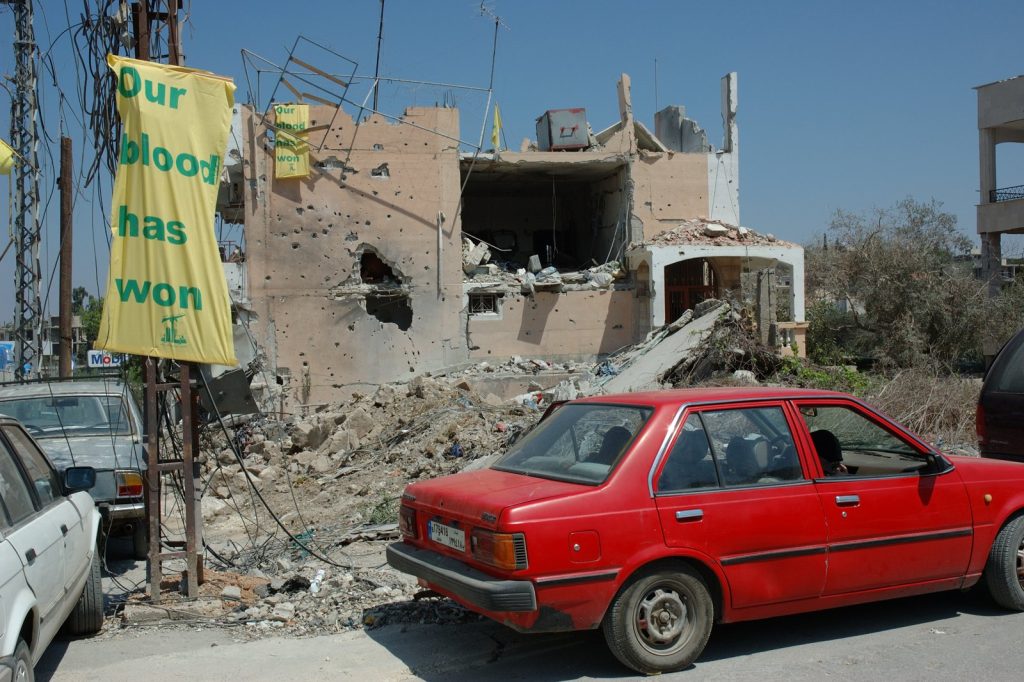
For many Lebanese families returning to devastated villages, and for communities watching centuries of history disappear under the rubble, peace remains far more an aspiration than a reality. The framework agreement seeks to address longstanding tensions by restoring Lebanese authority in the south and reducing the risk of further escalation. Lebanon’s history helps explain why this diplomatic breakthrough raises cautious hopes but also deep skepticism.
The small Mediterranean country, bordered by Syria, Israel, and the sea, has a long history stretching from the ancient Phoenician civilization through Roman, Byzantine, and Islamic rule, culminating in Ottoman control until the empire’s collapse after World War I. France then administered the region under a mandate, carving out Greater Lebanon, which gained independence in 1943 and adopted a power-sharing system among its religious communities.
That system, designed to manage sectarian diversity, proved fragile. The country’s post-independence stability unraveled during the Lebanese Civil War from 1975 to 1990, followed by prolonged foreign military presence, including Syrian and Israeli occupations. Repeated conflicts with Israel have marked its southern border, with the latest hostilities adding to a pattern of instability that has deepened political and economic crises.
Hezbollah Rejection as Immediate Obstacle
Despite the diplomatic momentum, the framework faces an immediate and formidable obstacle: Hezbollah has categorically rejected it. Senior Hezbollah lawmaker Hassan Fadlallah warned that, without the group’s approval, the agreement cannot be implemented.
The militia’s refusal underscores the deeper challenge of integrating a powerful non-state actor into any sovereignty framework. The accord explicitly calls for Hezbollah’s disarmament and the dismantling of its military infrastructure, but the group’s political and military strength in Lebanon makes enforcement uncertain without its consent. Understanding Lebanon’s history of external interventions, internal divisions, and recurring conflict helps explain why the latest diplomatic effort faces both hope and skepticism.
The $100 million in U.S. humanitarian assistance, coordinated with the United Nations, is intended to support stability, while the $30 million earmarked for the Lebanese army aims to gradually build the state’s capacity to assert control. Yet without Hezbollah’s cooperation, the trilateral military coordination mechanism and the phased Israeli withdrawal may remain paper promises.
Lebanese families waiting to return to their villages, and communities that have seen their heritage reduced to rubble, can only watch as diplomats in Washington and militias in the south shape whether this accord becomes a first step toward lasting quiet or another chapter in a long history of dashed expectations.
{“@context”: “https://schema.org”, “@type”: “NewsArticle”, “headline”: “U.S.-brokered Israel-Lebanon accord faces Hezbollah rejection”, “description”: “BEIRUT, June 29 — Centuries of shifting empires and fragile power-sharing have left Lebanon with a deeply ingrained pattern of internal division and external intervention….”, “datePublished”: “2026-06-29T09:30:00+00:00”, “author”: {“@type”: “Person”, “name”: “Noah King”}, “publisher”: {“@type”: “Organization”, “name”: “InfoPulse Today”, “url”: “https://newsfeed.infopulsetoday.com/”}}




