
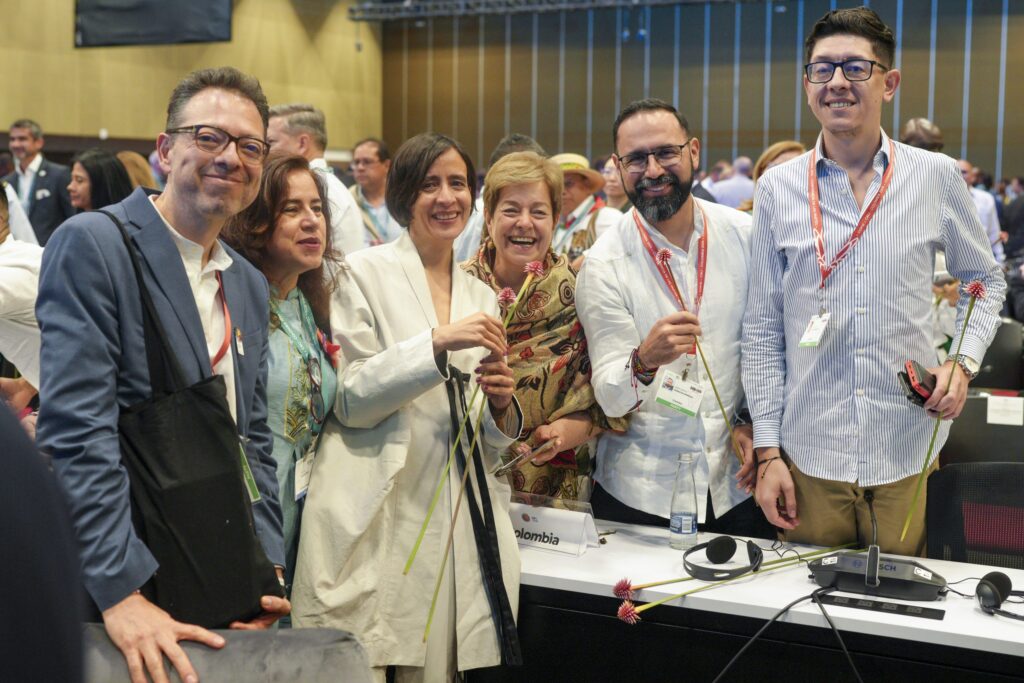
More than 700,000 people walked through the public green zone at COP16 in Cali, Colombia. Of those, 23,000 were registered delegates, the most ever at a Convention on Biological Diversity conference.
The Colombian presidency branded the event the “People’s COP” and ran it under the slogan “Peace with Nature.” Finance executives, Indigenous groups, people of African descent, young activists and environmental organizations all had seats in the debate. The conference ran from 21 October to 1 November 2024.
What delegates were measuring
Cali was a checkpoint. At COP15, governments adopted the Kunming-Montreal Global Biodiversity Framework, which carries 23 targets and four goals. Delegates came to see who is on pace. Among the targets: bring 30% of the world’s land and sea under protection, restore 30% of degraded ecosystems by 2030, cut pollution and end subsidies that harm nature, farm subsidies included. The framework also calls for $200 billion per year from all sources to pay for biodiversity work.
Money drew the biggest crowd. Finance and Biodiversity Day, only the second of its kind, pulled in over 1,000 people from the finance sector. UNEP FI and its partners ran over 90 events across the green and blue zones, and opened the first Finance and Biodiversity pavilion, which dealt with steering money toward national biodiversity strategies and action plans.
One deal came out of it. Colombia’s Banco Davivienda, a UNEP FI member, launched a $50 million biodiversity bond with the IFC to protect and restore the country’s wildlife and habitats.
Genetic data and Indigenous seats
Negotiators also settled how to share profits from digital sequence information, the genetic codes drawn from organism samples and passed around online. Pharmaceutical and cosmetics companies use that data to make money, while the communities where the samples originate have often seen little return. The new fund could bring in as much as $1 billion annually.
Delegates also approved a permanent body inside the Convention on Biological Diversity to represent Indigenous peoples and people of African descent and their communities.
Publications and the ask to banks
UNEP FI used the conference to release a set of papers for lenders and insurers. They included sector guidance for banks with exposure to agriculture, forestry and mining, a paper titled “Nature in the Boardroom,” and “From Kunming-Montreal to Cali: Is the Financial System on Track?”, informally called the CBD Scorecard. It also soft-launched insurance guidance on priority actions for a nature-positive future.
As the conference wound down, UNEP FI said the need for “substantial and dedicated investments remains urgent” and urged financial institutions worldwide to line up their portfolios with nature-positive goals.
Sources
- COP16: A Historic People’s COP Sets the Stage for Nature-Positive Action
- 2024 United Nations Biodiversity Conference




