
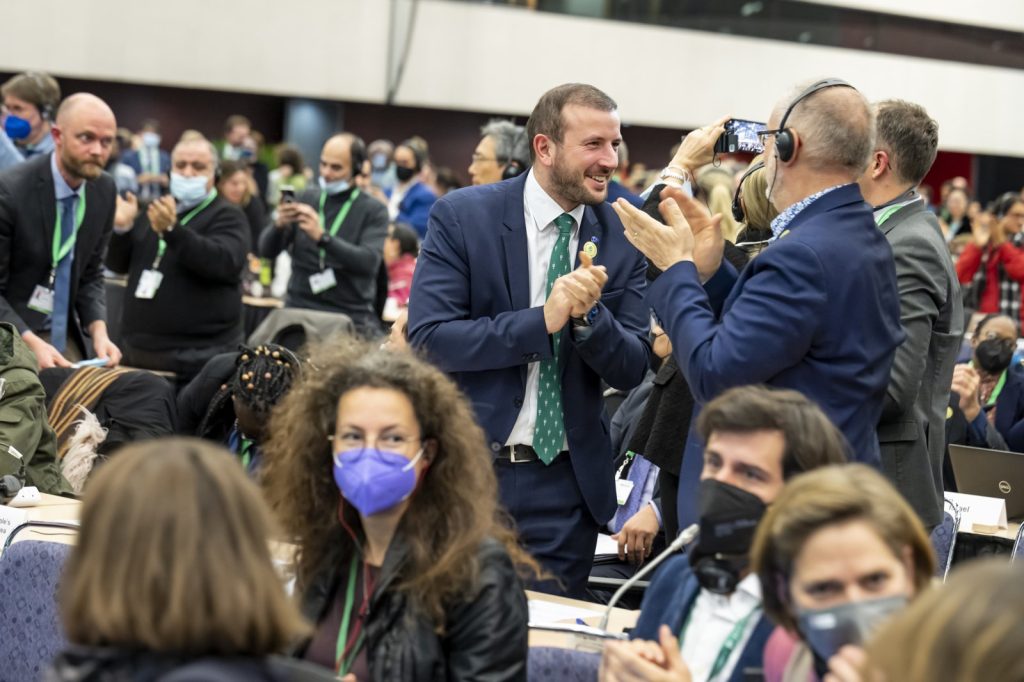
About 23,000 delegates registered for COP16 in Cali, the largest meeting in the history of the Convention on Biological Diversity. The final plenary ran roughly 12 hours past schedule, and then the room emptied. Delegates left to catch flights, a quorum check failed, and Colombia’s environment minister Susana Muhamad suspended the session on Saturday, November 2, 2024.
The summit had opened on October 21 with one main job: a detailed plan for raising money to protect species. It did not get one.
The funding gap in numbers
The 2022 Kunming-Montreal Global Biodiversity Framework set 23 targets for 2030. Nations agreed then that $200 billion a year should flow to biodiversity by that date, including $30 billion moving from rich countries to poorer ones. Carbon Brief, citing OECD data, put developed-country contributions in 2022 at $12.1bn, of which only $3.8bn was aimed specifically at biodiversity. AFP, via France 24, gave an overall figure of about $15 billion a year.
Pledges in Cali were small against that backdrop. On October 28, seven countries and Quebec added $163 million to the Global Biodiversity Framework Fund, taking its total to $396 million. “We are talking about millions that have been pledged… But what we are expecting are billions,” said Irene Wabiwa Betoko of Greenpeace.
Where the money talks broke down
Developing countries wanted a dedicated biodiversity fund, saying they have too little say in the existing channels. Muhamad tabled a draft proposing one. The European Union, Switzerland and Japan rejected it.
The lost quorum then froze three items at once: the new fund, the framework for monitoring progress, and the procedures for reviewing national biodiversity plans. The Democratic Republic of the Congo had tied the monitoring framework to the resource question, according to Carbon Brief. Only 44 of 196 parties had submitted updated national plans by the close.
“The global north gets to keep the status quo. The global south gets a process,” said Lim Li Ching of the Third World Network.
What did pass
Delegates approved the Cali Fund, which asks companies that profit from genetic sequence data to contribute 1% of profits or 0.1% of revenue. Carbon Brief noted the wording is “should contribute,” so payment is voluntary. At least 50% of the benefits must go to the needs of Indigenous communities.
They also created a permanent Indigenous body within the convention. The plenary broke into applause when it was adopted.
Rome next
The convention secretariat announced that the suspended session would resume from 25 to 27 February 2025 at FAO headquarters in Rome. Muhamad, who presides over COP16, put it this way: “Securing adequate and predictable financing will be central to our efforts.” On the table are a strategy targeting $200 billion a year by 2030 from all sources and a cut in harmful incentives of $500 billion a year.
The data behind the talks was stark. AFP reported that 27% of assessed species face extinction risk, while 17.6% of land and inland waters are protected. “The clock is ticking,” UN Secretary-General Antonio Guterres said.
Sources
- COP16 ends with no agreement on funding roadmap for species protection (France 24 / AFP)
- COP16: Key outcomes agreed at the UN biodiversity conference in Cali, Colombia (Carbon Brief)
- Countries to Resume Crucial Biodiversity Discussions in Rome, 25-27 February 2025 (Convention on Biological Diversity)




