
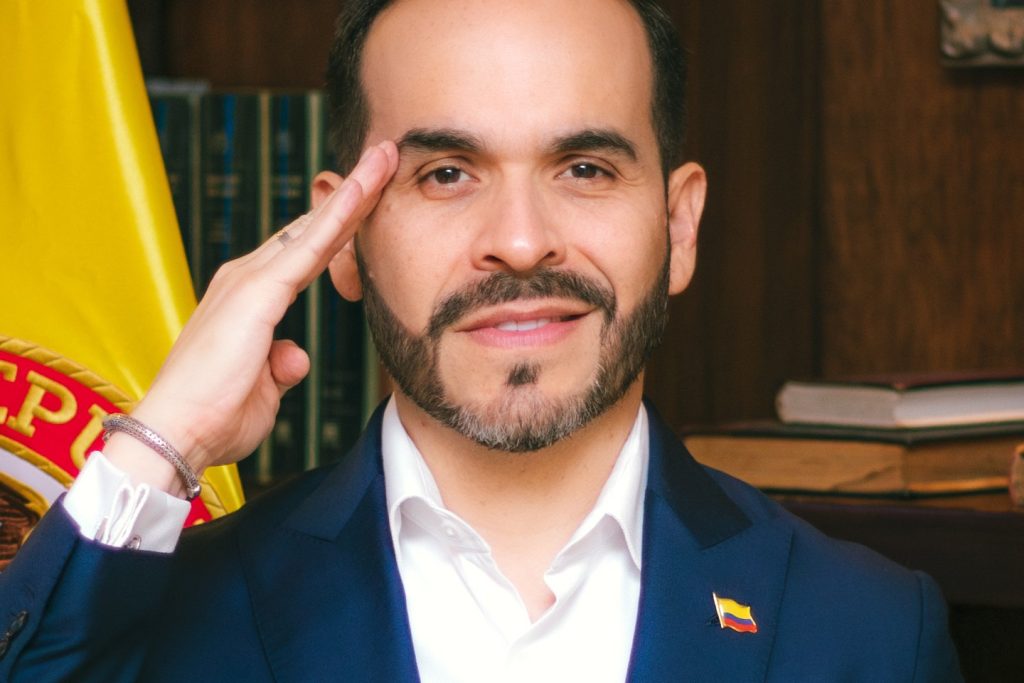
Twelve elections across Latin America in three years, and the right has taken the lead in most of them. Colombia’s runoff on Sunday, which Abelardo de la Espriella won narrowly, fits the pattern. El Pais counts 12 of the 16 countries it analyzed as now governed by right-wing forces.
De la Espriella calls himself El Tigre. He says he trusts only “God” and “the People,” and after winning the first round he declared it “the total defeat of the usual politicians, of the usual parties.” El Pais places him in the most personalist and heterodox strand of the regional right, alongside Argentina’s Javier Milei, who casts himself as a lion, and El Salvador’s Nayib Bukele, who was re-elected in 2024 after amending the Constitution. All three admire U.S. President Donald Trump.
Not the old right
Steven Levitsky, a Harvard professor of governance and author of How Democracies Die, says this is a new movement. “It is very different from the right of the early 2000s, with Sebastian Pinera, Vicente Fox, Pedro Pablo Kuczynski,” he told El Pais. Those leaders were more liberal and focused on markets. Today’s version puts security and culture wars first, with Milei the exception because he stresses the economy. It attacks minority rights, Levitsky said, and “generally has a more precarious relationship with democracy.”
That does not mean most voters have swung right, he cautioned. Perhaps only Bukele commands massive support. Levitsky points instead to “the tremendous level of dissatisfaction with the status quo and with incumbents.”
Two weeks before Colombia voted, Peru held its election. Keiko Fujimori, on her fourth attempt, was the virtual winner with a lead of about 40,000 votes. In Brazil, Flavio Bolsonaro is trying to challenge Luiz Inacio Lula da Silva in October. Only Mexico, Brazil, Guatemala under Bernardo Arevalo and Uruguay under Yamandu Orsi have resisted the shift.
Tigers and town squares
The contrast in Colombia was visual. De la Espriella travels by private jet, sells campaign T-shirts with a tiger on them and runs a highly professional social media operation. His rival Ivan Cepeda held rallies in town squares and flew commercial. Sandra Borda, an international relations scholar at the University of the Andes, said voters “are captivated by the spectacle of electoral politics” that De la Espriella introduced, something centrists do not offer.
His rhetoric did not hurt him. Cepeda accused him of ties to paramilitary groups, and his repertoire includes sexist remarks and mockery of the LGBTQ community. Kast’s praise of Pinochet and Milei’s pledge to take a “chainsaw” to the state did not stop either man either.
The left has its own problems, according to the analysts El Pais quoted. Pablo Stefanoni says it offers “a discourse more rooted in the past than in the future” and speaks less to the young. Levitsky puts it harder: the far right is the only force with a project that inspires passion. Rafael Rojas of El Colegio de Mexico reads the narrow Colombian defeat as confirmation that the Bolivarian bloc has come apart.
The security pitch
Latin America’s median homicide rate is 17.6 per 100,000 inhabitants, according to Insight Crime, and extortion is more widespread than ever. Hard-line promises sell in that setting. Stefanoni argues the right is not necessarily more effective on crime, but a simple recipe sounds more disruptive than a complex one.
The record is mixed. Bukele’s state of exception and mega-prison cut crime sharply in El Salvador, though organizations have documented human rights violations, torture, disappearances and killings there since 2022. Ecuador’s Daniel Noboa militarized prisons and repeatedly declared states of emergency, yet violence has not stopped. Costa Rica’s Laura Fernandez, elected in February, is pursuing a Bukele-style mega-prison.
In Chile, Jose Antonio Kast has spent three months in office cutting social spending and taxes, scrapping inclusive language in public services and creating a register of minor offenses. Penalties include withdrawing housing assistance or revoking driver’s licenses for things like drinking on the street.
De la Espriella’s own plan is to end the decades-long armed conflict in 90 days, with U.S.-backed bombing of armed groups and Bukele-style mega-prisons. He toned it down as the vote neared. Cepeda had offered “human security” and implementation of the 2016 peace agreements with the FARC.




