
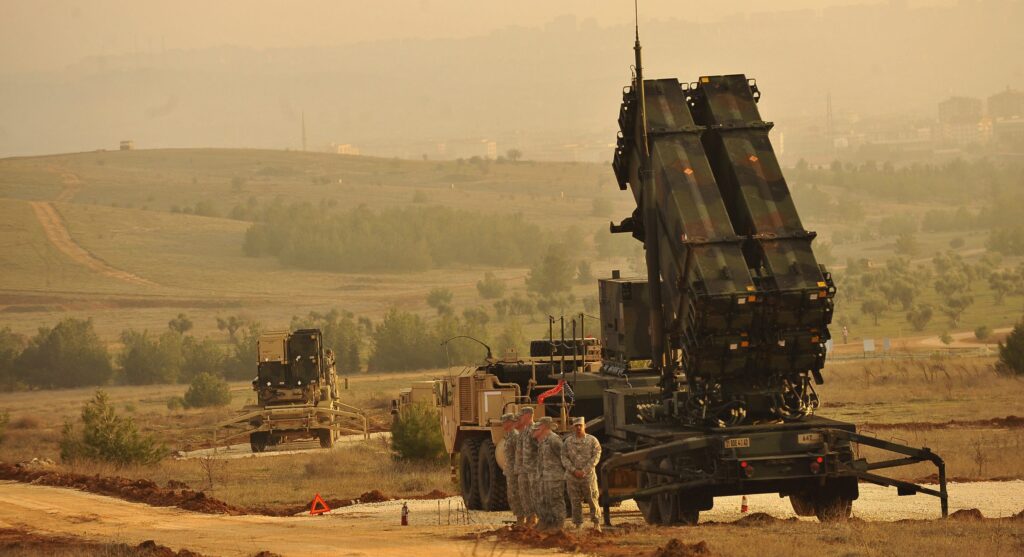
The U.S. Army said Patriot missiles destroyed 45 of 47 Iraqi Scuds in the 1991 Gulf War. Theodore Postol looked at the television footage and said the Patriot “didn’t work.” That call made his name, and it started a career spent contradicting the Pentagon.
MIT Technology Review profiled him in April 2002. By then he was an MIT professor of science, technology and national security policy, a post he took up in 1989. He had trained at MIT as a nuclear engineer, worked at Argonne National Laboratory, moved to Washington in 1980 to join Congress’s Office of Technology Assessment, and later served as senior scientific advisor to the chief of naval operations, before a spell at Stanford. Physicist Sidney Drell called him “a unique resource for doing hard-nosed, accurate, reliable and important technical analysis.”
The Patriot fight
The response was rough. The Pentagon opened a security investigation, and Raytheon, the manufacturer, accused him of doctoring video. Eventually the Pentagon admitted the Patriot had failed. In 2000 an American Physical Society panel judged the criticisms of his analysis “without merit.”
Decoys and a $100 million test
His next target was the national missile defense plan, priced then at $60 billion. The question was whether an interceptor could tell a real warhead from decoys. Nira Schwartz, an image analysis expert hired by TRW in 1995, concluded the company’s software could not, and TRW fired her in 1996 after she pressed it to tell the Pentagon. She sued under the False Claims Act.
A $100 million flight test in June 1997 was declared a success by the Pentagon and TRW. Investigators who examined the data disagreed. Postol said the researchers “fudged, dry-labbed, manipulated and censored the data.” A General Accounting Office study reportedly concluded that the test could not have worked because of an infrared sensor failure. A review by a team called POET cleared TRW, though Postol pointed out that its data contradicted its conclusions and that some members were from Lincoln Laboratory, which gets $80 million a year from the Ballistic Missile Defense Organization. That, he said, was “clearly a conflict of interest.” The FBI called the affair a “scientific dispute” with no criminal basis.
He took it to MIT’s president, Charles Vest, and still found the response lacking. “A failure of leadership at every level,” he said.
Critics and later evidence
Not everyone accepts his method. Bellingcat wrote in 2016 that Postol reused his Patriot approach, analysis of public video, on Iron Dome, even though in 1991 both interceptor and target showed up on camera, while in the Iron Dome footage only the interceptor’s contrail was visible. Even a colleague’s praise came with a caveat: Technology Review said his volatility sometimes undercuts his arguments.
On decoys, the record since has leaned his way. The Union of Concerned Scientists reported in 2019 that “none of the 18 GMD intercept tests performed through 2018 have included realistic decoys and other countermeasures.”




