
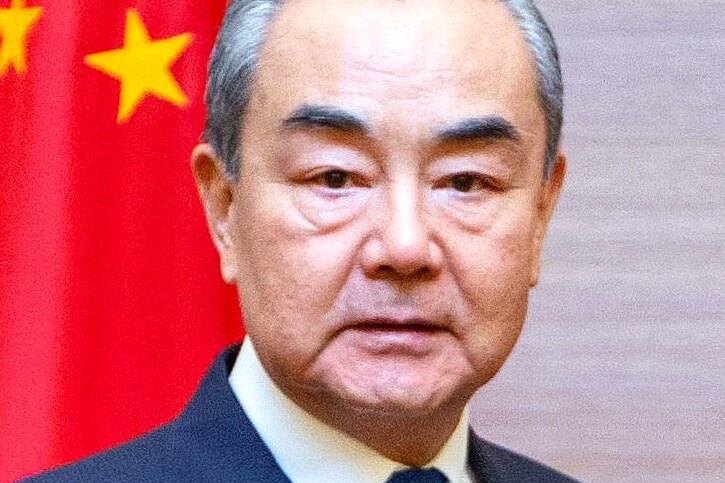
Iran’s foreign minister flew to Beijing for a single day on Wednesday and left with a public pledge from China to help get peace talks started.
Abbas Araghchi met his Chinese counterpart, Wang Yi, a week before President Donald Trump is due in China to meet Xi Jinping on May 14-15. It was Araghchi’s first trip to Beijing since the US-Iran war began. Chinese state media said the two men discussed the standoff over the Strait of Hormuz and the US blockade of Iranian ports.
What each side said
According to a readout from China’s Foreign Ministry, Araghchi updated Wang on the state of Iran-US negotiations and what Tehran plans to do next. He told Wang that “the issue of opening the Strait of Hormuz can be resolved as soon as possible.”
Wang pressed for continued talks. “Persisting in negotiations is particularly important,” he said, adding that “China believes that a complete cessation of hostilities is imperative.” Beijing, he said, hopes the parties will “respond promptly to the strong calls from the international community” to reopen the waterway, and it is ready to “play a greater role in restoring peace and tranquility in the Middle East.”
Araghchi answered in kind. Iran wants closer coordination with China in multilateral affairs, he said, and wants to deepen the Iran-China comprehensive strategic partnership.
The strait since February 28
Roughly a fifth of the world’s oil passed through Hormuz before the conflict began on Feb. 28. Traffic has collapsed since. The Joint Maritime Information Center puts daily ship movements in single digits, down from a daily average of 138 before the fighting.
Shortly before the Beijing meeting, Trump announced a pause in the US military operation to reopen the strait. Less than 48 hours after it began, he said, the US and Iran had made “great progress” toward a deal. Secretary of State Marco Rubio had said on Tuesday that major US military operations against Iran were over.
Pakistani Prime Minister Shehbaz Sharif welcomed the pause on X, writing that Pakistan is “very hopeful that the current momentum will lead to a lasting agreement.” He said Pakistan and Saudi Arabia, along with other “brotherly countries,” had asked for it. Pakistan hosted US-Iran talks in April that produced no breakthrough.
Washington leans on Beijing
US officials have been urging China to act. Treasury Secretary Scott Bessent said on Monday that Beijing should “step up” with diplomacy and “get the Iranians to open the strait.” Rubio took a harder tone. He said he hoped the Chinese would tell Araghchi that Iran’s conduct in the strait was leaving it “globally isolated,” and added: “You’re the bad guy in this.” China’s export-driven economy, he argued, suffers more from the closure than the US does.
China has leverage. It is Iran’s biggest oil customer, which has kept Tehran’s exports moving despite US sanctions. Much of that crude travels on a so-called shadow fleet and is refined by small private processors known as teapot refineries. Over the weekend China’s Ministry of Commerce told domestic companies not to comply with US sanctions on five Chinese refiners tied to Iranian crude, using a rarely invoked legal mechanism introduced in 2021 to counter what Beijing calls unjustified extraterritorial application of foreign law.
China has strongly criticised the US blockade of Iranian ports, which is squeezing Beijing’s own energy supplies. It is also widely reported to be assisting Pakistan in its mediation between Washington and Tehran.
Sources
- Iran, China discuss Hormuz reopening amid potential US-Iran talks
- China, Iran hold Talks In Beijing As Pressure Mounts Over Strait Of Hormuz Blockade | Outlook India
Sources
- Iran, China discuss Hormuz reopening amid potential US-Iran talks
- China, Iran hold Talks In Beijing As Pressure Mounts Over Strait Of…




