China bought 1.65 million barrels of Russian crude a day in March 2023, a U.S. intelligence report found, making Beijing the largest buyer of Russian oil. That one figure explains a good deal about why a war fought on Ukrainian soil is decided partly in Beijing.
Three men sit at the center of it: Volodymyr Zelensky, Vladimir Putin and Xi Jinping.
The comedian in the bunker
In 2019 Zelensky announced a run for president with no political experience at all. He was best known as a comic actor who played a teacher thrown into the presidency in Servant of the People, a show whose name his party borrowed. Some treated the candidacy as a joke. Then he won with 73% of the vote, at 41, on promises to fight corruption and end the fighting in the east, the BBC recounted in its profile.
Doubters feared a puppet of the oligarch Ihor Kolomoisky, who had backed his campaign. The BBC says Zelensky proved more independent than that. Peace was harder. Prisoner exchanges and steps toward the Minsk agreements produced no breakthrough, and his approval rating slid through 2020.
The war changed his tone. In Munich that February, at the security conference, he charged the West with appeasing a Russia on the rise. On 24 February, hours before the bombardment began, he revealed that his attempt to phone Putin had met with silence. “When you attack us you will see our faces – not our backs, but our faces,” he said. After the invasion he put on military fatigues for his broadcasts. After Russia wrongly claimed he had run away, he filmed himself in Kyiv with his advisers. “We are here,” he said. “We are protecting Ukraine.” His approval peaked at 90%.
Beijing’s calculation
Xi and Putin announced a “no limits” partnership just weeks before the invasion. Since then China has called its stance “principled neutrality”, NBC News reported in February 2023: no condemnation of Russia, calls for peace talks, and a refusal to break sanctions in the open. When Wang Yi met Putin in Moscow, he said China was “ready to deepen our strategic partnership”.
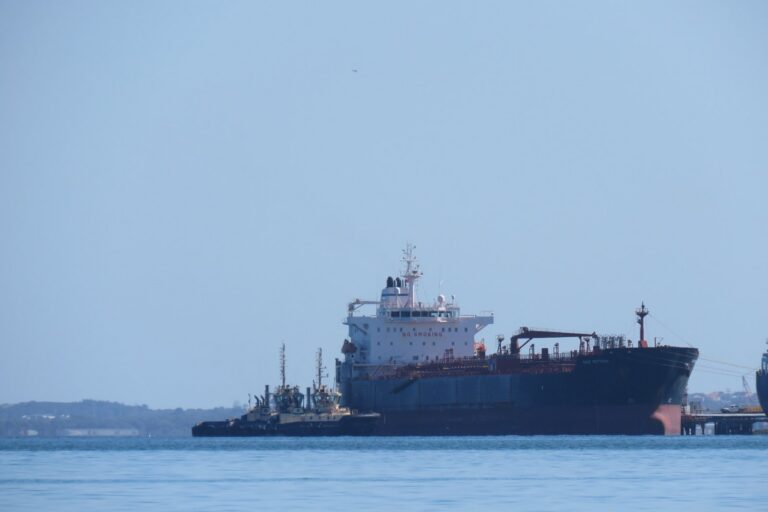
The economic side is larger than the diplomatic one. The U.S. intelligence report found that Chinese state-owned defense firms sent navigation gear, parts for fighter jets and dual-use items to Russian firms. By March 2023, customs data showed drone and drone-part exports above $12 million. About 18 Chinese super-tankers could carry roughly 15% of Russia’s Urals exports that year. Payments for Russian exports shifted toward the yuan, which went from a negligible share to 14% by September 2022.
Beijing denies arming Russia. Its embassy in Washington said China “does not sell weapons to parties involved in the Ukraine crisis and prudently handles the export of dual-use items in accordance with laws and regulations”. Representative Jim Himes saw it differently: the war, he said, had been enabled “in no small part by China’s willingness to support them”.
Torigian of American University told NBC that Beijing sees Russia as a strategic check on American dominance but has to weigh the economic and reputational price, especially with the European Union. EU foreign affairs chief Josep Borrell warned that arms deliveries would cross a “red line”. Washington’s charge was nonlethal aid, which China denied.
Putin’s side of the equation is the silence Zelensky described on that February morning in 2022. Russia’s disappointment at China’s reluctance to supply military help, NBC noted, shows the strain beneath the declared partnership.
Zelensky’s own standing with Washington shifted too. His trip there at the end of February 2025 broke down in an angry clash with Trump and Vice President JD Vance.
Sources
- Ukraine's Volodymyr Zelensky: The comedian who became a wartime leader (BBC News profile)
- China's Ukraine balancing act may be tilting toward Putin (NBC News)
- China helps Russia evade sanctions and supply military tech, U.S. report says (NBC News)