
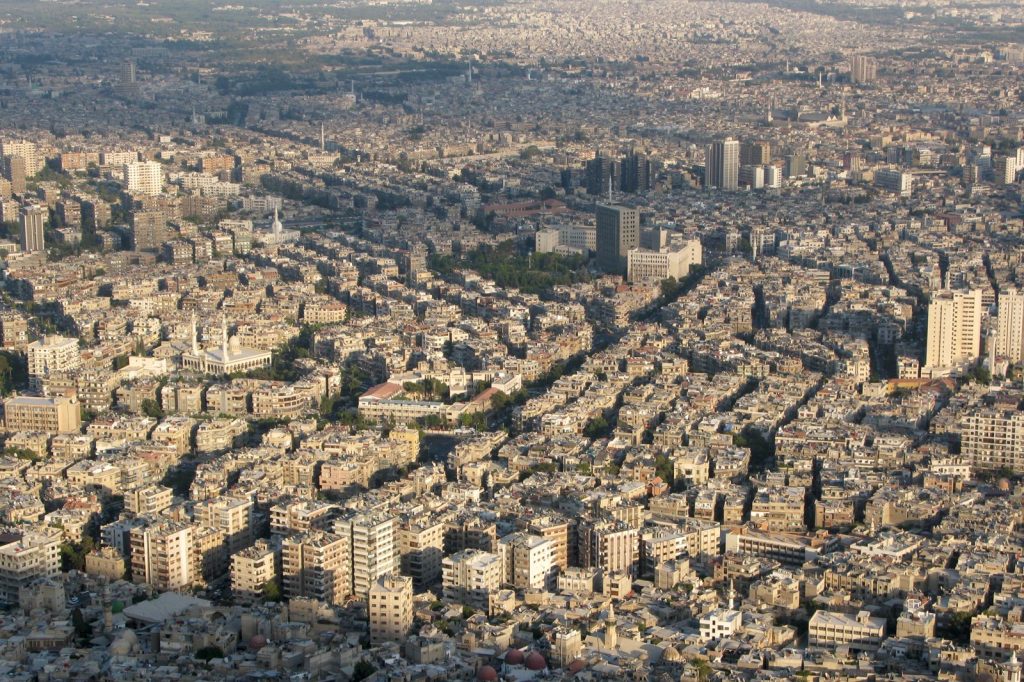
Syrian opposition fighters said early on Sunday that they were inside Damascus. By the end of the day they had announced on state television that “the tyrant Assad has been toppled” and that every prisoner in the capital was free.
The speed caught observers off guard. Rami Abdurrahman, who heads the Britain-based Syrian Observatory for Human Rights, told the Associated Press that President Bashar al-Assad had taken a flight out of Damascus. Two senior Syrian army officers gave Reuters the same account but did not know where he was headed. Reports later placed him in Russia, where he was granted asylum. Moscow’s foreign ministry said he had resigned and left Syria.
A fast offensive
The offensive began on Nov. 27. Within days the opposition had taken Aleppo and Hama and large stretches of the south. Insurgents reached the edge of Damascus on Saturday, the first time opposition forces had come that close since 2018, when government troops retook the outskirts after a siege lasting years.
A rebel commander, Hassan Abdul-Ghani, announced on Telegram that the “final stage” of encircling the capital had started. Fighters in the south were moving north, and the Syrian army pulled out of much of the southern region, including Daraa and Sweida. Prime Minister Mohammed Ghazi Jalali stayed in the capital and said so in a video statement. “I am in my house and I have not left, and this is because of my belonging to this country,” he said. His government, he added, was ready to “extend its hand” to the opposition and hand its functions to a transitional government.
The fall of Homs, Syria’s third-largest city, mattered a great deal. Its capture would sever Damascus from the coastal region where Assad had wide support. Al Jazeera footage showed fighters walking into the presidential palace, and the pro-government Sham FM radio said Damascus airport had been evacuated and flights halted.
Allies who did not come
Assad’s main backers were stretched thin. Russia was occupied with its war in Ukraine. Hezbollah, which once sent thousands of fighters to prop up his forces, had been weakened by a year of conflict with Israel. Iran’s proxies across the region had taken heavy damage from Israeli airstrikes, and U.S. officials said Iranian forces had “pretty much” left Syria by Saturday.
The assault was led by Hayat Tahrir al-Sham, known as HTS, together with the Syrian National Army, a Turkish-backed umbrella of militias. HTS has roots in al-Qaida and is classed as a terrorist organization by the United States and the United Nations. Its leader, Abu Mohammed al-Golani, told CNN on Thursday that the aim was to overthrow Assad’s government.
Washington stays back
The White House said President Joe Biden’s team was “closely monitoring the extraordinary events in Syria.” National security adviser Jake Sullivan said earlier that the U.S. would not “militarily dive into the middle of a Syrian civil war.” President-elect Donald Trump wrote on Truth Social that the U.S. should have nothing to do with it: “THIS IS NOT OUR FIGHT.”
Qatar’s top diplomat, Sheikh Mohammed bin Abdulrahman Al Thani, said he was surprised by how quickly the rebels advanced, and warned of a real threat to Syria’s “territorial integrity.”
Sources
- Fall of the Assad regime – Wikipedia
- Syrian President Bashar al-Assad flees, war monitor says, as his government collapses and insurgents enter Damascus
- Bashar al-Assad's regime collapses in Syria as opposition forces roll into Damascus – NPI's Cascadia Advocate




