
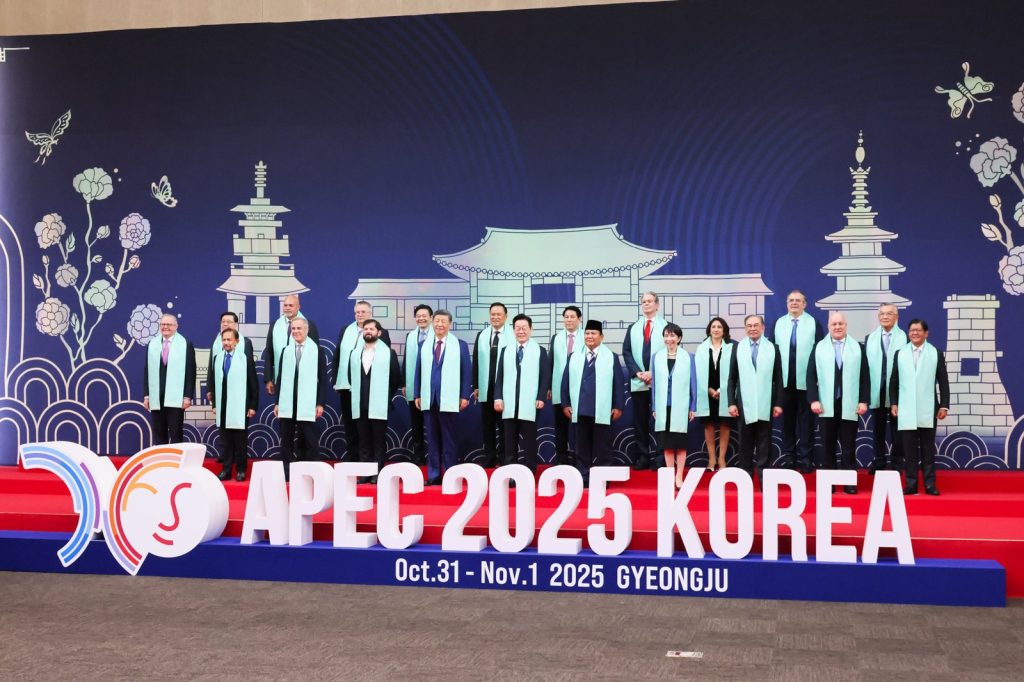
When the leaders of 21 Asia-Pacific economies left Gyeongju on November 1, 2025, they had just adopted the Gyeongju Declaration. South Korea, the host, had spent the two-day summit working out what could go into it.
The hardest part was trade. President Lee said the delegations had to settle “differences over whether to include a dedicated chapter on trade and investment.” They did settle it, but the Korea JoongAng Daily noted that the final wording leaves out direct references to the World Trade Organization, which was a concession to Washington under the Trump administration. U.S. Treasury Secretary Scott Bessent attended in place of the president. Chinese President Xi Jinping stayed until the close.
What leaders agreed to
The declaration is built on the theme “Building a Sustainable Tomorrow,” with three working priorities: Connect, Innovate, Prosper. On trade, members renewed their commitment to the Free Trade Area of the Asia-Pacific agenda, with a stated focus on transparent trade practices and on helping small and medium enterprises sell across borders. They also pledged to keep strengthening supply chains under the third Supply Chain Connectivity Framework Action Plan, which runs through 2026.
Artificial intelligence got the most attention. Leaders endorsed an APEC AI Initiative covering 2026 to 2030, aimed at building regional AI skills and drawing investment into AI infrastructure. The text calls for “human-centered” systems so that digital change benefits everyone. According to the JoongAng Daily, it is the first joint AI vision that both the United States and China have signed onto, and it reflects Korea’s proposal for an Asia-Pacific AI Center.
Ordinary households appear in the document too. A new framework on demographic change takes on aging populations and low birthrates through five areas of cooperation, and leaders endorsed “holistic and inter-generational policies” to keep economies growing as societies get older. The text also covers energy security, disruptions to food supply chains, and digital health. For the first time in an APEC leaders’ statement, cultural and creative industries are named as a driver of growth.
Handover to China
Lee formally passed the APEC chairmanship to Xi, and China will host the next summit in 2026. Vietnam follows in 2027 and Mexico in 2028.
Sources
- APEC Leaders Adopt 'Gyeongju Declaration'
- APEC ends with 'Gyeongju Declaration' underscoring importance of trade
- 2025 APEC Leaders' Gyeongju Declaration (APEC Secretariat)




