
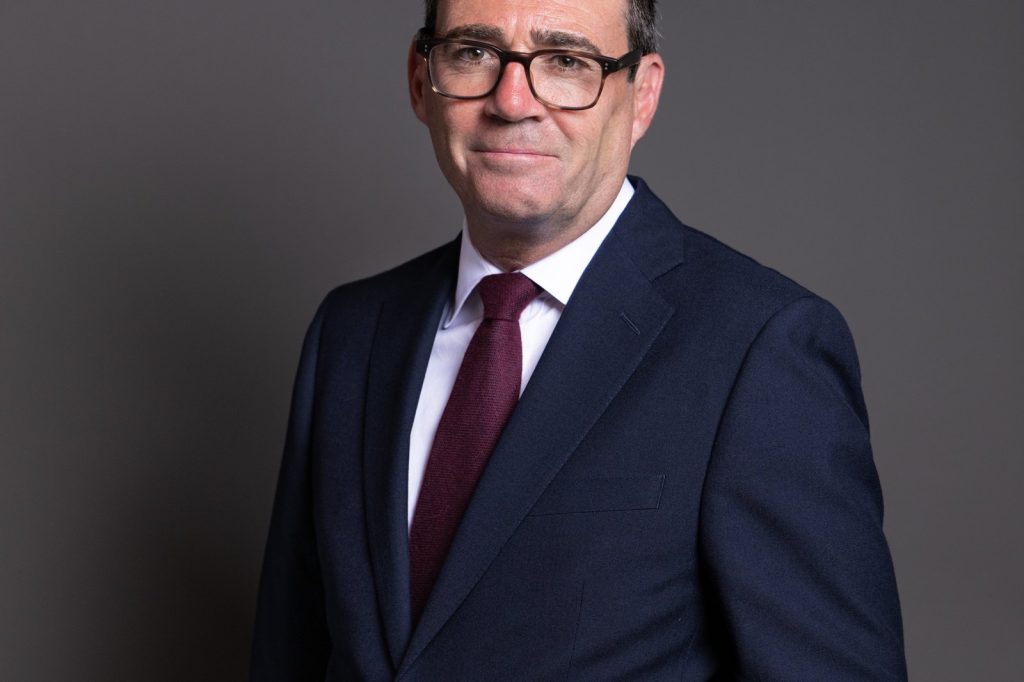
Eighteen percent of voters named Andy Burnham when Opinium asked who should replace Keir Starmer as Labour leader and prime minister. Angela Rayner came next on 5%, then Ed Miliband on 4%.
The poll surveyed 2,051 UK adults between 6 and 8 May 2026, days after Labour’s poor local election results.
Burnham, the Greater Manchester mayor, was the only potential Labour leadership candidate with a positive net acceptability rating, at +20. Rachel Reeves had the lowest, at -31. Voters were also more likely to say Burnham “understands the concerns of people like me” and “is most in touch with ordinary people” than to say it of the other names tested. He led on who “would be the strongest leader” and who “would represent the most real change.”
Starmer’s ratings stay near the floor
Starmer’s net approval stood at -43. Reeves was barely better at -42. Nigel Farage scored -18 and Kemi Badenoch -10, while Ed Davey, at -5, had the strongest rating of the major party leaders.
Asked directly, 56% said Starmer should resign as Labour leader. Some 26% said he should stay. On who would make the better prime minister, voters split evenly between Starmer and Badenoch, and Starmer and Farage tied on 28% each in a head-to-head.
On voting intention, Reform UK led on 28%, up one point. Labour held at 19% and the Conservatives at 18%. The Greens were on 16%, up one, and the Liberal Democrats on 11%, down one.
A popular successor with no seat
Burnham’s lead comes with a catch. He is not currently an MP. James Crouch, Opinium’s head of policy and public affairs, said “Labour’s bigger problem” is that the public’s preferred successor “has no easy route back to the Commons,” leaving the party with “both a leadership crisis and no obvious reset.”
The economic mood
Public sentiment on the economy was overwhelmingly negative. Nearly two thirds, 63%, expect the UK economy to worsen over the next 12 months, and only 10% expect it to improve. On key measures such as running the economy, setting tax levels and improving personal finances, voters still favoured the Conservatives over Labour. Labour kept an edge only on improving public services.
Nine in ten respondents, 91%, said grocery costs had risen in the past year, and 85% said the overall cost of living had gone up. More than 8 in 10 reported higher energy bills and council tax.




