
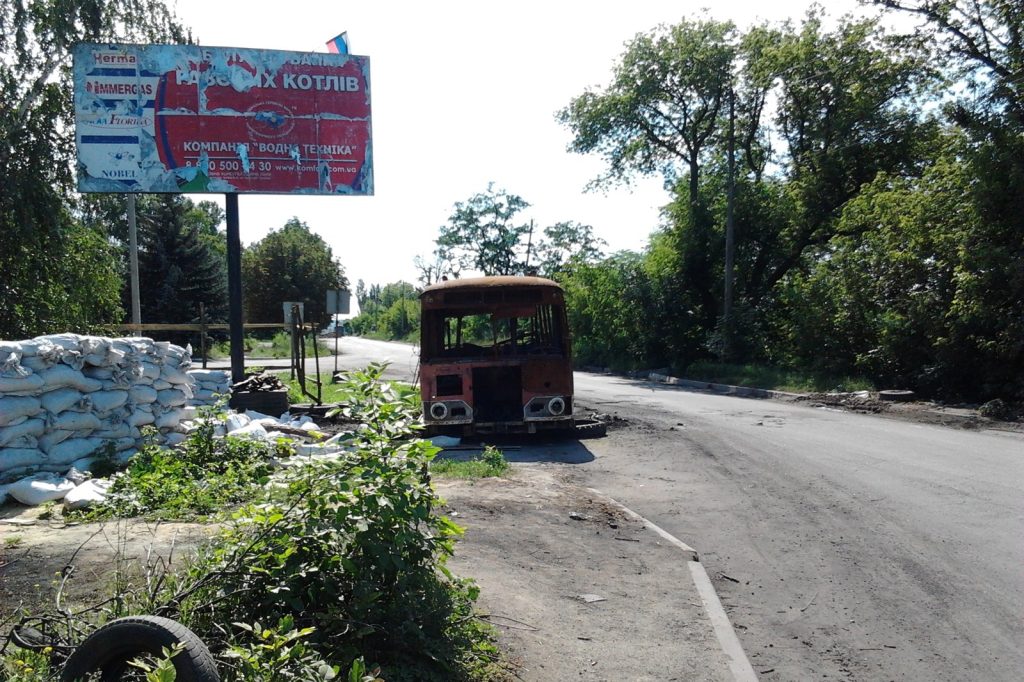
On Friday, July 3, Vladimir Putin appeared in military uniform to thank his troops for taking Kostyantynivka. The Russian defence ministry had just posted videos of soldiers waving flags in the town centre. It said its men were “in all parts of the town — from the southern to northern outskirts.” Kremlin spokesman Dmitry Peskov went further and called the capture complete, though he offered no evidence, RFE/RL reported.
Kyiv answered the next day. Andriy Kovalyov, a Ukrainian army spokesman, said to AFP that “the situation remains difficult,” yet the town “is under the control of the Ukrainian Defence Forces.” He conceded that small Russian groups had slipped into Kostyantynivka and that fighting continued. President Volodymyr Zelensky was blunter. He called the announcement “just another Russian lie” and added a taunt: “If Kostyantynivka were under Russian control, then perhaps Putin would have no problem meeting me there to find a diplomatic way to finally end this war.” Peskov replied that Zelensky was welcome to come to Moscow instead.
Why the town matters
Before the war Kostyantynivka held 78,000 people. It now sits near the end of the road to Kramatorsk and Sloviansk, the two large Ukrainian-held cities that Moscow ultimately wants in the Donbas. For months Russian units have pushed small infiltration teams into the streets, the same method AFP says delivered Pokrovsk in late 2025.
CNN, which has reported from near the town twice in a year, set the claim against geolocated video, testimony from Ukrainian soldiers and mapping by the independent Ukrainian group Deep State. Its conclusion: the capture was false. The July 3 map still showed Russia needing to establish control over large parts of Kostyantynivka. Russian troops were truly inside the southwest, and a grey zone of disputed ground ran deep into the centre.
The reporting also traces how slowly the front moved. A CNN team that visited the previous July found streets bustling with civilians and fishing nets strung over the road to shield cars from drones. By May, the same approach, the five-kilometre “Road of Life” from Druzhkivka, had to be walked on foot, with soldiers diving into the bushes whenever a drone passed. Western officials, CNN notes, had begun to echo Ukrainian estimates of up to 35,000 Russian dead or wounded a month.
A war of announcements
Moscow added a humanitarian twist on Saturday. Its defence ministry proposed a six-hour ceasefire around the town on Monday so it could hand over the bodies of Ukrainian soldiers, and gave Kyiv until Sunday to reply. The next day it accused Ukraine of refusing, Reuters reported through Al Jazeera.
The claims arrived alongside Russian reports of Ukrainian drones over St Petersburg, which Moscow said had hit an oil terminal. Ukraine’s own account of the week was darker: a Russian strike on Kyiv had killed 31 people, and a guided bomb attack on Sumy killed at least four.
A week after the declared capture, drone footage from Ukraine’s 19th Army Corps showed strikes on Russian troops in the rubble. “The enemy paints victories on screens, but in practice, they are destroyed by our units,” it wrote. “The city stands. Defense continues.” CNN put the scale plainly: the town covers 66 square kilometers; Russia spans 17 million. Even an optimistic estimate, it said, puts the fall of Kramatorsk and Sloviansk at least a year away.
Sources
- Ukraine denies Moscow claim of seizing strategic stronghold
- Ukraine Rejects Russia's Claim It Captured Key City
- Russia says Ukraine rejects local ceasefire in dispute over Kostiantynivka
- Putin's false claim of the capture of one Ukrainian town exposes the slow pace of Russia's bloody advance
- Putin's false claim … (later passages)
- RFE/RL (Sumy and Kyiv strikes)
- CNN (Deep State mapping, casualties)
- CNN (May reporting trip)




