
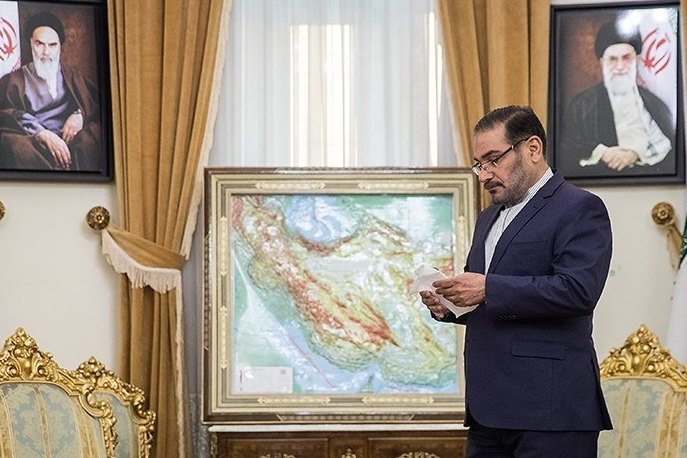
From Defense Minister to Nuclear Negotiator
Before his long tenure as secretary of Iran’s Supreme National Security Council, Shamkhani served as Iran’s Minister of Defense from 1997 to 2005 under President Mohammad Khatami. In that role, he oversaw the country’s military modernization and defense industries during a period of relative reformist openness. Yet that era also saw the expansion of Iran’s ballistic missile program and increased support for allied militias across the Middle East. His portfolio later expanded to include diplomacy when he became involved in the negotiations leading to the 2015 Joint Comprehensive Plan of Action, the landmark nuclear deal between Iran and world powers. For Western observers, Shamkhani’s presence at the table signaled Tehran’s willingness to engage on its most sensitive program—even as his background in defense and security suggested a hard-headed pragmatism. He represented a faction willing to negotiate on the nuclear file while maintaining a hardline stance on national security.
Architect of Strait of Hormuz Strategy
Shamkhani served as secretary of the Supreme National Security Council from 2013 to 2023, a period when Iran’s regional influence grew and its nuclear program remained a point of contention with Western governments. His tenure coincided with repeated warnings about closing the Strait of Hormuz, a narrow waterway through which much of the world’s oil passes. Those threats were not theoretical; they were part of a broader deterrence strategy intended to counter what Iran viewed as hostile economic and military encirclement, especially after the United States withdrew from the 2015 nuclear deal and reimposed sanctions. For Western analysts and military planners, Shamkhani’s threats represented a direct challenge to global energy security and a potential trigger for armed confrontation. The strait became a recurring flashpoint under his leadership, and his dual experience—defense leadership and strategic diplomacy—made him a central figure whenever Iran faced isolation or the threat of military action. His background as a combat veteran and commander of both naval forces gave his pronouncements weight; he understood that maritime pressure could reshape global energy flows and force international responses.
A Changing of the Guard
In 2023, Shamkhani was replaced as security council secretary by Admiral Ali Akbar Ahmadian, a senior commander in the Islamic Revolutionary Guard Corps. The transition marked a shift in Iran’s security establishment, with a naval officer taking the helm of the body that coordinates national security policy. What this means for the Strait of Hormuz and Iran’s broader strategy remains a question for analysts watching the region. Shamkhani’s departure closed a chapter defined by both diplomatic engagement and confrontational brinkmanship. The new leadership under Ahmadian has yet to signal a clear departure from the playbook Shamkhani helped write.
Shamkhani’s legacy embodies the continuity between Iran’s revolutionary past and its present security posture. His career reflects how Iran balances deterrence with diplomacy, using naval power to signal resolve while pursuing nuclear negotiations when conditions allow. The Strait of Hormuz, where he repeatedly raised the prospect of closure, remains one of the world’s most sensitive chokepoints. Should he ever return to a position of influence, his presence would signal that Iran’s leadership still views maritime pressure as a tool of statecraft—one that can test the limits of global energy security and draw international powers into confrontation.




