
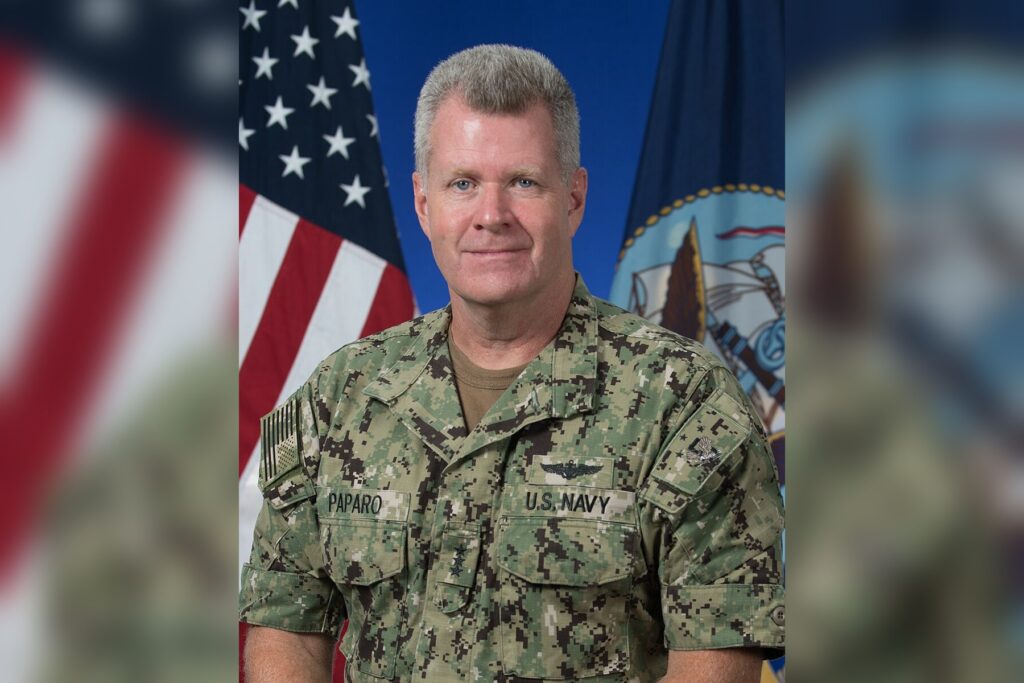
MANAMA, July 12 — Admiral Samuel Paparo, commander of the U.S. Fifth Fleet and U.S. Naval Forces Central Command, has positioned American naval power at the center of escalating tensions in the Persian Gulf. Based in Manama, Bahrain since February 2024, Paparo commands a force of approximately 30 ships and 15,000 personnel, including the USS Dwight D. Eisenhower carrier strike group.
The calculus for Washington in this theater is straightforward: maintain freedom of navigation through the Strait of Hormuz, a chokepoint for global oil shipments. In a March 2024 interview, Paparo stated that the U.S. Navy is “ready to respond to any threat.” That statement carries weight given his operational focus on countering Iranian drone and missile capabilities.
Paparo has deployed destroyers equipped with Aegis systems, including the USS Carney (DDG-64), to patrol these waters. The broader stakes involve not just American naval assets but the economic stability of allied nations dependent on Gulf oil transiting the strait.
From the Pacific to the Gulf
This is not Paparo’s first tour commanding a major fleet. A native of New York and a 1987 graduate of the U.S. Naval Academy, he served as commander of the U.S. Pacific Fleet from 2021 to 2024. In that role, he oversaw naval operations across the Indo-Pacific, managing the American response to Chinese naval activities in the South China Sea.
What this signals is a commander with deep experience in two of the world’s most volatile maritime theaters. Paparo holds a master’s degree in national security strategy from the National War College.
He is also a naval aviator with over 4,000 flight hours in the F-14 Tomcat and F/A-18 Hornet — a background that shapes his understanding of both air and surface threats.
Exercises and Alliances
Under Paparo’s command, the Fifth Fleet has conducted International Maritime Exercise (IMX) 2024, a multinational drill involving 50 nations. Such exercises serve a strategic purpose: they demonstrate interoperability among allied navies and send a clear signal to adversaries about collective resolve. Iran’s drone and missile programs remain the primary near-term threat.
The deployment of Aegis-equipped destroyers like the USS Carney is a direct response to that capability. Strategically, the U.S. Navy is betting on layered defenses — ships, aircraft, and allied systems — to protect both military assets and commercial shipping.
What to Watch
Paparo’s tenure at Fifth Fleet will be defined by how effectively he manages the dual pressures of Iranian provocations and the need to keep sea lanes open. His Pacific experience, particularly in countering Chinese naval assertiveness, provides a template for how he approaches the Gulf: forward presence, allied integration, and readiness to escalate if necessary. The Strait of Hormuz remains the flashpoint.
With 30 ships and 15,000 personnel under his command, Paparo has the tools. The question is whether diplomatic pressure or military deterrence will prevail.




