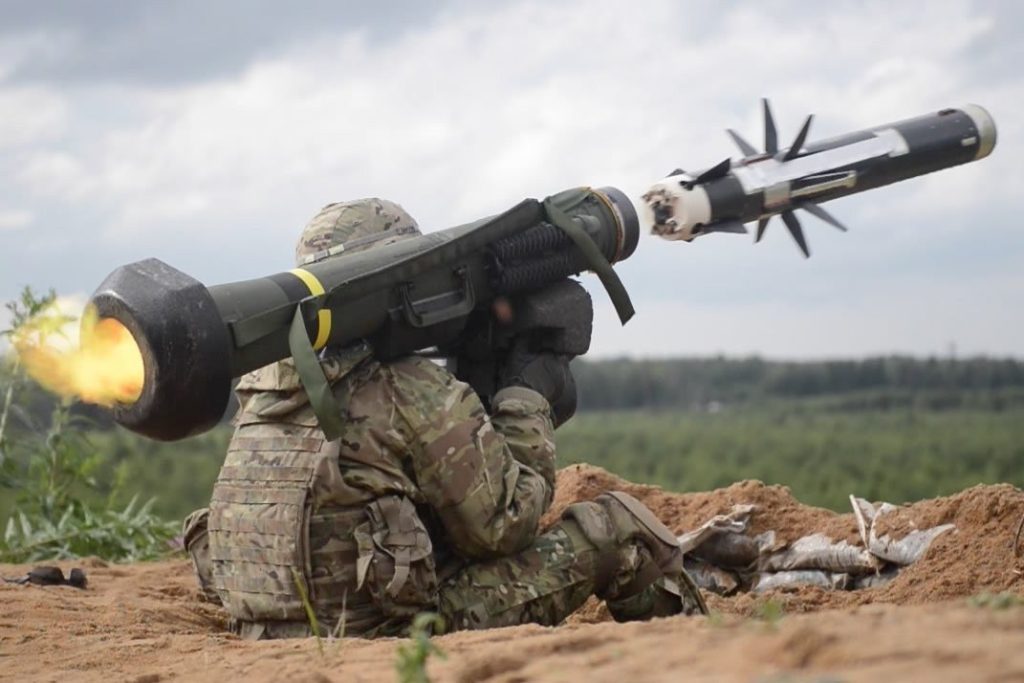
WASHINGTON, Aug. 2 — The United States is running two financial campaigns against Russia at once, and it is a mistake to read them separately. On the military side, Washington has committed over $2 billion in aid to Ukraine since the conflict began, routing advanced systems like the Javelin missile and the HIMARS rocket launcher into the fight. On the economic side, it has layered sanctions on Russian individuals and companies, a pressure campaign that works on a different clock. On closer reading, the two are one strategy: make the war so expensive for Moscow that continuing it stops making sense.
Two Ledgers, One Objective
The $2 billion military figure gets the headlines. The mechanics here matter more than the headline. This is not a lump-sum transfer written off in a single budget line. It is a continuous pipeline, and the systems named in the public accounting are telling: the Javelin, an anti-tank weapon designed to stop armor columns at range, and HIMARS, a precision rocket system that changes what Ukrainian units can reach from the front.
The catch is that the $2 billion is a floor, not a ceiling. Every tranche of aid resets the arithmetic of the battlefield, which means the number on the page is always slightly behind the equipment actually in use. The strategic point, though, is the consistency.
Follow the Money
Sanctions are the slower instrument, and the harder one to measure. The United States has imposed significant penalties on Russian individuals and companies — a targeted approach that goes after the funding base rather than the front line. The logic is straightforward: if the Russian economy bleeds enough, the capacity to sustain the conflict bleeds with it.
The stated assessment is that these measures have had a significant impact on the Russian economy. The catch is that economic pressure compounds rather than detonates. Sanctions do not end a war on a schedule; they raise its cost in increments, month after month, until the price of continuing exceeds the price of stopping. Washington has framed them as a key factor in the broader international effort to pressure Russia — and the phrasing matters, because it signals that the US does not expect to carry that pressure alone.
What is harder to see from the outside is enforcement. A sanction is only as strong as the willingness to apply it consistently, and that is where the international coalition becomes the actual mechanism.
The Forward Edge
The third piece of the strategy is geographic, and it is the one most easily overlooked in a ledger-keeping exercise. The United States has been tightening its relationships with Poland and the Baltic states, the NATO members sitting closest to the Russian border. These are not symbolic gestures. The stated purpose is to counter Russian influence and promote stability in the region — on closer reading, to build a forward position so that any escalation meets a prepared response before it reaches Ukraine’s territory.
Poland and the Baltics are not passive recipients in this arrangement. They are the states with the most obvious exposure, and their alignment with Washington gives the US a logistical and political foothold on the eastern edge of the alliance. Follow the money there, and the pattern is the same: aid, alignment, and pressure all pointed in one direction.
What to Watch
All three tracks — the weapons pipeline, the sanctions regime, the regional alignment — are presented as mutually reinforcing. Military aid keeps Ukraine equipped. Sanctions raise Russia’s cost of war. Regional ties keep the conflict from widening. None of them, on the evidence available, is treated as sufficient on its own.
What to watch now is durability, not drama. The $2 billion figure will grow; the question is whether the pipeline keeps pace with what the war consumes. The sanctions list will lengthen; the question is whether the international coalition holds together as the economic effects spread. And the