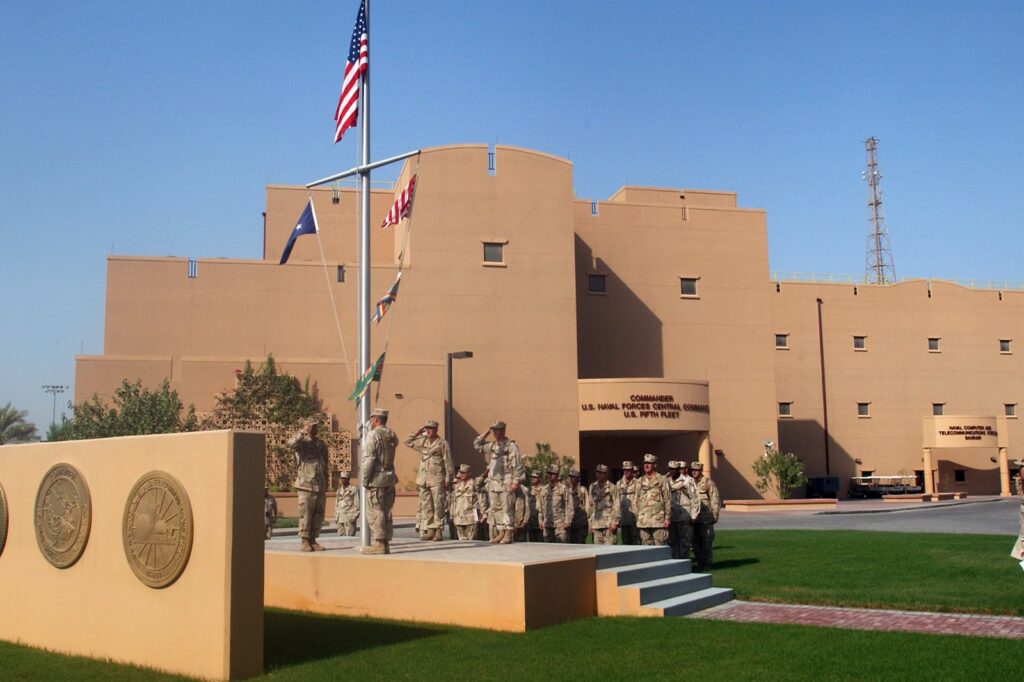
MANAMA, November 28, 2026 — The U.S. Naval Support Activity Bahrain, the headquarters for U.S. Naval Forces Central Command and the Fifth Fleet, remains crippled nine months after devastating Iranian strikes, operating at a fraction of its pre-war capacity as the Pentagon weighs a fundamental shift in its regional posture.
A Devastated Hub and Its Evacuees
On February 28, 2026, Iranian missile and drone strikes began, hitting the base, Bahraini energy infrastructure, residential buildings, and data centers, according to the record. The attacks resulted in two civilian deaths and dozens of injuries, including two Defense Department employees. The record shows that in the immediate aftermath, the pre-war population of over 8,000 military personnel, dependents, and civilian contractors was decimated. On March 2, the State Department ordered the departure of nonessential personnel, leading to the evacuation of approximately 1,300 family members to the U.S., Germany, and elsewhere. Only a small fraction of personnel remain, focused solely on critical operations.
The physical destruction is extensive. The Congressional Research Service estimates the damage to NSA Bahrain exceeds $400 million, a figure consistent with reports that the destruction remains visible from nearby highways. The broader cost of repairing U.S. bases across the region is even more staggering, with the Center for Strategic and International Studies estimating total regional base repair costs at $9.4 billion. The human and community impact is equally profound. Surrounding neighborhoods, once lively communities home to a U.S. school, movie theater, and franchises like Chili’s and Fuddruckers, are largely deserted. “It felt like a small town, except you were living overseas,” one former resident told The Washington Post. “Those were the best years of my life.”
Strategic Uncertainty at the Pentagon
The Navy’s leadership has offered a sober assessment of the base’s future. Acting Navy Secretary Hung Cao told The Epoch Times that Iran “blew the hell out of Bahrain.” More definitively, Chief of Naval Operations Adm. Daryl Caudle stated in August that the Navy is “not getting back in there anytime soon.” According to Navy officials, the formal evaluation of the base’s future presence began only recently, and no specific plans have been developed. One official, speaking on condition of anonymity, told The Washington Post, “Until all of this is resolved, we’re not going anywhere near there. It just doesn’t make any sense.”
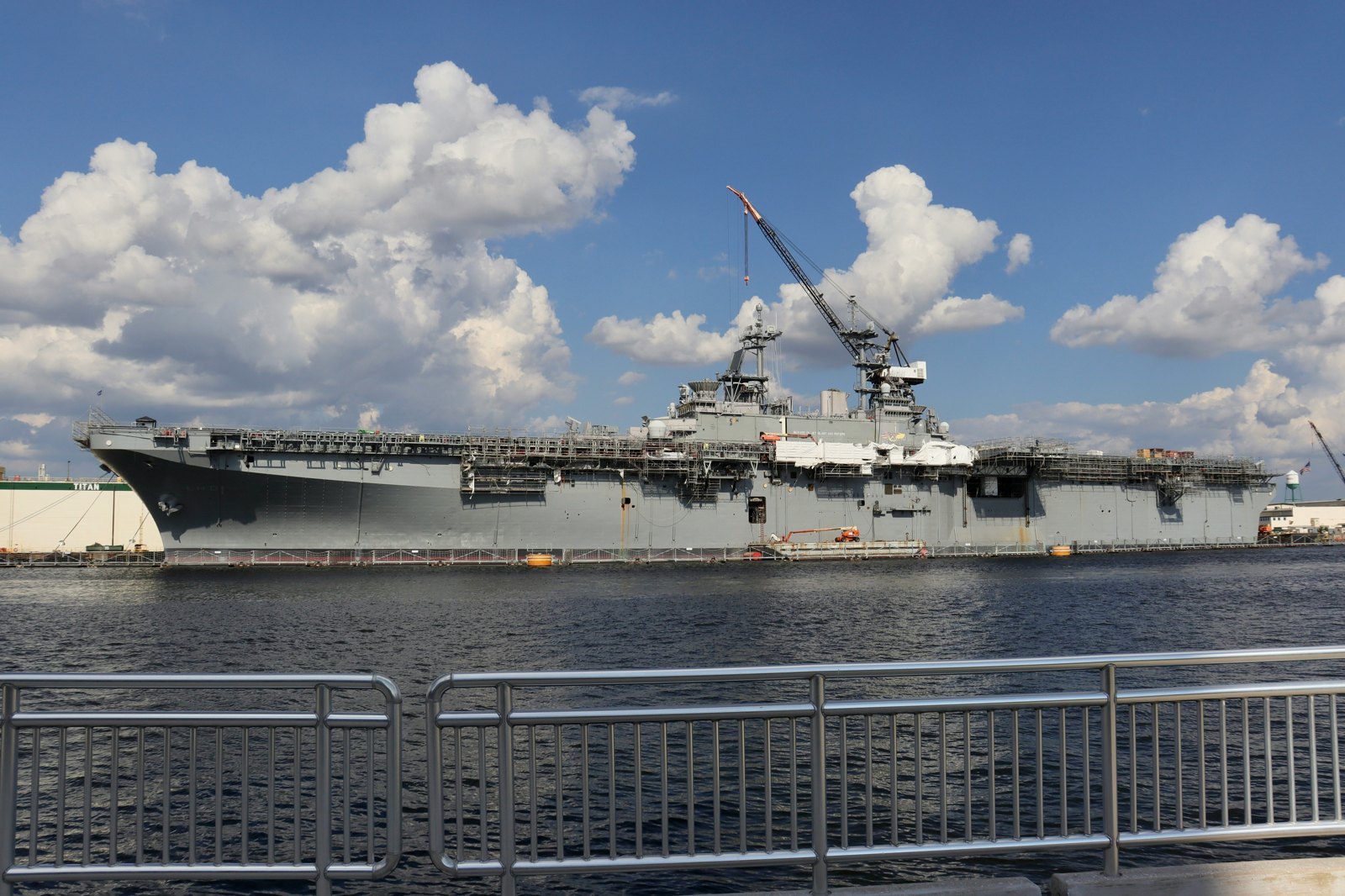
The Pentagon is actively assessing a strategic shift for the region. Sources familiar with the deliberations indicate the Pentagon has weighed reducing its Gulf footprint, with a possible relocation of forces to Israel and Jordan. A Navy official suggested that the U.S. could direct Middle East operations from the United States itself without fully rebuilding the Bahrain installation, maintaining relationships with Gulf allies through periodic regional visits.
A New Blueprint for the Region
This potential shift reflects a broader strategic reassessment. Experts anticipate a move toward a posture that is “smaller, more dispersed, more hardened, and generally further away from Iran,” according to Michael O’Hanlon, a senior fellow at the Brookings Institution. The vulnerability of large, centralized bases has been exposed. As Kelly Grieco, a defense policy expert at the Stimson Center, noted, major bases like the one in Bahrain are a liability because “they are right within the range of Iranian missiles and drones.” Some facilities, according to Mark Cancian, a senior adviser at CSIS, will likely be moved underground for protection, while others may be relocated further from the Gulf.
The strategic consequences of a compromised or permanently reduced base in Bahrain are significant. The installation has hosted a U.S. naval command presence since 1948, serving as a critical hub for operations during the Gulf War, the Iraq War, and subsequent efforts to deter Iran. Its prolonged disruption or closure would represent a major setback for U.S. regional power projection, forcing a fundamental re-evaluation of how the Navy maintains its presence and influence in the Middle East. The partnership between Bahrain and the United States, a Bahraini government spokesperson stressed, “remains strong, built on mutual trust, shared interests, and a common commitment to regional security and stability.” However, the physical reality of the base and the ongoing threat from Iran now cast a long shadow over that decades-long alliance.
Sources
- Future of US naval base in Bahrain uncertain after Iran’s strikes – Washington Post
- Areas near Bahrain US military base largely deserted months after Iran attacks | The Jerusalem Post
- How the Iran war is reshaping the US military presence in the Middle East
- Pentagon Weighs Future of Iran-Damaged Bahrain Naval Base
- The US withdrew most of its military personnel from Bahrain
Photo: U.S. Navy photo by Photographer’s Mate Phillip A. Nickerson, Jr. (Public domain)