European security officials are tracking a surge in terrorist plots and cyberattacks attributed to Iran or its proxies across the continent and in Britain, a campaign that has intensified since the United States and Israel launched a joint war against Tehran in February.
The Surge in Attributed Plots
On Veterans Day, President Trump declared from Arlington National Cemetery that the war with Iran had been a complete success and would end soon. That same week, the record shows a pattern of foiled operations that has rattled national security agencies and unnerved the public.
In September, U.S. prosecutors charged an Iraqi man, an Iranian operative, and a senior operative for an Iran proxy group detained in a New York jail with plotting to attack R.A.F. Fairford, an air base in England used by American bombers. The plot did not succeed, but it prompted a major security incident, according to The New York Times. Arson attacks on Jewish community sites and cyberattacks that raised temperatures in refrigerators and blood banks have also been attributed to Iranian actors.
The sense of unease spiked again on Friday when the U.S. government grounded all air travel for hours. Officials later attributed the stoppage to a technical issue, but the timing amplified the anxiety across European capitals.
Economic Fallout at the Grocery Store
The security threat is compounded by an economic one. Disruptions of oil deliveries through the Strait of Hormuz have driven up gas prices across Europe. Groceries cost more. Heating homes this winter has become far less affordable for ordinary residents, a direct consequence of the conflict that began on February 28 when the U.S. and Israel attacked Iranian sites, an operation that included the assassination of Supreme Leader Ali Khamenei.
Iranian social media accounts frequently post videos of attacks on ships violating Tehran’s new navigation rules for the strait. The U.S. is assisting tankers along a route close to Oman’s coastline, but the International Monetary Fund says Gulf Arab states are in recession despite higher oil prices, with Kuwait, Qatar, and Iraq’s economies contracting approximately 16 percent this year and Bahrain’s down 11 percent.
Bessent’s Relocation and the Expansion of the Campaign
The threat has reached the highest levels of the U.S. administration. Treasury Secretary Scott Bessent was relocated from his Washington, D.C., mansion to a U.S. military base following alleged Iranian threats to his life, The New York Times reported Tuesday, citing three sources. An anonymous source close to the matter told Reuters the threats increased after the Wall Street Journal published an aerial photograph of Bessent’s Georgetown residence in January 2025, which allowed the property to be geolocated.
Bessent has spearheaded the sanctions campaign dubbed Operation Economic Outcast since August to coerce Tehran to end attacks on shipping and reopen the Strait of Hormuz. He joins at least six other U.S. officials, including White House Chief of Staff Stephen Miller and former Attorney General Pam Bondi, who have left their Washington-area residences for protected housing in the last year.
“I think we are witnessing a deliberate expansion of Iran’s campaign of retaliation beyond the Middle East,” Andreas Krieg, an associate professor of defence studies at King’s College London, told Al Jazeera.
The United Kingdom is facing parallel threats. The U.S. military moved aircraft from a second airbase in the U.K. “in the wake of a threat from Iran,” the Wall Street Journal reported this week, citing people familiar with the matter. Two U.S. refuelling tankers and several other aircraft diverted from R.A.F. Mildenhall in eastern England to Germany and other locations on Monday. Weeks earlier, five men were arrested outside R.A.F. Fairford over a security incident, with two others later arrested on suspicion of assisting Iranian intelligence.
Diplomatic Leverage and the Midterm Shift
The diplomatic landscape shifted following U.S. midterm elections in which President Trump’s party lost its majority in Congress. Vice President JD Vance blamed the Republican losses on the unpopular war with Iran and the nature of U.S. relations with Israel.
On Thursday, Trump waved away the need for a deal with Iran on Truth Social, stating the U.S. has billions of Iran’s dollars frozen in overseas accounts. “We don’t need a deal with Iran. Those days have long since passed. We’ve got their money,” he wrote. He added that while the U.S. remains “locked and loaded,” an attack “seems to be quite unlikely.”
Negotiations remain stuck with Qatar mediating. Trump met Qatar’s prime minister at the White House this week and said Gulf Arab allies prefer “the status quo” of continued economic pressure on Iran. Meanwhile, Iranian President Masoud Pezeshkian announced on November 9 that Supreme Leader Ali Khamenei has authorized the government to engage in negotiations with the United States, a potential shift framed as a move sanctioned by the nation’s highest authority.
Sources
- In Europe, an Emboldened Iran Contributes to a Sense of Anxiety
- Iran–United States relations
- What's Trump's strategy now with Iran? To keep things as they are
- Iran President Says Khamenei Authorizes Negotiations with Washington
- Bessent’s relocation: From US to EU, is Iran bringing war to Western soil?
- Taliban Finance Minister Travels To Iran To Discuss Economic Cooperation
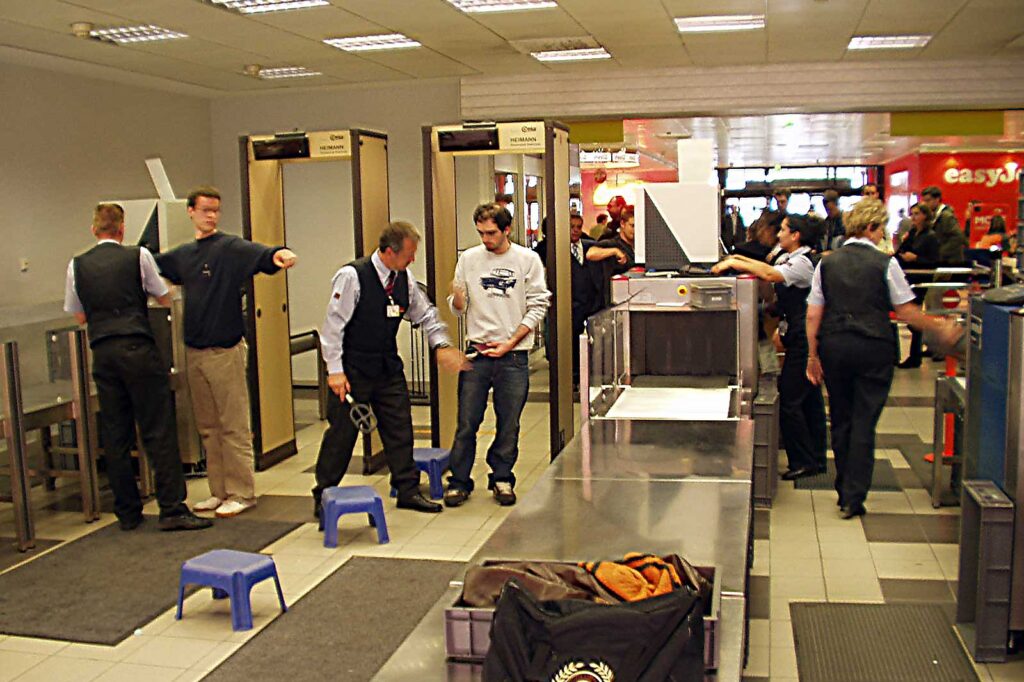
Photo: Ralf Roletschek (GFDL)