
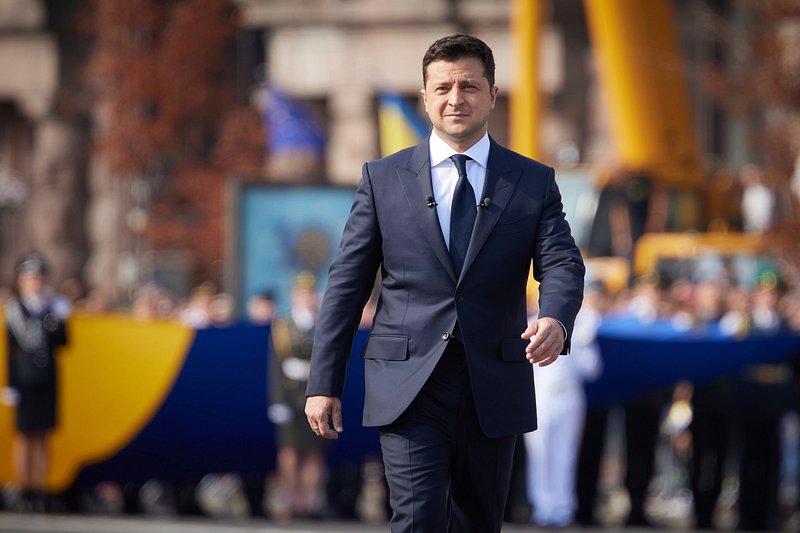
KYIV, February 19 — Ukrainian President Volodymyr Zelenskyy has rejected any prospective settlement of the war with Russia that would permit Moscow to continue exporting energy resources while the conflict in Ukraine persists. According to the statement, delivered at the Munich Security Conference on February 18, 2025, Zelenskyy explicitly dismissed proposals that would leave Russia with fuel supplies flowing while Ukraine remains under active invasion.
The Ukrainian leader’s remarks came as reports indicated that U.S. and European officials had discussed potential frameworks for ending the war, including the possibility of sanctions relief targeting Russia’s energy sector. Zelenskyy’s position, as the record shows, was unequivocal: the objective must be “Ukraine without war,” not a mere reduction in hostilities that would allow the Kremlin to maintain its economic lifeline.
The Strategic Context
The conflict, which began on February 24, 2022, with Russia’s full-scale invasion of Ukraine, has produced a humanitarian and strategic crisis that now extends into its fourth year. As of early 2025, the war has resulted in tens of thousands of casualties and the displacement of over 8 million Ukrainians. Ukraine’s infrastructure has sustained significant damage across multiple regions.
Zelenskyy has consistently called for the complete withdrawal of Russian forces from all occupied territories, including Crimea, which Russia annexed in 2014. The Munich Security Conference, an annual gathering of world leaders and security experts held in Munich, Germany, since 1963, provided the venue for this latest restatement of Ukraine’s negotiating position.
Energy as a Lever
The question of Russia’s energy exports has been a central point of contention throughout the war. European nations, which once relied heavily on Russian natural gas and oil, have been reducing their dependence, but global energy markets remain interconnected. Any sanctions relief for Russia’s energy sector would represent a significant shift in the Western approach to the conflict.
Zelenskyy’s rejection of such a scenario underscores the fundamental disagreement between Kyiv and those who might seek a compromise that leaves Russia’s revenue streams intact. According to the president’s statement, allowing Russia to continue exporting fuel while the war continues would be unacceptable.
What to Watch
The coming months will test whether the diplomatic discussions reported among U.S. and European officials gain traction or founder on the basic incompatibility of positions. Zelenskyy has drawn a clear line: the war must end, not merely pause. Whether that position can be sustained as the conflict grinds on, and whether Western allies will hold to the same standard, remains the central question of this phase of the war.




