
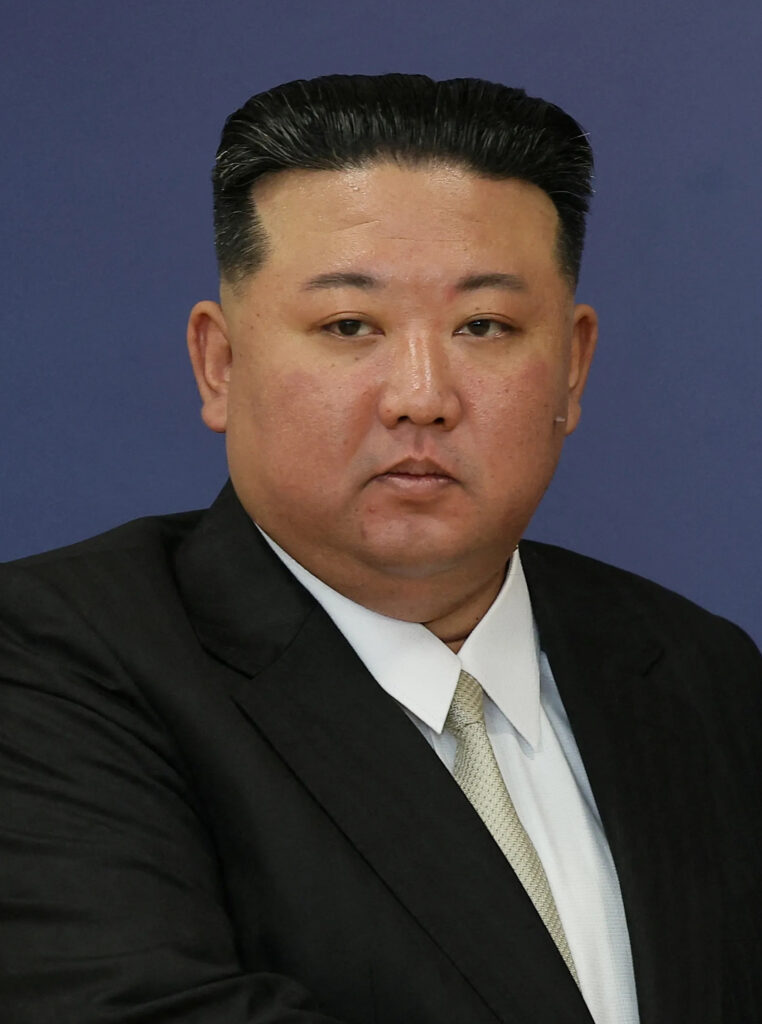
North Korea swapped out more than half of the officials in its key ruling bodies within about five weeks in early 2026, and Kim Jong Un came out of it with a fourth term as supreme leader. Daily NK described the sequence as the groundwork for that term.
Three events did the work. The Ninth Congress of the Workers’ Party of Korea ran from Feb. 19 to 25. Voters then elected the 15th Supreme People’s Assembly on March 15, and the new assembly held its first session on March 22 and 23. Kim kept his posts as party general secretary and president of the State Affairs Commission. Elder figures such as Choe Ryong Hae lost their places of influence.
It is Kim’s 15th year in power. Daily NK read the shake-up as a break from the path of Kim Il Sung and Kim Jong Il, and said Kim seems sure enough of himself, with a maturing nuclear arsenal and thousands of troops sent to back Russia’s war in Ukraine, to set his own direction. The outlet listed five pillars: nuclear weapons, self-reliance, ideological reinforcement, hostility toward South Korea, and diplomacy shaped by bloc membership or national interest.
A policy speech and tighter controls
The assembly confirmed what the party congress had decided and passed changes to the constitution and the budget. Its centerpiece was a Kim speech titled “On the Tasks Facing the Government of the Republic at the Present Stage of Socialist Construction.”
He defended the nuclear program and the self-reliance drive, and said he would keep pursuing autonomy, independence and self-defense backed by nuclear weapons. He also reached back to the 1970s “three revolutions” and demanded “strict administrative and legal measures” against what he called alien and unsound elements. A new police system is planned, along with a bigger role for neighborhood watch units and local government offices.
Daily NK saw unease at the top about public sentiment. Personnel moves fit that reading. Propaganda chief Ri Il Hwan joined the Party Presidium, and top military commissar Jong Kyong Thaek became vice chairman of the Central Military Commission and head of the Military Political Leadership Department. At the assembly, intelligence chief Ri Chang Dae, Public Security Minister Pang Tu Sop and chief prosecutor Kim Chol Won were all promoted to the State Affairs Commission.
Seoul shut out, Washington left open
On the South, Kim left no room. At the congress he said North Korea “has nothing to discuss with the ROK, the most hostile entity, and will exclude the ROK from the category of compatriots forever.” Any South Korean effort to alter the status quo, he warned, would end in its own destruction. His assembly speech went further, promising to “categorically reject, ignore and treat the ROK with the most explicit words and actions.”
Washington got milder treatment. Kim confined himself to general criticism of recent U.S. policy, including the bombing campaign against Iran. Daily NK took that as a sign the “two hostile states” line is applied selectively, with Seoul frozen out and a door left ajar for President Donald Trump.
Foreign affairs now run through a troika, with Kim overseeing it personally. His sister Kim Yo Jong handles South Korean and external affairs. Kim Song Nam, head of the party’s international department, covers China and the socialist bloc. Foreign Minister Choe Son Hui takes the United States and Russia. Jo Yong Won, the chief aide, was named first vice chair of the State Affairs Commission and chairman of the Standing Committee of the Supreme People’s Assembly.
Whether the “two hostile states” framing has been written into the constitution has not been disclosed. Daily NK judged from Kim’s wording and tone that it probably has, though it said the leadership seems to be softening the optics of dropping the “one Korean nation” doctrine of earlier leaders.
The outlet’s forecast was blunt: stability through defense, experimentation through offense. That could bring nuclear or missile tests, executions staged as warnings, and provocations along the border.




