
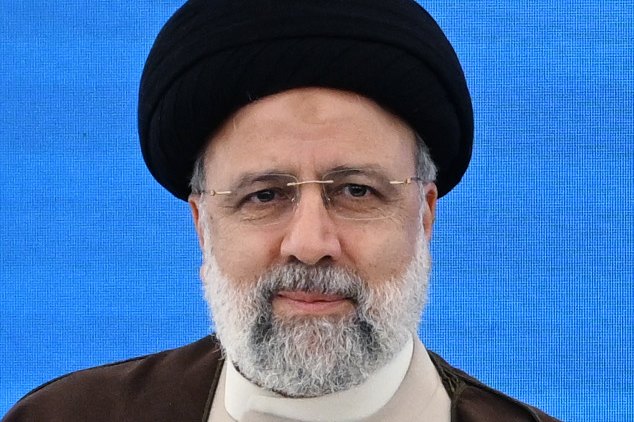
Eight people were aboard the Bell 212 that went down in Iran’s East Azerbaijan province on 19 May 2024. None survived. Among the dead were President Ebrahim Raisi and Foreign Minister Hossein Amir-Abdollahian.
The helicopter was one of three flying from the Giz Galasi Dam to Tabriz, where Raisi was due to open a project at an oil refinery. Earlier that day he had joined Azerbaijan’s president, Ilham Aliyev, to inaugurate a dam on the Aras river. Also on board were East Azerbaijan Governor-General Malek Rahmati, Mohammad Ali Ale-Hashem, the supreme leader’s representative in the province, Raisi’s security chief Brig. Gen. Mohammad Mehdi Mousavi, and a three-man flight crew.
What happened in the air
Gholam-Hossein Esmaeili, head of the president’s office, was in one of the other aircraft. He said the convoy lifted off at around 13:00 in normal weather. Forty-five minutes in, the pilot leading the formation told the others to climb to clear a cloud. Half a minute later, Esmaeili’s pilot saw that Raisi’s helicopter, which had been flying in the middle, was gone.
The pilot circled back but could not raise it by radio and could not descend through the cloud. He set down at the Sungun copper mine.
Two ministers, Ali Akbar Mehrabian and Mehrdad Bazrpash, were in the other two helicopters. Both reached Tabriz safely after searching for the missing aircraft for 15 to 20 minutes.
The crash came at around 13:30 local time, about 2 kilometres south-west of the village of Uzi. Iranian state TV did not report anything until after 16:00, and then described a “hard landing” in heavy fog and rain. Interior Minister Ahmad Vahidi told the public the aircraft had been “forced to make a hard landing due to bad weather conditions and fog in the area”.
A night of searching
Ale-Hashem was the only person reached by phone. Esmaeili spoke to him and later quoted him as saying: “I don’t feel good, I don’t know what happened, I don’t know where I am, I’m under trees.” Rescuers kept talking to him for about three hours. He died before they arrived.
Fog, rain and snow slowed the search. Forty teams from the Iranian Red Crescent Society were sent out, along with drones. Russia dispatched two airplanes, rescue helicopters and around 50 personnel. Turkey flew an unarmed Bayraktar Akinci drone at Iran’s request, and the European Union offered satellite mapping. The U.S. State Department said it turned down a rare Iranian request for help, “largely for logistical reasons”.
Rescuers spotted the wreckage at about 05:00 on Monday, from roughly 2km away, and needed about an hour to reach it. Pirhossein Kolivand, head of the Red Crescent, told state TV they found “no signs of life”. The site sat at an altitude of around 2,200m. The helicopter had burned completely except for its tail. Mohammad Nami, who runs Iran’s crisis management agency, said no DNA tests were needed to identify the dead.
Succession and mourning
Supreme Leader Ali Khamenei named First Vice President Mohammad Mokhber acting president, and Ali Bagheri Kani, the deputy foreign minister, took over the foreign ministry on an acting basis. Iran’s constitution calls for a new presidential election within 50 days, and the date was later set for 28 June. Khamenei declared five days of public mourning and told the nation it “doesn’t need to be worried or anxious”.
Raisi, 63, was a hardliner who had led the judiciary before winning the 2021 election, which drew the lowest turnout in the Islamic Republic’s history. Some analysts had floated him as a successor to the 85-year-old Khamenei. He was the second Iranian president to die in office, after Mohammad-Ali Rajai, who was killed in a bombing in 1981.
Reaction inside Iran was split. State television aired prayers for him in cities across the country. Social media carried videos of people setting off fireworks, and posts recalling the crackdown on the 2022 protests that followed Mahsa Amini’s death. Police in Tehran warned that anyone publicly celebrating would be prosecuted.
Funerals began in Tabriz on 21 May, with crowds estimated in the tens of thousands. A ceremony at Tehran University the next day was led by Khamenei and drew foreign figures including Hamas leader Ismail Haniyeh and Qatar’s emir. No European Union member state sent a representative. Raisi was buried on 23 May at the Imam Reza shrine in his hometown of Mashhad.
The cause
Iran’s military said in a preliminary report on 23 May that the helicopter “caught fire after hitting an elevated area” and that it found no evidence of foul play. On 1 September, the armed forces’ general staff concluded in its final report that poor weather, including thick fog, was the primary cause.
The helicopter itself was an aging type. State media identified it as a Bell 212, and Iran bought this airframe in the early 2000s. Sanctions make parts hard to obtain, and most of the country’s military air fleet predates the 1979 revolution. Former foreign minister Mohammad Javad Zarif argued on state TV that the U.S. was indirectly to blame for exactly that reason.
Sources
- 2024 Varzaqan helicopter crash – Wikipedia
- Iran helicopter crash: What we know about how Ebrahim Raisi died
- Iranian president Ebrahim Raisi dies in helicopter crash
- Ebrahim Raisi
Sources
- 2024 Varzaqan helicopter crash – Wikipedia
- Iran helicopter crash: What we know about how Ebrahim Raisi died




