
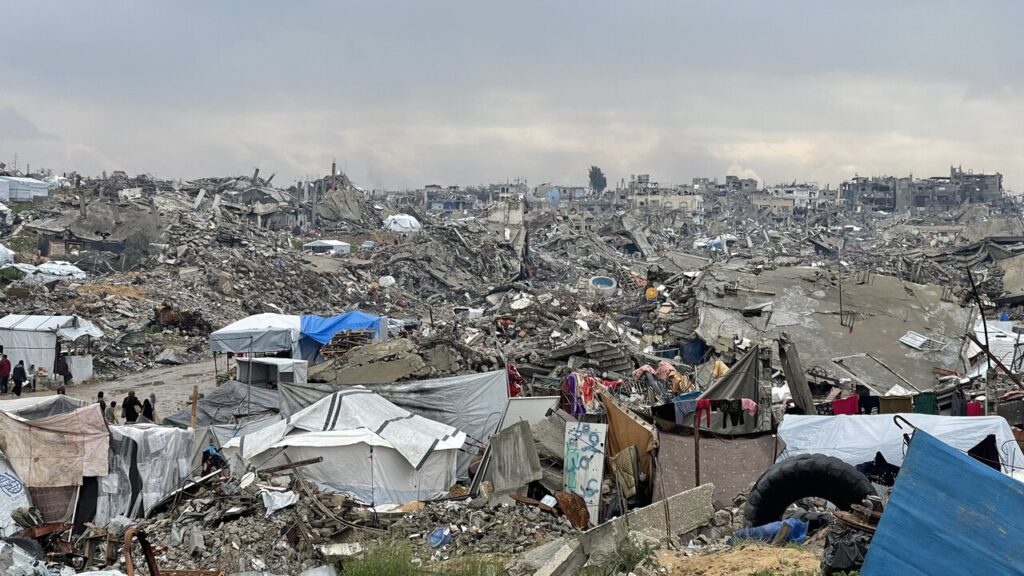
Gavin Kelleher works for the Norwegian Refugee Council in central Gaza, and he says the people he meets have run out of things to trade. Some had been bartering “a bag of diapers for lentils or cooking oil”. Others were selling what they still owned to find a little cash.
His account came the day the UN World Food Programme said its own food in Gaza was gone, according to the BBC. The agency had sent its last remaining stocks to hot meals kitchens, and warned that those kitchens would be empty in the coming days.
Kelleher said that once that food runs out, the kitchens cannot give anything at all. Begging was happening on a scale never seen in Gaza before, he added, but people no longer had anything to give to one another.
What the numbers show
Israel has held back aid since March 2. It restarted its offensive two weeks afterward when a two-month ceasefire fell apart, saying it wanted leverage over Hamas to free the hostages still held. The WFP says the shutdown is the longest Gaza has faced, and that it has pushed food prices up by as much as 1,400% compared with the ceasefire.
All 25 bakeries the WFP supported closed at the end of March, with no wheat flour or cooking fuel left. Two-week family food parcels ran out as well.
The agency wants borders open. It says 116,000 tonnes of food, enough for one million people for up to four months, is staged at aid corridors and could go in as soon as the crossings reopen. Without that, it said, its “critical assistance may be forced to end.”
Child nutrition is slipping. Last week a UN partner checked 1,300 children in northern Gaza and found more than 80 acute malnutrition cases, twice what earlier weeks showed. OCHA reports severe shortages of medicine and hospital supplies, and says fuel shortages are cutting into water production.
Competing claims
The UN says Israel must secure supplies for 2.1 million Palestinians under international law. Israel says it is meeting its legal obligations and that no aid shortage exists. Its foreign ministry brushed aside a joint UK, France and Germany statement calling the blockade “intolerable”, saying more than 25,000 lorries with almost 450,000 tonnes of aid arrived during the ceasefire. It argued Hamas had “hijacked” supplies. Hamas denies this.
WHO director-general Dr Tedros Adhanom Ghebreyesus said the territory had reached “an awful and grim moment”. His message was blunt: “This aid blockade must end. Lives depend on it.”
Hamas, meanwhile, rejected an Israeli ceasefire proposal the week before. It would have meant disarming in exchange for a six-week pause and the release of 10 of the 59 hostages still held.




